How Many Children in India Are Exposed to Extreme Heat? UNICEF Report Shows Alarming Figures
A UNICEF report says around 392 million children in India, about 92% of all children, are exposed to extreme heat, with 89 million facing heatwaves. The report warns that existing Heat Action Plans often miss child-specific needs, including schools and anganwadis. UNICEF urges targeted protections, including vulnerability mapping and inclusion of children in climate adaptation planning.

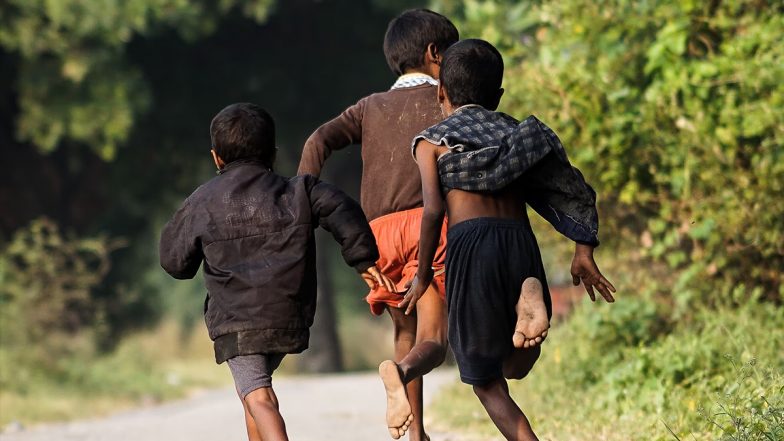
A new UNICEF report has raised serious concern over the scale of heat exposure affecting children in India, estimating that around 392 million children (32.9 crore), about 92% of the country’s child population, are living with extreme heat conditions. The report also states that 89 million (8.9 crore) children are exposed to heatwaves, as rising temperatures increasingly threaten health, education and survival outcomes.
The findings come from UNICEF’s Children’s Climate Risk Report 2026, which highlights how intensifying climate extremes are disproportionately affecting young populations. While India has introduced Heat Action Plans across several states and cities, the report notes significant gaps in addressing child-specific risks. El Nino May Persist Through 2027 Raising Inflation Risk in Highly Rated Sovereigns Economies, Says Fitch Ratings.
Extreme Heat Is Becoming a Child Survival Issue in India
According to the report, India is among the most climate-vulnerable countries in the region, with extreme heat identified as one of the most severe hazards. The report states that 392 million (32.9 crore) children in India, nearly 92% of all children within the 0–18 age group, are exposed to extreme heat, while a further 89 million (8.9 crore) children are exposed to heatwaves.
UNICEF also highlights that globally, 1.1 billion children are exposed to at least three overlapping climate hazards, underscoring the scale of climate-related risks faced by younger populations worldwide. El Nino Officially Declared: IMD Warns of Weaker Monsoon, Rising Heat Risk in India.
Heat Stress and the Overlooked Child Vulnerability Gap
UNICEF’s assessment points out that while India’s Heat Action Plans represent an important step in climate adaptation, they often do not include targeted measures for children. The report notes that existing plans generally lack age-specific strategies that consider the vulnerabilities of infants, school-going children and adolescents.
“Heat Action Plans should include schools, anganwadis, nighttime heat and district-level child vulnerability mapping for targeted interventions,” UNICEF recommends.
Experts cited in the report suggest that children are more susceptible to dehydration, heatstroke and long-term developmental impacts due to prolonged exposure to extreme temperatures.
Schools and Anganwadis in the Adaptation Gap
A key concern highlighted is the limited integration of educational and childcare systems into climate preparedness strategies. UNICEF recommends that schools and anganwadis be actively included in Heat Action Plans, especially as learning environments can become unsafe during peak heat conditions.
The report also flags the importance of addressing nighttime heat, which can affect sleep patterns, recovery and overall health among children. It further suggests district-level vulnerability mapping to identify high-risk areas and enable more targeted interventions.
India Among Highest Climate Hazard Regions
The report places India among countries with the highest climate hazard scores in the region, behind Pakistan and Bangladesh, with extreme heat identified as the dominant risk factor. This reflects a broader regional trend where South Asia is experiencing increasingly frequent and intense heatwaves.
UNICEF notes that climate change is amplifying existing vulnerabilities, particularly among children in densely populated and urban heat-stressed regions.
The report situates India’s situation within a wider global challenge, where multiple overlapping climate hazards are affecting children’s wellbeing. UNICEF is urging governments worldwide to accelerate emission reductions and transition toward clean energy systems to mitigate long-term risks.
It also calls for stronger integration of child-focused planning in national and local climate adaptation strategies, arguing that current frameworks often overlook the specific needs of younger populations.
The findings highlight an emerging policy gap: while climate adaptation plans are expanding, child-specific protections remain limited in scope. With heatwaves becoming more frequent and intense, UNICEF warns that without targeted interventions, the impact on children’s health, education and survival outcomes is likely to increase in the coming years.
The report concludes that climate resilience planning must move beyond general population strategies to include structured protections for children as a distinct and highly vulnerable group.
(The above story first appeared on LatestLY on Jun 17, 2026 07:46 PM IST. For more news and updates on politics, world, sports, entertainment and lifestyle, log on to our website latestly.com).