Indian Passport Not Proof of Citizenship, Says MEA; Javed Akhtar and Aaditya Thackeray React
The MEA clarified that an Indian passport is a travel document, not proof of citizenship, sparking public backlash. Figures like Javed Akhtar and Aaditya Thackeray called the stance absurd, questioning the point of police checks. Legally, cards like Voter ID and Aadhaar only establish residency or identity, not citizenship.

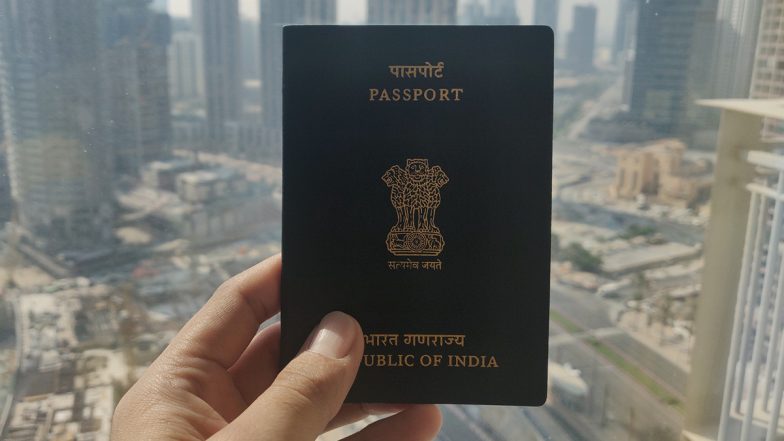
On the occasion of the 14th Passport Seva Divas on Wednesday, June 24, 2026, the Ministry of External Affairs (MEA) clarified that an Indian passport is primarily a travel document and should not be treated as conclusive proof of citizenship. The announcement, which came alongside details of a digital transformation and the expansion of the chip-enabled e-passport system, has sparked significant public debate regarding what precise documents legally establish identity versus nationality in India.
The clarification drew immediate criticism from prominent public figures and politicians, who questioned the rationale behind rigorous police verification processes if the final document does not certify citizenship. Indian Sports Ministry Submits ‘Sports Passport’ Proposal to PM Narendra Modi’s Office: Report.
Javed Akhtar Reacts to Passport Being Travel Document
The ministry of external affairs says that a passport is a document travel not the proof of citizen ship . Really ??? . So are they providing this travel document to some people with out being totally convinced that this person is an Indian citizen ?? . It is absurd .
— Javed Akhtar (@Javedakhtarjadu) June 24, 2026
The MEA's Position on Passports
According to senior MEA officials, while passports are strictly issued only to verified Indian nationals, the document itself is legally defined under the Passports Act of 1967 as an instrument to facilitate international travel. The ministry noted that a passport attests to a person's nationality while they are abroad but remains the property of the Government of India, subject to surrender upon official order. "A passport is issued after a lot of due diligence, and it is based on documents from several government agencies," an MEA official stated. However, the ministry emphasised that it does not serve as a permanent, absolute certificate of citizenship within domestic legal frameworks.
How Much More Absurd Can the MEA Become? Asks Aaditya Thackeray
If the MEA believes Passport is not a document of citizenship:
1) What do the police verify before granting a passport?
2) Does our country give passports as travel documents to non Indians as well?
3) Wouldn’t this announcement create doubts in the minds of other countries,… pic.twitter.com/p3ebg90A3C
— Aaditya Thackeray (@AUThackeray) June 24, 2026
Public and Political Backlash Over Citizenship Proof
The MEA's stance triggered sharp reactions on social media, with writer and lyricist Javed Akhtar and Shiv Sena (UBT) leader Aaditya Thackeray labelling the classification as "absurd". Javed Akhtar expressed his scepticism on the social media platform X, writing: “The ministry of external affairs says that a passport is a document travel not the proof of citizenship. Really??? So are they providing this travel document to some people without being totally convinced that this person is an Indian citizen ?? It is absurd”
Aaditya Thackeray raised concerns regarding how international immigration authorities might perceive the ruling, tweeting a series of operational questions directed at the ministry: “If the MEA believes Passport is not a document of citizenship: What do the police verify before granting a passport? Does our country give passports as travel documents to non Indians as well? Wouldn't this announcement create doubts in the minds of other countries, of whether non Indians get Indian passports as a travel document?”
It is worth noting that under Indian law, citizenship by birth depends on your birth date:
- 1950–1987: Anyone born in India.
- 1987–2004: Born in India with at least one parent who is an Indian citizen.
- After Dec 3, 2004: Born in India with both parents as Indian citizens (or one parent a citizen and the other not an illegal immigrant).
What Documents Establish Indian Citizenship?
The MEA's declaration highlights a broader, unresolved legal reality in India: there is currently no single, universally issued document that serves as absolute proof of citizenship for those born within the country. Over the years, the Supreme Court of India and various High Courts have consistently ruled that several common government-issued IDs do not legally establish citizenship:
- Aadhaar Cards: Deemed by the Supreme Court as purely an identity and biometric residential document, not a proof of citizenship.
- Voter ID Cards: Functions primarily as a residency document that grants voting rights in specific constituencies, but remain legally distinct from absolute citizenship verification.
- PAN Cards & Bank Accounts: Regarded strictly as financial tracking tools and identity proofs.
Under the Citizenship Act of 1955, actual "Citizenship Certificates" are explicitly granted only to foreign nationals who undergo the formal processes of naturalisation or registration. For the vast majority of populations born in India, legal status relies on a combination of specific parameters, including birth certificates indicating parentage and compliance with structural cut-off dates specified in the Citizenship Act.
(The above story first appeared on LatestLY on Jun 24, 2026 10:48 PM IST. For more news and updates on politics, world, sports, entertainment and lifestyle, log on to our website latestly.com).