India’s Monsoon Rainfall Deficit Narrows to 43%, but El Niño Threat Keeps Drought Concerns Alive
India’s crucial summer monsoon is facing severe headwinds, with national rainfall plunging to a 43% deficit in the first month of the season. Meteorologists warn that a developing El Niño phenomenon is actively suppressing rainfall, raising significant concerns over potential drought conditions across major agricultural states.

New Delhi, June 28: India’s crucial summer monsoon is facing severe headwinds, with national rainfall plunging to a 43% deficit in the first month of the season. Meteorologists warn that a developing El Niño phenomenon is actively suppressing rainfall, raising significant concerns over potential drought conditions across major agricultural states.
According to the latest data from the India Meteorological Department (IMD), the significant nationwide shortfall recorded between June 1 and June 27 is highly likely to translate into an overall seasonal deficit exceeding 10%. While the arrival of the monsoon across the remainder of the country in July is expected to narrow the current gap, the long-range outlook remains troubling for the country's multi-billion dollar farming sector. What Is El Nino and How Does It Affect Weather?
El Niño Looming Without a Climate Cushion
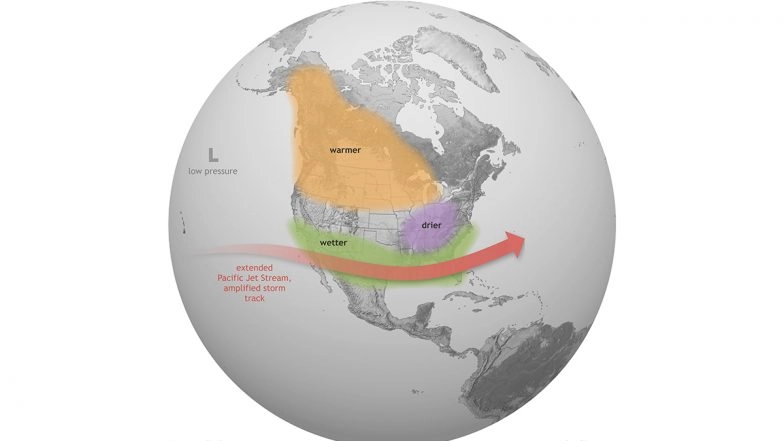
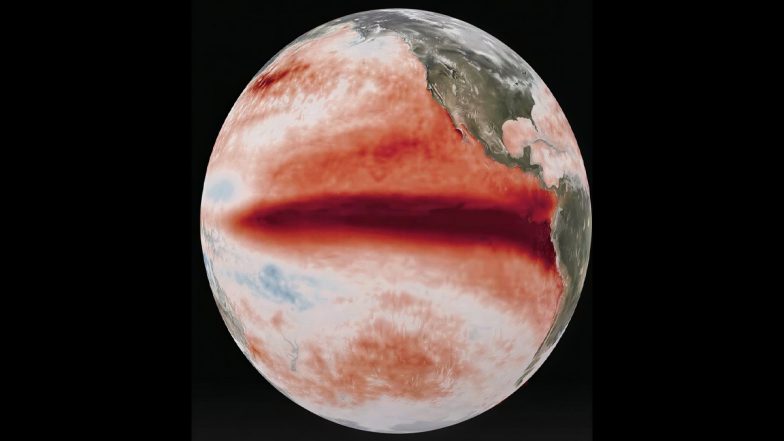
The primary driver behind the weakening monsoon is El Niño - a climate pattern marked by the warming of surface waters in the equatorial Pacific Ocean, which historically disrupts Indian rainfall.
Compounding the problem is the lack of a secondary oceanic cushion. In previous years, such as 2023, India managed to secure near-normal rainfall despite a strong El Niño because of a highly positive Indian Ocean Dipole (IOD). The IOD measures temperature differences between the western and eastern parts of the Indian Ocean, and a positive phase typically boosts monsoon currents. El Niño 2026: Can the Strongest Event on Record Weaken India’s Monsoon?
However, current IMD modeling indicates that the Indian Ocean is locked in "neutral" IOD conditions. Because a neutral IOD neither strengthens nor weakens the winds, it leaves the subcontinent entirely vulnerable to El Niño’s dry spell, pushing the probability of a structurally deficient monsoon season to 60%.
Agricultural Core Hit Hardest
The geographic breakdown of the rain deficit paints a stark picture for rural India. The highest shortfall has hit Central India, which is currently reeling under a 57% precipitation deficit. East and Northeast India follow with a 44% shortfall, while South Peninsular and Northwest India record deficits of 30% and 27%, respectively.
Regionally, individual state statistics highlight the severity of the delay:
-
Meghalaya: 82% deficit
-
Gujarat: 79% deficit
-
Jharkhand: 66% deficit
-
Maharashtra: 59% deficit
-
Uttar Pradesh: 56% deficit
Of particular concern to economists is Madhya Pradesh, which sits directly in India's "monsoon core zone." The state is currently facing a 41% rain deficit. Because agriculture in this belt is overwhelmingly rain-fed rather than irrigated, prolonged delays in rainfall threaten to heavily disrupt sowing schedules for crucial summer crops like soybeans, rice, pulses, and cotton.
Bracing for Impact
Even in Peninsular India - where the monsoon technically advanced two to three weeks ago - states like Karnataka, Kerala, Tamil Nadu, and Telangana are all reporting rainfall deficits exceeding 30%.
While the IMD notes that the geographic expansion of the monsoon next month will bring widespread relief and lower the current 43% deficit figure, the structural weakness of the system remains. With El Niño expected to persist through the June–September cycle, authorities and agricultural sectors are beginning to brace for a parched season ahead.
(The above story first appeared on LatestLY on Jun 28, 2026 03:00 PM IST. For more news and updates on politics, world, sports, entertainment and lifestyle, log on to our website latestly.com).