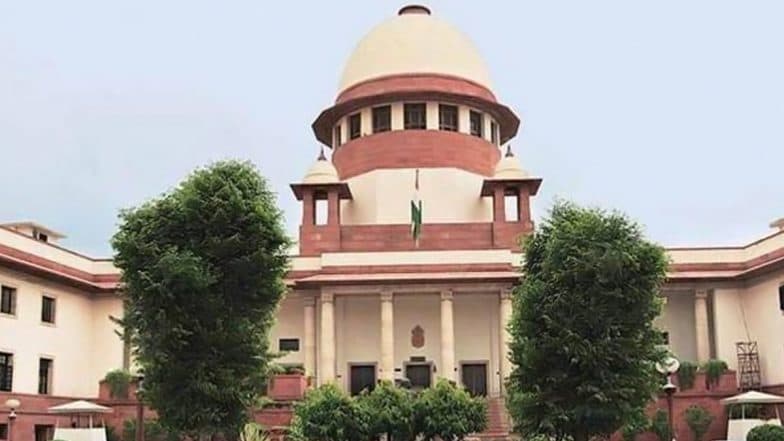
No More ‘Someone Else’s Problem’: Supreme Court Issues Nationwide Orders on Waste Management
The Supreme Court has issued sweeping nationwide directions for the strict implementation of the Solid Waste Management (SWM) Rules, 2026, flagging serious concern over the high volume of solid waste being generated across the country and the near total absence of civic sense in its management and disposal.

- Read in
- हिंदी
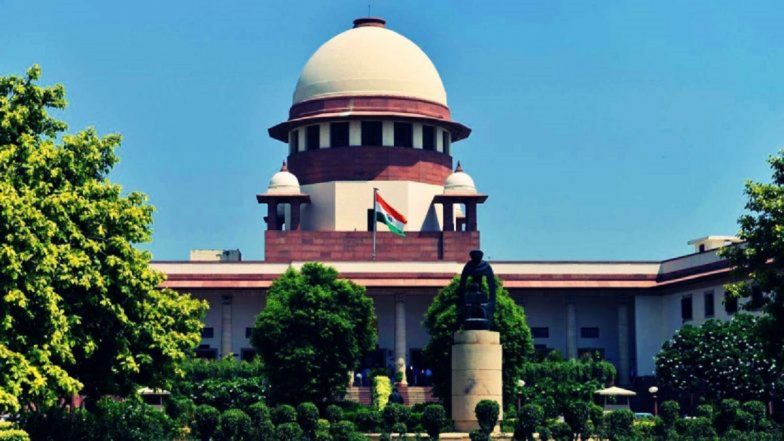
The Supreme Court has issued sweeping nationwide directions for the strict implementation of the Solid Waste Management (SWM) Rules, 2026, flagging serious concern over the high volume of solid waste being generated across the country and the near total absence of civic sense in its management and disposal. A bench of Justices SVN Bhatti and NV Anjaria said the country's solid waste management infrastructure needs to be completely audited and upgraded to meet the standards prescribed under the SWM Rules, 2026, and criticised the widespread public attitude of treating waste disposal as someone else's responsibility.
Court Slams Public Apathy On Waste Management
The bench observed that it was regrettable that the general feeling across society was: "I am entitled to generate but not to cooperate and control the impact of solid waste management at the threshold." Bihar Student Protests: Govt Tells Supreme Court Constable Fired AK-47 in Air After Being Trapped by Protesters.
The court noted that the volume and complexity of waste, including biodegradable, non-biodegradable, hazardous, electronic and construction waste, had outgrown what any single class of workers could be expected to handle. It flagged non-compliance with the SWM Rules among individuals and institutions alike, including schools, colleges, students, professionals, businessmen, and both educated and illiterate citizens.
Case Background
The bench was hearing appeals arising from orders of the National Green Tribunal concerning environmental compliance by municipal corporations under the SWM Rules. The matter originated with the Bhopal Municipal Corporation, which had challenged proceedings relating to its waste handling obligations. Given the scale of the problem, the Supreme Court later expanded the scope of the case to a nationwide inquiry. ‘Are You Bowing to Corporate Pressure?’: Supreme Court Questions FSSAI on Food Warning Labels.
The court also praised the Centre for setting up statutory committees for implementation and enforcement of the SWM Rules, which came into force on April 1. However, it cautioned that merely establishing committees and enforcement agencies would not by itself address the larger and perennial hazards arising from non-compliance.
Six-Week Deadline To Identify Bulk Waste Generators
The Supreme Court has directed district collectors across the country to identify all bulk waste generators (BWGs) in their jurisdictions, in coordination with local bodies, within six weeks.
It has also directed the Union Environment Ministry to confer special powers on district collectors under the Environment (Protection) Act, 1986, enabling them to take punitive action against violators of waste management rules.
The State-level Compliance Monitoring Committees, acting through state chief secretaries, have been directed to communicate to all bulk waste generators the consequences of non-compliance with the SWM Rules, 2026, including temporary disconnection of power or water supply until their waste conforms to the rules.
Special Cells To Be Formed In Every District
The court ordered the formation of a special cell in every district, comprising regional officers of pollution control boards. These cells will have the power to issue directions to disconnect the electricity and water connections of bulk waste generators who violate the rules and fail to properly process and segregate their waste.
Bulk waste generators have been defined as institutions generating more than 100 kg of waste per day, having a built-up area exceeding 20,000 square metres, or consuming more than 40,000 litres of water daily. This category includes large hotels, malls, hospitals, commercial complexes and large residential societies.
Such generators have been directed to set up the required facilities and report their compliance online to local bodies for inspection, with the reports to be forwarded to district collectors.
'Constitutionally Unethical,' Says Supreme Court
The Supreme Court said every person, household and institution generates solid waste as an inevitable by-product of life and activity, and rejected the prevailing assumption that solid waste is solely a problem for sanitary workers while the rest of the population remains passive generators. The court termed this approach neither legally correct nor practically sustainable, calling it constitutionally unethical.
Under the new rules, waste must be segregated at source into four categories: wet waste, dry waste, sanitary waste, and special-care or domestic hazardous waste.
The bench said the law can secure cooperation by prescribing rules and consequences, but cannot by itself generate civic behaviour, adding that compliance can be achieved only when individual and institutional waste generators internalise their obligations. It identified the unorganised sector of residential, commercial and business establishments as the real challenge in ensuring compliance.
(The above story first appeared on LatestLY on Aug 20, 2026 08:58 AM IST. For more news and updates on politics, world, sports, entertainment and lifestyle, log on to our website latestly.com).