‘Cannot Pass Order on Newspaper Report’: Supreme Court Seeks EC Reply on Gyanesh Kumar’s Alleged Unilateral Decisions
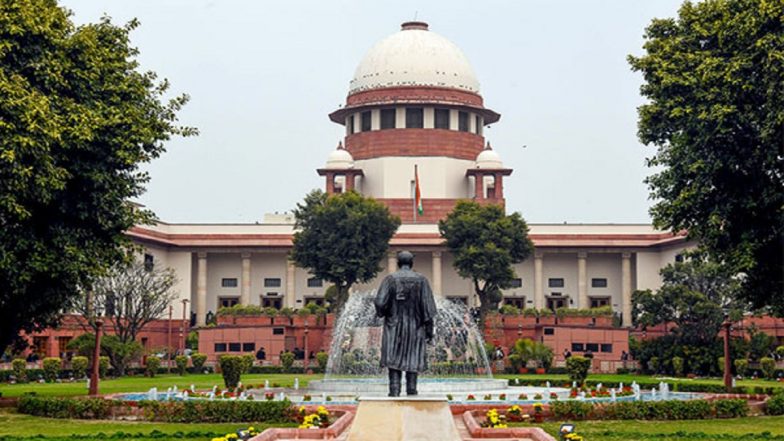
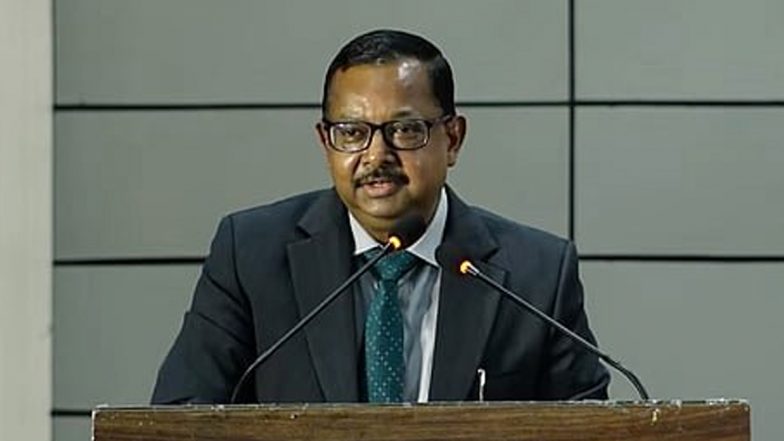
The Supreme Court on Monday sought a response from the Election Commission of India (ECI) on allegations that Chief Election Commissioner Gyanesh Kumar took certain decisions unilaterally without the consensus of the other two Election Commissioners.

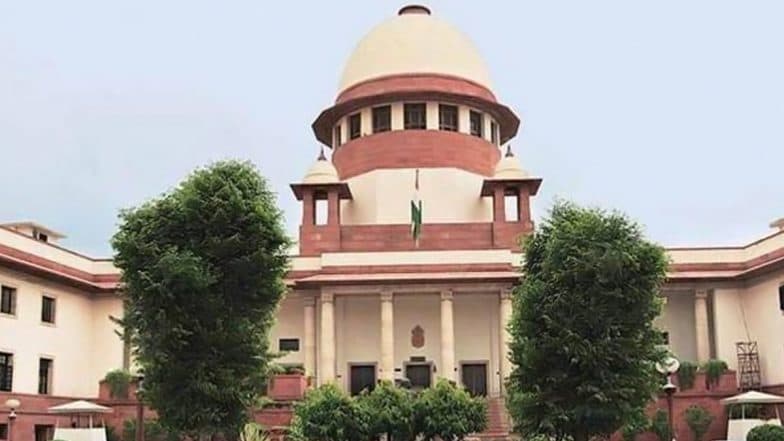
New Delhi, October 5: The Supreme Court on Monday sought a response from the Election Commission of India (ECI) on allegations that Chief Election Commissioner Gyanesh Kumar took certain decisions unilaterally without the consensus of the other two Election Commissioners.
A bench headed by Chief Justice of India Surya Kant made it clear that the court could not pass an order solely on the basis of a newspaper report and said it would first require a formal response from the poll panel.
The court was hearing a Public Interest Litigation (PIL) filed by Patna resident Rakesh Kumar Singh. The petition seeks a determination on whether the Chief Election Commissioner individually exercised powers that are constitutionally and legally vested in the Election Commission as a multi-member body. CJP Protest Against CEC Gyanesh Kumar; Opposition Calls It Fight to ‘Save Democracy’, BJP Says ‘Fake Narrative’ Won’t Succeed.
The petitioner has urged the Supreme Court to declare any such unilateral decisions unauthorised if the allegations are found to be true and to take appropriate legal action.
The PIL comes against the backdrop of a report published by The Indian Express, which claimed that Election Commissioners Sukhbir Singh Sandhu and Vivek Joshi had raised objections on at least 14 occasions over a period of 10 months. The reported objections related to matters including electoral rolls, voter registration and the Election Commission’s technology systems. ‘A Lathi Can Stop a Crowd, But Not a Question’: Rahul Gandhi Backs Protesters Demanding Gyanesh Kumar’s Resignation.
During the hearing, the Election Commission rejected the suggestion that the reported objections amounted to institutional dissent over final decisions. The poll panel maintained that operational queries, inputs and suggestions raised during the draft stage were part of the normal administrative and decision-making process.
The ECI also said decisions concerning the schedule of the Special Intensive Revision (SIR) exercise were taken unanimously.
The Supreme Court said it could not assume that decisions had been taken unilaterally without first establishing the facts. “If it is found that the decisions were taken neither unanimously nor by a majority, they could be stayed,” the court observed.
The bench also cautioned that it could not “put the cart before the horse” by presuming that all decisions had been taken by the CEC alone.
When the petitioner relied on the newspaper report, the court asked, “You are relying on the newspaper report?”
The petitioner argued that the Election Commission had not denied the allegations reported by the newspaper.
The court, however, said a newspaper report could be completely correct, partly correct or incorrect and therefore could not form the sole basis for an immediate judicial order.
The bench said it wanted certified information from the Election Commission on whether the decisions in question were taken unanimously or by a majority.
It further indicated that if the court eventually finds that the law was not followed in any instance, appropriate corrective action could be considered, including undoing the decisions concerned.
(The above story first appeared on LatestLY on Oct 05, 2026 01:54 PM IST. For more news and updates on politics, world, sports, entertainment and lifestyle, log on to our website latestly.com).