Understanding the Assam-Meghalaya Conflict: Border Disputes and Recent Unrest Explained
Tensions between Assam and Meghalaya have escalated following recent violent protests, vehicle vandalism, and retaliatory transport blockades along the Guwahati-Shillong route, compounding a long-standing 885-km border dispute across 12 sectors. Amid the ongoing conflict, the leadership of both states intervened swiftly to prevent further escalation.

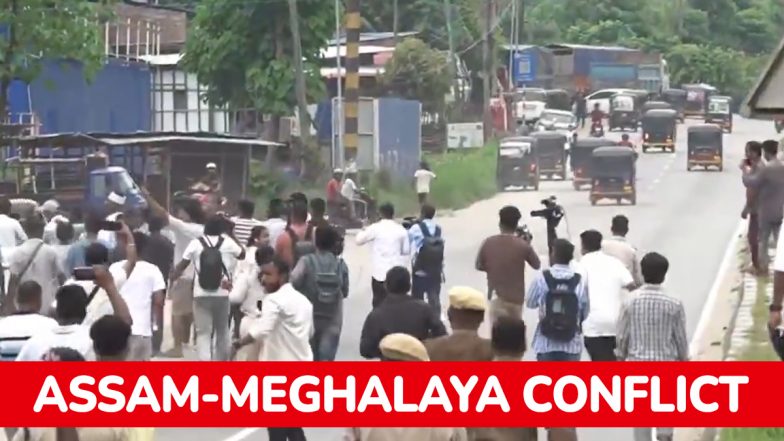
Friction along the inter-state borders of Assam and Meghalaya has intensified following recent episodes of urban violence, vehicle vandalism, and retaliatory transport blockades along the crucial Guwahati-Shillong corridor. These localised flare-ups highlight underlying sensitivities connected to a long-standing 885-kilometre boundary dispute between the two states spanning 12 sectors, alongside recent socio-political grievances in the region.
Root Causes and Territorial Dispute Between Assam and Meghalaya
The underlying tensions between the neighbouring states - Assam and Meghalaya - stem from a complex, decades-old inter-state boundary dispute divided into 12 distinct sectors. While bilateral negotiations and regional committees have made notable progress in resolving differences in several specific areas, comprehensive settlements for remaining sectors require delicate, ongoing administrative diplomacy. How Meghalaya’s South Garo Hills Achieved Zero Maternal Deaths for Eight Consecutive Months.
Assam-Meghalaya Border Tensions Continue
VIDEO | Jorabat (Assam-Meghalaya Border): Assam Taxi Association continue protest at Jorbabat.#Assam #Meghalaya
(Full video available on PTI Videos - https://t.co/n147TvrpG7) pic.twitter.com/fe9IHzu4Pf
— Press Trust of India (@PTI_News) August 22, 2026
Periodic administrative friction, alongside local debates regarding regional identity, resource rights, and employment quotas, frequently creates an environment vulnerable to sudden public unrest.
Historical Background of the Border Dispute Between Assam and Meghalaya
The roots of the boundary dispute between Assam and Meghalaya trace back to the British colonial era and the subsequent post-independence reorganisation of northeastern states. During British rule, the province of Assam encompassed vast tribal regions that later became independent states. Administrative lines and frontier demarcations established during this period - such as the Bengal Eastern Frontier Regulation of 1873 - often relied on rough geographical surveys rather than permanent, ground-level markings. Following India's independence, tribal communities in the hills of Assam pushed for greater autonomy and eventual statehood throughout the 1960s and 1970s. This culminated in Meghalaya being carved out of Assam as an autonomous state in 1970, before becoming a full-fledged state under the Assam Reorganisation (Meghalaya) Act of 1969.
The core conflict arose because Meghalaya disputed the legal interpretation of the boundaries defined in the post-independence act, contending that the administrative framework ignored historical tribal land rights and traditional jurisdictions. While Assam relies on post-independence administrative delineations, Meghalaya challenges several sectors - such as Langpih and parts of the erstwhile United Khasi and Jaintia Hills - leading to overlapping claims across 12 distinct sectors along their 885-km shared border.
Recent Unrest and Transport Standoffs
The latest escalation followed a student-led protest rally in Shillong, during which multiple vehicles bearing Assam registration numbers were vandalised or damaged, and several individuals sustained injuries. The incidents prompted immediate reactions from transport unions and commercial driver associations in neighbouring Assam.
In response to growing safety concerns for motorists, Assam-based transport operators and cab associations launched retaliatory blockades at key transit points such as Jorabat and Khanapara along the Guwahati-Shillong route. The resulting standoff disrupted regular passenger movement, stranded commuters and tourists, and prompted the activation of emergency police helplines to coordinate assistance for stranded travellers.
Appeal to Citizens of Both States To Maintain Peace, Harmony and Restraint, Says Conrad Sangma
Spoke with the Hon’ble Chief Minister of Assam, Dr. @himantabiswa ji regarding the unfortunate violence in Shillong on 19th August and the reactions that have followed, which have affected the common people and commuters of both States.
We have agreed to work together, as…
— Conrad K Sangma (@SangmaConrad) August 20, 2026
Chief Ministers Join Hands to Defuse Tension
Following the violence and subsequent transport disruptions, the leadership of both states intervened swiftly to prevent further escalation. Assam Chief Minister Himanta Biswa Sarma and Meghalaya Chief Minister Conrad K. Sangma held high-level discussions, committing to coordinate closely through designated cabinet ministers and local administrations to restore public safety and trust. Meghalaya: 5 Die of Suffocation Inside Well at Construction Site in Shillong.
Assam and Meghalaya Are Sister States, Bound by Deep Historical, Cultural and People-to-People Ties: Himanta Biswa Sarma
I also conveyed to Shri @SangmaConrad Assam’s concern over the recent incidents in Shillong, particularly those involving Assam-registered vehicles.
Hon’ble Minister for Border Protection Shri @ATULBORA2 has been asked to coordinate closely with the authorities in Meghalaya and… https://t.co/CaidQwOvy2
— Himanta Biswa Sarma (@himantabiswa) August 20, 2026
In statements released via social media, both leaders emphasised the deep historical, cultural, and people-to-people ties binding the neighbouring states. Chief Minister Sarma noted that he conveyed Assam's concerns regarding the safety of Assam-registered vehicles to his counterpart, while Chief Minister Sangma appealed for public harmony and restraint. The two governments agreed to deploy designated cabinet ministers to formalise peace-building measures and ensure the unhindered movement of commuters along the vital inter-state corridor.
(The above story first appeared on LatestLY on Aug 22, 2026 02:21 PM IST. For more news and updates on politics, world, sports, entertainment and lifestyle, log on to our website latestly.com).