UPI MDR on Payments Above INR 2,000 to Stay; Govt Rules Out Reversal
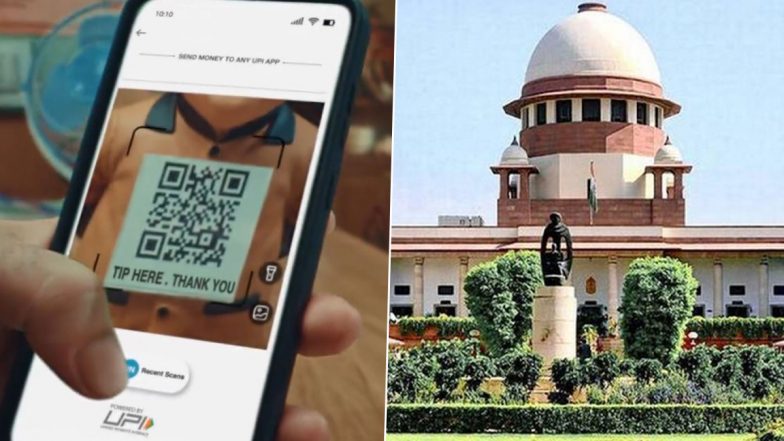
The Centre has ruled out any rollback of the newly announced 0.4 per cent Merchant Discount Rate (MDR) on eligible Unified Payments Interface (UPI) transactions above Rs 2,000, with a top government official saying there is no question of reconsidering the decision.


The Centre has ruled out any rollback of the newly announced 0.4 per cent Merchant Discount Rate (MDR) on eligible Unified Payments Interface (UPI) transactions above Rs 2,000, with a top government official saying there is no question of reconsidering the decision. The new MDR framework for person-to-merchant (P2M) UPI payments will come into effect from October 15, 2026. Government sources said the decision was taken with the broader objective of ensuring the long-term sustainability of the UPI ecosystem.
UPI MDR Decision Is Final
When asked whether the government was considering a rollback of the proposed charges, a top official said the decision had already been taken and there was no question of reversing it. Government sources said the MDR framework is intended to support the sustainability, security and continued development of the UPI payment ecosystem. UPI Charges Above INR 2,000: Plea Filed in Supreme Court Against New Merchant Fee Framework.
The government has also argued that introducing a limited merchant-side charge would help create a revenue stream for participants in the digital payments ecosystem after more than six years of zero-MDR UPI merchant payments.
Who Will Pay the 0.4% UPI Charge?
The 0.4 per cent MDR will apply to eligible P2M UPI transactions above Rs 2,000. The charge will be paid by merchants rather than consumers. The MDR will be capped at Rs 300 per transaction for payments of Rs 75,000 and above. For example, a Rs 3,000 merchant payment would attract an MDR of Rs 12, while a Rs 50,000 transaction would attract Rs 200. A Rs 1 lakh transaction would be subject to the Rs 300 cap rather than a Rs 400 charge.
The Finance Ministry has said merchants should not pass the MDR cost on to customers.
UPI Payments Up to Rs 2,000 Remain Free
The new framework does not impose MDR on P2M UPI transactions of up to Rs 2,000. The government has said such transactions account for more than 95 per cent of the total volume of P2M UPI payments. Person-to-person (P2P) UPI transactions will also continue to remain free, irrespective of the transaction value. This means the new charge is targeted primarily at higher-value merchant payments rather than everyday small-value UPI transfers. UPI Payments New Rule Explained: What Happens to Payments Above INR 2,000 From October 15.
Special MDR Rates for Certain Sectors
The framework also provides a separate flat MDR of Rs 5 for certain categories, including railways, telecom, insurance, fuel and agricultural inputs, for transactions above Rs 2,000. Certain other sectors, including government utility payments and educational fee payments, have also been included under the specified flat-fee structure. The government has said the differentiated structure is intended to limit the impact on essential services and sectors where margins may be relatively low.
Why the Government Introduced UPI MDR
The government has described the new MDR framework as a measure to support the long-term sustainability of the UPI ecosystem, including investment in infrastructure, security and innovation. The Finance Ministry's FAQ states that the 0.4 per cent rate is lower than typical charges associated with traditional card-based payment systems. It also says the framework is intended to maintain UPI's accessibility for everyday transactions while ensuring that larger commercial payments contribute towards the cost of maintaining the ecosystem.
The announcement marks a change after more than six years in which merchant UPI payments operated without an MDR. The new framework is scheduled to take effect on October 15.
DISCLAIMER: This article is strictly for informational and educational purposes to raise awareness about the said topic. LatestLY DO NOT host, distribute, or provide links to sexually explicit content, leaked videos, or pirated material. Any search terms or keywords mentioned are solely for the purpose of explaining the viral trend and its associated dangers. We strongly condemn the circulation of non-consensual intimate imagery (NCII) and advise all readers to refrain from searching for or sharing such content, as doing so may lead to severe legal consequences.
(The above story first appeared on LatestLY on Sep 16, 2026 05:57 PM IST. For more news and updates on politics, world, sports, entertainment and lifestyle, log on to our website latestly.com).