Why Is Mumbai Facing One of Its Worst June Water Crises in Nearly 2 Decades?
Mumbai, India's financial heartland, is grappling with an alarming and unseasonal dry spell, marking June 2026 as one of its driest in nearly two decades. The stalled advance of the southwest monsoon has left the bustling metropolis facing a severe rain deficit and critically low reservoir levels, triggering widespread water conservation measures and casting a shadow over the national economic outlook.

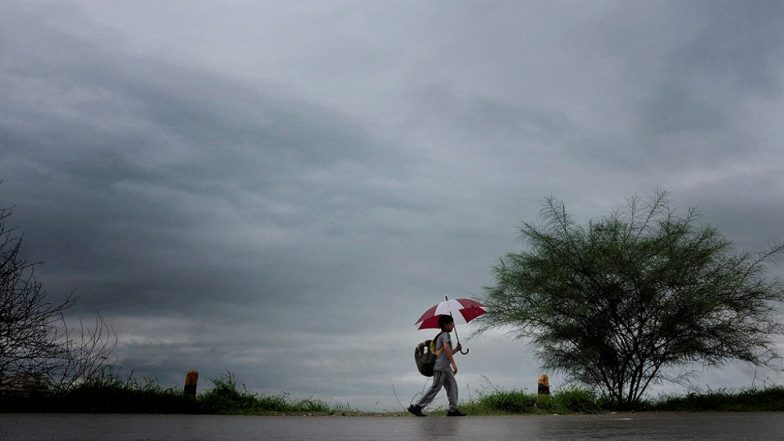
Mumbai, India's financial heartland, is grappling with an alarming and unseasonal dry spell, marking June 2026 as one of its driest in nearly two decades. The stalled advance of the southwest monsoon has left the bustling metropolis facing a severe rain deficit and critically low reservoir levels, triggering widespread water conservation measures and casting a shadow over the national economic outlook. The anomaly raises immediate concerns for urban water security and threatens broader agricultural and inflationary pressures across the country.
The Monsoon's Unsettling Delay
The financial capital has received a mere fraction of its typical June rainfall, with the Santacruz observatory recording only 13.1 mm this month against an average of 526.3 mm. This translates to a deficit of nearly 79% for Mumbai in June. The southwest monsoon, which usually arrives in Mumbai by June 10 or 11, has been delayed by more than a week, with its progress stalling over southern Maharashtra. This sluggish start has contributed to a nationwide rainfall deficit of 38% to 47% between June 1 and June 18. Delhi-NCR Weather Forecast: Rain, Thunderstorms Likely To Bring Relief From Heat in National Capital; Monsoon Activity Set To Revive Across India.
Mumbai's Water Woes Intensify
The absence of adequate rainfall has severely impacted Mumbai's water supply, with the seven reservoirs feeding the city holding a critical 10.35% of their total storage capacity as of mid-June. Some reports suggest the city has roughly 40 days of water left in its reservoirs. In response to the escalating crisis, the Brihanmumbai Municipal Corporation (BMC) implemented a 10% citywide water cut on May 15, further tightening restrictions from June 17 with a 20% reduction for industrial units, commercial establishments, and sports clubs. Water supply to swimming pools and construction sites has been completely halted. The scarcity has also led to a sharp increase in water tanker rates due to heightened demand and depleted groundwater levels. Monsoon 2026: Where Are the Rains? Uneven Advance Leaves Mumbai, Gujarat Waiting.
Broader Economic Repercussions
The broader implications of a weak monsoon extend far beyond urban water taps. The India Meteorological Department (IMD) has projected below-normal rainfall for the entire June-September monsoon season, estimating it at 90% of the Long Period Average (LPA), the first such outlook in three years and the weakest since 2015. This outlook fuels concerns about agricultural output, particularly for Kharif crops like pulses, oilseeds, coarse cereals, and sugarcane, which are highly rain-dependent. Maharashtra's rain-fed regions are particularly vulnerable, with sowing activities significantly delayed.
Inflationary Pressures and Market Mood
Economists and analysts are closely monitoring the situation, with many flagging rising inflationary pressures, especially food inflation, as a significant risk. Pulses, oilseeds, and vegetables are identified as particularly vulnerable to price spikes due to limited buffer stock mechanisms. A weak monsoon could dampen rural demand and consumer spending, potentially affecting sectors reliant on rural markets such as farm equipment manufacturers, two-wheeler companies, and consumer goods firms. Real estate in Mumbai could also face delays and increased costs if water restrictions persist. While some experts suggest the Indian economy is more resilient to monsoon shocks than in the past, a confluence of a weak monsoon and global commodity volatility could still pose a significant macroeconomic challenge.
Climatic Drivers and Government Response
The current monsoon slowdown is largely attributed to the developing El Niño conditions in the equatorial Pacific Ocean, which typically lead to weaker rainfall in India. Other contributing factors include weak Madden-Julian Oscillation (MJO) activity, dry westerly winds, a weak Somali Jet, and the absence of strong low-pressure systems over the Bay of Bengal. Recognising the severity of the situation, the Maharashtra government has directed officials to prioritise drinking water supply until August 31. The Union Ministry of Agriculture and Farmers Welfare is also revising contingency plans for 150-200 vulnerable districts to mitigate potential impacts on the Kharif season.
While the IMD forecasts a possible revival of monsoon activity over the Konkan belt around June 24-25, bringing some much-needed relief to Mumbai, the overall outlook for the 2026 monsoon remains challenging. The interplay of El Niño with other regional climate drivers, such as a potentially positive Indian Ocean Dipole later in the season, will be crucial in determining the ultimate spatial and temporal distribution of rainfall. Businesses and policymakers will need to remain agile, adapting to evolving weather patterns and their cascading economic effects throughout the monsoon season and beyond, as the nation navigates this critical period of climate uncertainty.
(The above story first appeared on LatestLY on Jun 20, 2026 12:55 PM IST. For more news and updates on politics, world, sports, entertainment and lifestyle, log on to our website latestly.com).