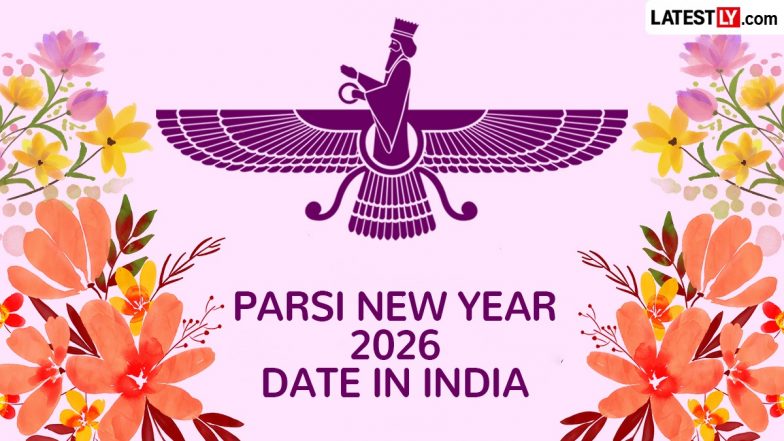
Parsi New Year 2026 Date in India: When Is Navroz Celebrated? History and Significance of the Shahenshahi Calendar Festival
Parsi New Year or Navroz, will be celebrated on Sunday, August 16, following the Shahenshahi calendar. Primarily observed in Maharashtra and Gujarat, the festival features prayers at Fire Temples, festive feasts, and rich cultural traditions. Parsi New Year is a beautiful amalgamation of spiritual reflection, cultural pride, and community bonding.

- Read in
- हिंदी
As the monsoon clouds grace the Indian subcontinent, a unique and culturally rich celebration awaits a significant community. Parsi New Year, fondly known as Navroz (or Nowruz), is a cherished festival that heralds a fresh start for Parsis in India, following the Shahenshahi calendar. This year, mark your calendars for Sunday, August 16, as the Parsi community across Maharashtra and Gujarat, in particular, comes alive with traditional customs and heartfelt prayers. Pateti (the eve/day of repentance) will be observed on Saturday, 15 August 2026.
When Is Navroz 2026 in India?
Unlike the global Nowruz celebrations that typically align with the spring equinox around March 20-21, Parsi New Year in India is observed later in the year. This difference stems from the Parsi community in India adhering to the ancient Shahenshahi calendar, which does not account for leap years. Gatari Amavasya 2026 Date and Time: Know Shubh Muhurat, Rituals and How To Celebrate.
Parsi New Year (Navroz) 2026 Date:
- Date: Sunday, August 16
- Observed By: Parsi community in India
- Calendar Followed: Shahenshahi Calendar
- Primary Regions: Maharashtra, Gujarat
While Navroz is a significant regional holiday, particularly in Maharashtra and Gujarat, it is not a national holiday. It's worth noting that in 2026, Navroz falls on Sunday, August 16, the day after Independence Day (August 15), contributing to a weekend of national and community celebrations.
Because the Shahenshahi calendar does not account for leap years, the Parsi New Year shifts by one day every 4 years. Depending on whether a calendar accounts for the leap day calculation, some sources mark it on August 15 while others list August 16.
History and Significance of Navroz
The word "Navroz" is derived from two Persian words: "Nav" meaning "new" and "Roz" meaning "day", literally signifying "new day". Its roots trace back over 3,000 years to ancient Persia and the teachings of Prophet Zoroaster, the founder of Zoroastrianism. For the Parsi community, who are descendants of Zoroastrians who fled Persia to India to escape persecution, Navroz holds profound spiritual and cultural significance.
It symbolises renewal, rebirth, and the triumph of light over darkness. It's a time for introspection, expressing gratitude for the past year, and making resolutions for the coming one, embracing positivity and letting go of negativity. The festival also commemorates the legendary Persian King Jamshed, who is believed to have introduced the Parsi calendar.
Key Rituals and Traditions
Parsi New Year is a joyous occasion marked by a series of cherished traditions that bring families and communities together:
- Spring Cleaning and Home Decoration: Homes are meticulously cleaned to symbolise clearing away the old year's negativity and inviting prosperity. Entrances are adorned with beautiful
rangolidesigns, fresh flowers, andtorans. - Wearing New Clothes: Families don new traditional attire to mark the auspicious beginning.
- Visiting Fire Temples (Agiary): A central ritual involves visiting the
Agiaryor Fire Temple, where Parsis offer special prayers, including theJashanceremony. Offerings of sandalwood, milk, fruits, and flowers are made to the sacred fire, which symbolises purity and divinity, and blessings are sought from Ahura Mazda. - Haft-Seen Table: Many Parsi households set up a special
Haft-Seentable, similar to Persian traditions, featuring seven symbolic items whose names often begin with the letter 'S' in Persian. These items represent prosperity, health, and happiness, and can includeseer(garlic for health),senjed(dried oleaster fruit for love),serkeh(vinegar for patience), andsamanu(sweet pudding for prosperity). - Festive Feasts: Navroz is synonymous with delectable Parsi cuisine. Families prepare elaborate meals featuring traditional dishes like
Dhansak(a lentil and meat curry),Patra ni Machhi(steamed fish wrapped in banana leaves),Sev(sweet vermicelli), andRavo(a sweet semolina dish), alongside a variety of sweets. - Exchanging Greetings and Gifts: Friends and family visit each other, exchanging greetings of 'Navroz Mubarak' and thoughtful gifts, often welcoming guests with a sprinkling of rose water.
- Charity and Good Deeds: The spirit of generosity is prominent, with many Parsis donating to charities and engaging in social service.
- Pateti: While often confused with Navroz,
Patetiis traditionally observed on the eve of the New Year, serving as a day of repentance for any wrongdoings and a commitment to live by Zoroastrian principles of good thoughts, words, and deeds.
Parsi New Year is a beautiful amalgamation of spiritual reflection, cultural pride, and community bonding. It's a time to mend relationships, embrace fresh perspectives, and spread happiness, echoing the timeless message of new beginnings and harmonious living. Why Is the Flag 'Hoisted' on Independence Day and 'Unfurled' on Republic Day?
Infographic: Parsi New Year (Navroz) 2026 Essentials
| Detail | Description |
|---|---|
| Date 2026 | Sunday, August 16, 2026 |
| Also Known As | Navroz, Nowruz, Jamshedi Navroz |
| Significance | Marks the beginning of a new year as per the Shahenshahi calendar; symbolizes renewal, rebirth, triumph of good, reflection, and gratitude. |
| Key Rituals | House cleaning & decoration, wearing new clothes, visiting fire temples for prayers, setting Haft-Seen table, festive feasts, exchanging greetings & gifts, charity. |
| Regions | Primarily observed by Parsis in India, especially Maharashtra and Gujarat. |
As families gather, Agiaries twinkle with special prayers, and the aroma of traditional Parsi delicacies fills the air, Navroz 2026 promises to be a vibrant testament to a rich heritage and the enduring spirit of new beginnings. Navroz Mubarak to all celebrating!
(The above story first appeared on LatestLY on Aug 10, 2026 06:37 PM IST. For more news and updates on politics, world, sports, entertainment and lifestyle, log on to our website latestly.com).