National Eye Donation Fortnight: 15 Facts About Eye Donation You Should Know
In India, only 10% of eye transplantation demands are met due to lack in availability of corneas.

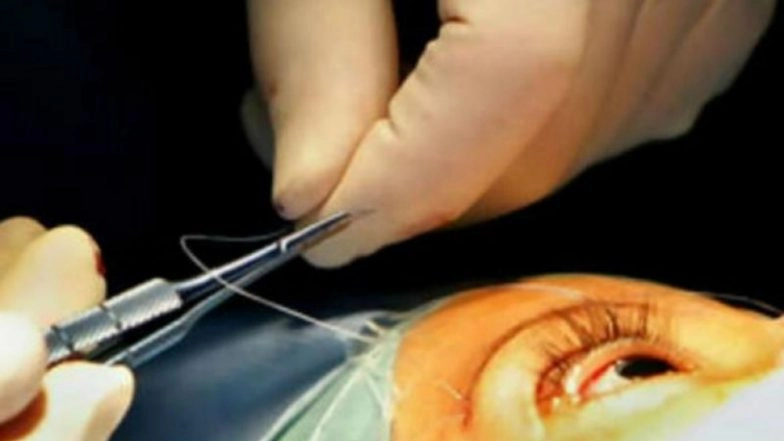
In India, only 10% of eye transplantation demands are met due to lack in availability of corneas. There are over 1.5 million people in India who suffer from Corneal Blindness out of which 80% of cases related to blindness are preventable. Corneal Blindness is one of the most important causes of blindness in India and this can be treated by Corneal Transplantation, but due to lack of Cornea donation, people continue to be on the waitlist.
In observance of National Eye Donation fortnight, which begins on 25th August’2018 and continues till 8th September’2018, we wish to bring forth and highlight the current scenario of eye donation in the country, which requires strong awareness and the willingness of people to come forward and pledge to donate their eyes.
To highlight the importance, here are 15 Facts about Eye Donation that each one of us must be aware of:
- Eyes can only be donated after death
- Eyes can be donated even if the deceased has not pledged to donate his/her eyes
- Donor, as well as recipient identity, is kept confidential
- Patients on the waiting list are given preference only if there is a major emergency
- The donated eyes are matched with the recipients according to the list maintained by Eye Banks
- Only a registered medical practitioner is permitted to retrieve the eyes from the donor, this can also be done by trained eye bank technicians and trained Optometrists, to increase the reach for harvesting more Corneas
- The eyes have to be donated and harvested within 6 to 8 hours of the death
- Eye removal takes only 10-15 minutes and leaves no scar or disfigurement of the face
- One pair of eyes gives vision to two Corneal Blind people, and aid many more if the tissue is used for research or education
- Eye donors can be of any age or sex
- There is no cost involved in organ or tissue donation to the donor or their families
- Eyes of patients who are Diabetic, Hypertensive, Asthmatic and also those without any communicable disease, can also be donated
- Over 90% of all corneal transplant operations successfully restore the corneal recipient’s vision. The recovered vision may not be the same as the original one due to various reasons but can be restored by various other means like contact lenses and suture adjustments
World Organ Donation Day 2018: How Can You Donate Your Organs? 8 Things You Should Know
Conditions that can lead to a corneal transplantation:
Keratoconus: is an eye disease where the normally round, spherical-shaped cornea becomes distorted, resulting in visual impairment. As it progresses, the cornea thins and bulges forward, sometimes forming scars. The success rate for corneal transplants in people with Keratoconus is 95%
Bullous Keratopathy: is a general term for corneal swelling and blistering. It is common in older people. Bullous Keratopathy can occur after an eye surgery like cataract removal. The swelling progresses into fluid-filled blisters on the surface of the cornea. The blisters can burst which would cause immense pain and vision impairment.
Fuchs’ Dystrophy: is a developing disease that affects both eyes, and is more common in women. There are few early signs for this condition in people from the ages 30 to 40, but the disease only affects the vision until a person is in the age group of 50 to 60 years. Cells in the cornea gradually deteriorate, for no apparent reason. As cell deterioration progresses, the cornea swells and eventually distorts vision which can then be treated with a corneal transplant
Herpetic Eye Disease: Herpes simplex virus is the most common cause of corneal blindness in the U.S. An estimated 450,000 Americans develop recurring episodes, and about 46,000 people are affected every year. There are two forms of this eye disease — Varicella-Zoster Cirus and Herpes Simplex type-1. In severe cases, corneal scarring may necessitate a corneal transplant.
According to a study, almost 20,000 new cases of eye blindness are added every year and the majority of those cases are of young people. It is vital to creating awareness of eye donation to a larger audience. It is also critical to understand the need and bridge the gap between the demand and supply of a cornea.
(This article is contributed by Dr Harshvardhan Ghorpade Cornea, Cataract and Refractive Surgeon at Department of Visual Sciences, Hiranandani Hospital Vashi- A Fortis Network Hospital))
(The above story first appeared on LatestLY on Aug 24, 2018 08:10 PM IST. For more news and updates on politics, world, sports, entertainment and lifestyle, log on to our website latestly.com).