Antonio Rattin Dies: Argentina and Buca Juniors Legend Passes Away at 89
Antonio Rattín, the iconic Argentina and Boca Juniors midfielder, passed away on Saturday, July 11, 2026, at 89. Renowned for his distinguished club career with Boca Juniors, where he played 382 matches and won multiple titles, Rattín also captained Argentina at the 1966 World Cup. His controversial sending-off in that tournament against England famously.

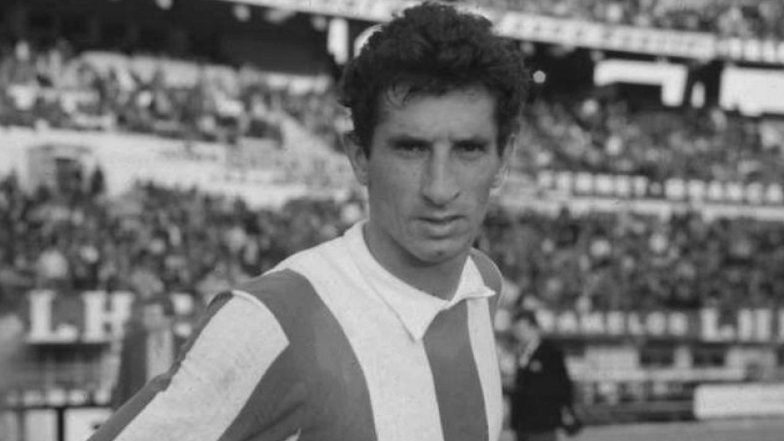
Antonio Ubaldo Rattín, one of Argentine football's most iconic figures, has died at the age of 89. The former Argentina national team captain and an undisputed idol of Boca Juniors passed away on Saturday, July 11, 2026, the Argentine Football Association (AFA) and his beloved club confirmed. Rattín's passing marks the end of an era for a player whose impactful career spanned over a decade and whose defiant act at the 1966 FIFA World Cup famously led to the introduction of yellow and red cards in football. Lionel Messi’s Heated Exchange with Portuguese Referee Joao Pinheiro During Argentina's FIFA World Cup QF Goes Viral (Watch Video).
Antonio Rattin Passes Away
Con mucho pesar, lamentamos el fallecimiento de Antonio Ubaldo Rattín, ídolo y emblema de nuestra Institución.
Acompañamos a su familia y seres queridos en este difícil momento.
Hasta siempre, Rata. 💙💛💙 pic.twitter.com/RYODn1j4r0
— Boca Juniors (@BocaJrsOficial) July 11, 2026
A Boca Juniors Legend
Born on May 16, 1937, in Tigre, Buenos Aires, Rattín spent his entire professional club career with Boca Juniors, a testament to his unwavering loyalty and deep connection with the club's passionate fanbase. From 1956 to 1970, the imposing defensive midfielder, affectionately known as "El Rata" (The Rat), became the embodiment of the Xeneize spirit.
His decorated spell at La Bombonera saw him make 382 appearances and score 28 goals. During his time, Rattín led Boca Juniors to significant domestic triumphs.
Boca Juniors Honours:
Argentine Primera División: 1962, 1964, 1965, Nacional 1969
Copa Argentina: 1969
International Career and World Cup Controversy
Rattín's influence extended to the international stage, where he earned 34 caps for the Argentina national team between 1959 and 1969, scoring one goal. He represented La Albiceleste in two FIFA World Cups, in Chile in 1962 and as captain in England in 1966. Erling Haaland's Father Alfie Haaland Reacts to England’s VAR-Fuelled FIFA World Cup 2026 QF Win Over Norway.
It was at the 1966 World Cup that Rattín etched his name into global football folklore. In the controversial quarter-final clash against host nation England at Wembley Stadium, he was sent off by German referee Rudolf Kreitlein for “verbal dissent” in the 35th minute. Rattín, unable to understand the German referee due to a language barrier, vehemently protested the decision and refused to leave the pitch immediately. His defiant acts included sitting on the red carpet reserved for Queen Elizabeth II and crumpling an English corner flag before eventually being escorted off.
This incident, highlighting communication issues between players and officials, became a catalyst for change. FIFA's refereeing committee, led by Ken Aston, subsequently introduced the universally understood yellow and red card system for cautions and dismissals, which debuted at the 1970 World Cup and remains a cornerstone of the game today.
A Lasting Legacy
After retiring from playing in 1970, Rattín continued his involvement in football, coaching Boca Juniors and their youth teams. He later ventured into politics, serving as a National Deputy for Buenos Aires from 2001 to 2005. Jayden Adams, Who Was Part of South Africa Squad at FIFA World Cup 2026, Dies Aged 25.
The Argentine Football Association expressed its "deepest sorrow at the passing of a historic symbol of Boca Juniors and the national team," while Boca Juniors honored him as "an idol and symbol of our institution. Farewell, Rata." Rattín’s legacy is not only defined by his remarkable talent and leadership on the field but also by his pivotal role in an event that profoundly shaped the laws of the game, cementing his place as an unforgettable figure in football history.
Antonio Rattín's impact on football, both through his exceptional playing career and his indelible mark on the rules of the game, ensures his memory will live on.
(The above story first appeared on LatestLY on Jul 12, 2026 11:52 AM IST. For more news and updates on politics, world, sports, entertainment and lifestyle, log on to our website latestly.com).