Googlebook Launched: Google’s New Gemini AI Laptop To Replace Chromebooks; Check Features, Specs, and Price
Google has unveiled Googlebook, a new AI-first laptop platform built around Gemini and Android, marking its biggest shift beyond Chromebooks in over 15 years. Launching later this year with partners including Acer, Asus, Dell, HP and Lenovo, Googlebook introduces features such as Magic Pointer, deep Android integration and AI-powered personalized widgets.

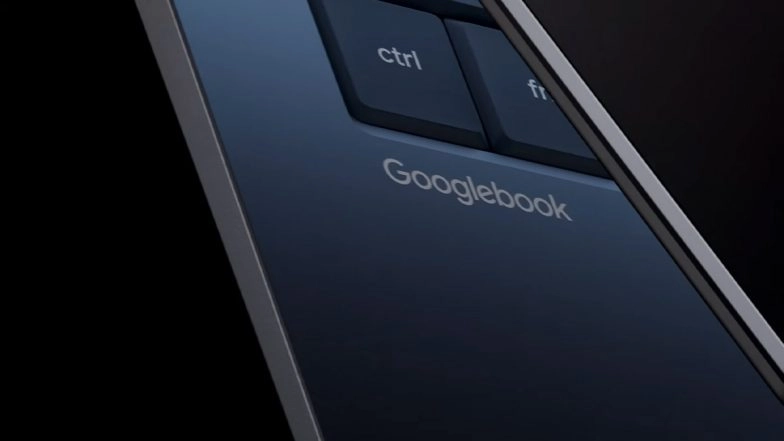
Google on Tuesday, May 12, introduced Googlebook, a new category of AI-focused laptops powered by Gemini, marking the company’s most significant shift in personal computing since the launch of Chromebooks more than 15 years ago.
The company said Googlebook combines elements of Android and ChromeOS into a new AI-centric platform designed around Gemini Intelligence. The first devices, expected to launch later this year, will be developed in partnership with major PC manufacturers including Acer, Asus, Dell, HP and Lenovo. Googlebook is positioned as a premium laptop platform with artificial intelligence integrated directly into core system functions, from navigation and multitasking to file management and app interaction. Google’s GTIG Detects First AI-Developed Zero-Day Exploit Amid Massive Service Outage.
Googlebook Marks Shift Beyond Chromebook Era
Google launched Chromebooks in 2011 as lightweight, browser-focused laptops built around cloud computing. The devices became widely used in schools and workplaces because of their affordability and simplified software experience. With Googlebook, the company is now moving toward what executives described as an “intelligence-first” computing platform.
Although Google has not formally announced the end of Chromebooks, the company acknowledged that Googlebook represents a major evolution beyond ChromeOS. Existing Chromebooks will continue receiving software updates under their current support timelines, and some models may become eligible for a transition to the new experience. Google Down: Thousands of Users in India and Worldwide Report ‘Server Error’ As Search Stops Working.
The move also reflects Google’s broader effort to compete more directly with Microsoft’s AI-focused Copilot+ PCs and Apple’s growing integration of AI features into macOS and iPadOS devices.
Gemini AI Integrated Into Core Laptop Experience
At the centre of Googlebook is Gemini, Google’s flagship family of AI models. Google said the laptops are designed “from the ground up” for Gemini Intelligence, allowing AI to assist users proactively across the operating system instead of functioning as a separate chatbot or application.
One of the headline features is “Magic Pointer,” an AI-powered cursor developed in collaboration with Google DeepMind. According to Google, moving or “wiggling” the cursor activates contextual Gemini suggestions based on what appears on screen. Users can point to a date in an email to instantly create a meeting, or combine images to generate visual previews and ideas.
Google executive Alexander Kuscher described the feature as an attempt to make the cursor “truly smart and intelligent” while keeping AI assistance integrated naturally into workflows rather than interrupting users.
Android Apps and Cross-Device Features
Googlebook is also heavily integrated with the Android ecosystem. The platform allows users to access and interact with apps from their Android phones directly on the laptop. For example, users can open mobile apps such as Duolingo or messaging services without physically switching devices.
Google is also introducing “Quick Access,” a feature that enables users to browse, search and insert files stored on their smartphones directly through the Googlebook file manager without requiring manual transfers.
The laptops are built partly on Android’s technology stack, which Google said would allow faster feature updates and improved compatibility between phones, tablets and laptops.
AI-Powered Widgets and Personalised Dashboards
Another major feature announced is “Create your Widget,” an AI-driven customization tool powered by Gemini. The feature allows users to create widgets and desktop dashboards using natural language prompts. Gemini can pull information from services such as Gmail, Calendar and online search results to build personalised interfaces.
Google demonstrated scenarios such as organizing travel plans, hotel bookings, restaurant reservations and event countdowns into a single dashboard for family trips or business travel.
The company said the feature is intended to make the desktop experience more adaptive and personalised than traditional operating systems.
Hardware, Design and Expected Specifications
Google said Googlebooks will be available in multiple sizes and form factors from different manufacturers, though detailed hardware specifications were not yet announced. The company confirmed that all Googlebooks will feature premium materials and design elements, including a distinctive “Glowbar” integrated into the hardware.
Industry analysts expect the first models to include AI-focused processors with dedicated neural processing units (NPUs), high-refresh-rate displays, long battery life and deep cloud integration similar to premium Windows AI PCs and Apple Silicon laptops.
While Google has not confirmed chipset partners, the devices are expected to support advanced on-device AI processing alongside cloud-based Gemini capabilities.
Price and Launch Timeline
Google has not announced official pricing for Googlebook devices. However, analysts expect the laptops to be positioned above entry-level Chromebooks and compete directly with premium AI PCs from Microsoft, Samsung and Apple. The company said more details regarding specifications, pricing and availability will be shared later this year ahead of the planned fall 2026 launch.
The launch of Googlebook highlights Google’s broader strategy of integrating Gemini across its ecosystem of products and services. Over the past year, the company has embedded Gemini into Android smartphones, Workspace apps, Search and Pixel devices. Googlebook now extends that strategy into personal computing hardware.
The announcement also signals a growing industry shift toward AI-native operating systems, where artificial intelligence becomes embedded into everyday computing tasks rather than existing as a standalone assistant.
(The above story first appeared on LatestLY on May 13, 2026 08:46 AM IST. For more news and updates on politics, world, sports, entertainment and lifestyle, log on to our website latestly.com).