Artemis II Mission: NASA Astronauts Carry iPhones Into Deep Space for First Time on Historic Moon Flight
NASA astronauts aboard the Artemis II mission are carrying their personal iPhones into deep space for the first time, a shift in how the US space agency equips its crews for human spaceflight beyond Earth's orbit.

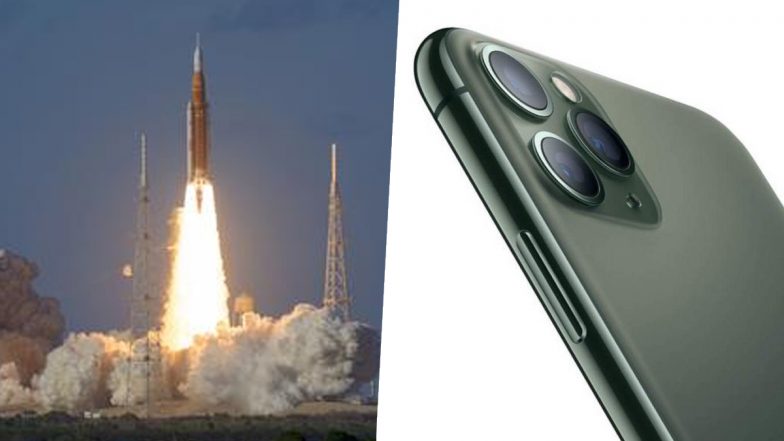
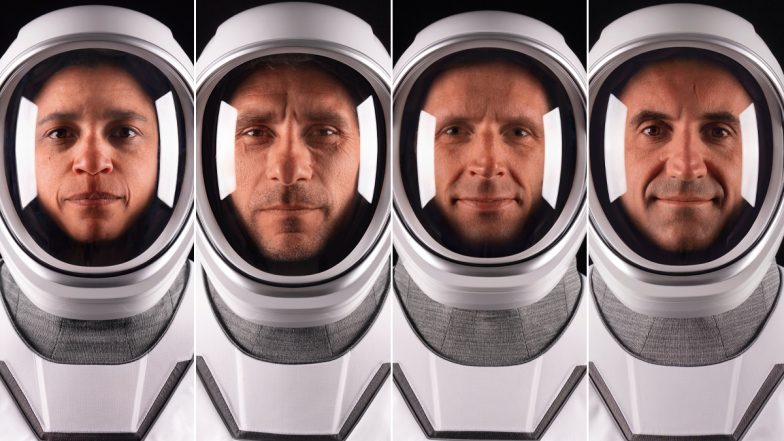
New Delhi, April 2: NASA astronauts aboard the Artemis II mission are carrying their personal iPhones into deep space for the first time, a shift in how the US space agency equips its crews for human spaceflight beyond Earth's orbit. The four-member crew -- Commander Reid Wiseman, Pilot Victor Glover, Mission Specialist Christina Koch, and Mission Specialist Jeremy Hansen of the space agency -- lifted off aboard the Orion spacecraft atop the Space Launch System rocket from Kennedy Space Center in Florida on Wednesday, embarking on a historic 10-day journey to fly around the Moon and back.
The decision to allow personal smartphones was announced earlier this year by NASA Administrator Jared Isaacman as part of a broader push to modernise crew equipment and streamline mission documentation. The move allows astronauts to capture behind-the-scenes moments without relying on bulky, government-issued cameras. "We are giving our crews the tools to capture special moments for their families and share inspiring images and video with the world," Isaacman wrote on X in February. Artemis II Launch: NASA Sends Four Astronauts on First Crewed Moon Mission in Over 50 Years From Florida (Watch Videos).
He added that qualifying modern hardware for spaceflight on an expedited timeline would serve NASA well in future lunar and orbital missions. The devices will operate in Aeroplane mode throughout the deep space leg of the journey to prevent interference with spacecraft systems, effectively serving as high-end cameras. When the crew passes through the International Space Station, astronauts will be able to connect to the station's Wi-Fi to send photos and emails, though voice calls will not be possible. NASA Artemis II Flight Update: Orion Spacecraft Successfully Separates From Rocket Upper Stage As Artemis II Mission Progresses Towards Moon.
The Artemis II mission is humanity's first crewed flight to the vicinity of the Moon in more than half a decade. During the lunar flyby, the crew will capture live imagery of the Moon's surface, observe features not previously visible to human eyes, and witness a partial solar eclipse from their vantage point in deep space.
(The above story first appeared on LatestLY on Apr 02, 2026 01:20 PM IST. For more news and updates on politics, world, sports, entertainment and lifestyle, log on to our website latestly.com).