NASA Artemis II Flight Update: Orion Spacecraft Successfully Separates From Rocket Upper Stage As Artemis II Mission Progresses Towards Moon
The National Aeronautics and Space Administration (NASA) on Wednesday (local time) confirmed the successful separation of the Orion spacecraft from the upper stage of the rocket as part of the Artemis II mission and stated that the "proximity operations" test is currently underway.

- Read in
- हिंदी
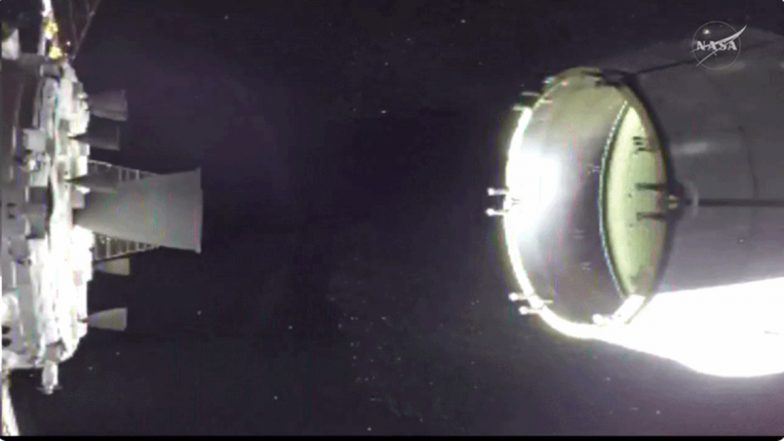
Florida, April 2: The National Aeronautics and Space Administration (NASA) on Wednesday (local time) confirmed the successful separation of the Orion spacecraft from the upper stage of the rocket as part of the Artemis II mission and stated that the "proximity operations" test is currently underway. In a post on X, NASA stated that astronauts aboard Orion are manually piloting the spacecraft in a manner similar to what would be required during docking with another spacecraft, marking a key milestone in the mission.
This development came hours after the successful launch of NASA's Artemis II mission, sending astronauts on a historic journey around the Moon for the first crewed lunar flyby in more than 50 years, since the Apollo 11 mission, which saw the first human landing on the Moon in 1969. The agency's Artemis II mission lifted off aboard the Space Launch System rocket from Launch Pad 39B at the Kennedy Space Center in Florida earlier in the day. NASA Administrator Jared Isaacman described the launch as a defining moment for space exploration, highlighting that the mission marks humanity's return to the Moon for the first time in over five decades and lays the groundwork for future exploration, including missions to Mars. Artemis II Launch: NASA Sends Four Astronauts on First Crewed Moon Mission in Over 50 Years From Florida (Watch Videos).
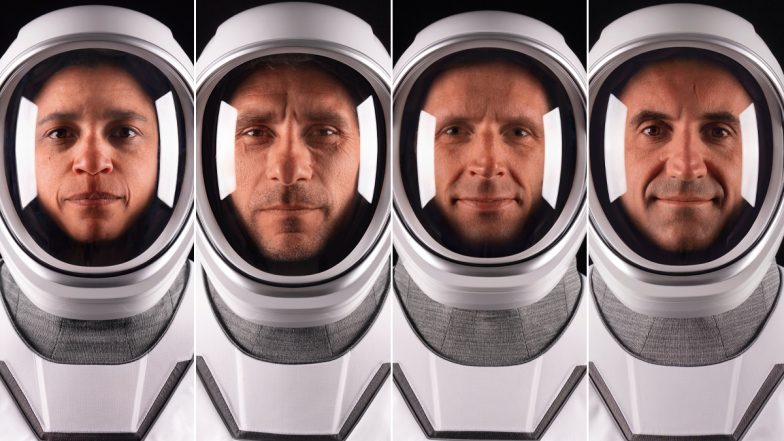
"Artemis II is the start of something bigger than any one mission. It marks our return to the Moon, not just to visit, but to eventually stay on our Moon Base, and lays the foundation for the next giant leaps ahead," Isaacman said. The approximately 10-day mission includes NASA astronauts Reid Wiseman, Victor Glover, and Christina Koch, along with Canadian Space Agency astronaut Jeremy Hansen. Following liftoff, Orion successfully deployed its solar array wings, enabling it to draw power from the Sun, while mission teams began transitioning the spacecraft from launch to flight operations and conducting system checks.
NASA Associate Administrator Amit Kshatriya said the mission is a crucial test flight that will validate the spacecraft's systems and capabilities for future crewed missions to the lunar surface. During the mission, Orion will travel into a high Earth orbit before performing a translunar injection burn to set it on a trajectory around the Moon. The spacecraft will conduct a lunar flyby, allowing astronauts to observe and capture images of the Moon's surface, including parts of the far side rarely seen by humans. NASA Artemis II Launched: Astronauts Reid Wiseman, Victor Glover, Christina Koch and Jeremy Hansen Begin Historic Moon Mission.
Orion Spacecraft Separates From Rocket
🚨 JUST IN
The Orion spacecraft successfully separated from the upper stage of the rocket, and the "proximity operations" test is underway. The Artemis II astronauts are manually piloting Orion similarly to how they would if they were docking with another spacecraft. pic.twitter.com/TKtjeJWOJZ
— STORM NEWS 📰🗞️ (@storm1news) April 2, 2026
The mission also includes deployment of multiple CubeSats from international space agencies for scientific research and technology demonstrations. Upon completion of the lunar flyby, the crew is expected to return to Earth, concluding the mission with a splashdown in the Pacific Ocean. Artemis II is the first crewed mission under NASA's Artemis programme and is expected to pave the way for sustained human presence on the Moon and future deep space exploration missions.
(The above story is verified and authored by ANI staff, ANI is South Asia's leading multimedia news agency with over 100 bureaus in India, South Asia and across the globe. ANI brings the latest news on Politics and Current Affairs in India & around the World, Sports, Health, Fitness, Entertainment, & News. The views appearing in the above post do not reflect the opinions of LatestLY)