Asteroid Spotted Just Hours Before Burning Up Over Australia: Why This Tiny Space Rock Matters
A tiny asteroid measuring up to 5 feet across was detected hours before safely burning up over northwestern Australia. The harmless fireball marked only the 13th time scientists detected an asteroid before atmospheric entry.

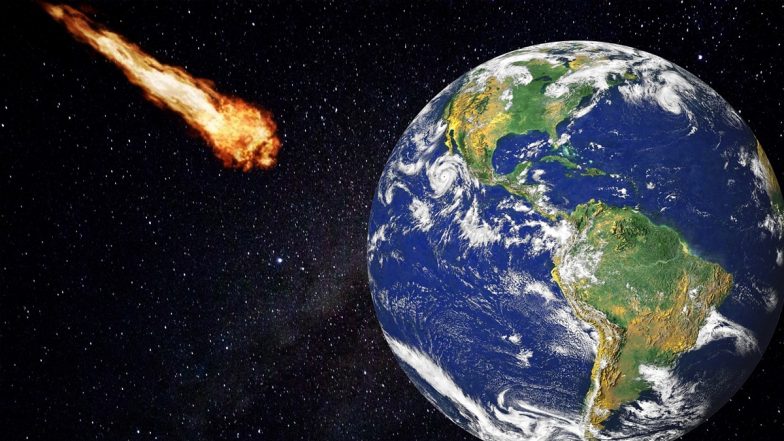
A tiny asteroid entered Earth's atmosphere over northwestern Australia and safely burned up on Sunday, creating a harmless high-altitude fireball, scientists said. The object was detected just hours before its atmospheric entry, offering another example of how astronomers are improving their ability to spot small near-Earth objects before they reach our planet.
The asteroid was estimated to be around 1.5 to 5 feet (0.5 to 1.5 metres) in diameter. Due to its small size, it posed no threat to people, property or infrastructure and completely disintegrated in the atmosphere.
The object entered the atmosphere at around 12:14 p.m. EDT, according to tracking calculations.
How Was The Asteroid Detected?
The asteroid was first reported to the International Astronomical Union's Minor Planet Center by the Catalina Sky Survey in Arizona. NASA Invites ISRO To Join Moon Base Programme As India-US Deepen Space Cooperation.
Astronomers later identified earlier observations of the same object from the Pan-STARRS survey in Hawaii. By combining these observations, scientists were able to establish the asteroid's trajectory and determine where it would enter Earth's atmosphere.
Asteroid Alert: Tiny Space Rock Detected Hours Before Burning Up Over Australia
The object was first reported to the Minor Planet Center by the Catalina Sky Survey, with earlier detections by Pan-STARRS, and the Center for Near-Earth Object Studies @NASAJPL calculated its trajectory and impact location - all funded by NASA's Planetary Defense Coordination…
— NASA Space Alerts (@NASASpaceAlerts) September 6, 2026
Orbital calculations were carried out by analysts at the Center for Near-Earth Object Studies (CNEOS) at NASA's Jet Propulsion Laboratory.
The detection and tracking systems involved in the observation are supported by NASA's Planetary Defense Coordination Office (PDCO), which coordinates efforts to identify and monitor potentially hazardous near-Earth objects.
Did The Asteroid Pose Any Danger?
No. Scientists said the asteroid was far too small to pose a significant ground threat.
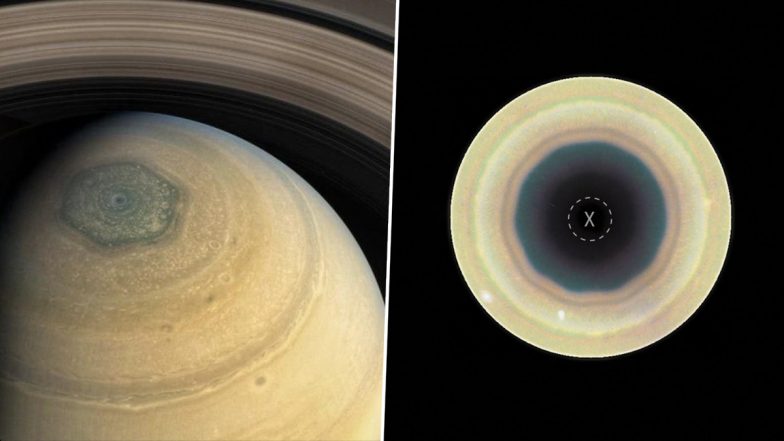
Objects of this size typically break apart and burn up high in Earth's atmosphere. In this case, the asteroid's entry produced a bright but harmless fireball over northwestern Australia. Saturn Has a 10-Sided Mystery: Astronomers Discover Massive ‘Decagon’ Around South Pole.
Despite the lack of danger, such events are closely followed by planetary defence scientists because detecting an object before atmospheric entry demonstrates how quickly monitoring networks can identify and track incoming space rocks.
Why Is Early Asteroid Detection Important?
Detecting an asteroid before it reaches Earth is particularly important when dealing with much larger objects.
Small asteroids can be extremely difficult to spot because of their limited size and the short amount of time they may spend within the range of ground-based telescopes. An early detection allows astronomers to calculate an object's speed, trajectory and likely atmospheric entry point.
These observations also provide real-world tests for early-warning systems, automated orbit calculations and communication protocols used in planetary defence.
While Sunday's asteroid was harmless, the same detection infrastructure could be critical if a substantially larger object were ever found on a collision course with Earth.
Only 13th Pre-Impact Asteroid Detection
The event is particularly notable because scientists have successfully detected an asteroid in space before its atmospheric entry only a small number of times.
According to the information available on the event, this was the 13th known pre-impact asteroid detection.
Most such detections have been made through sophisticated sky-survey programmes and follow-up observations, highlighting the increasing sensitivity of automated telescopes and the speed with which astronomers can process orbital data.
The latest event over Australia therefore serves as more than a spectacular fireball: it demonstrates another step forward in humanity's ability to spot small asteroids before they enter Earth's atmosphere.
(The above story first appeared on LatestLY on Sep 06, 2026 11:29 PM IST. For more news and updates on politics, world, sports, entertainment and lifestyle, log on to our website latestly.com).