Rotten Food, Sex and Politics: What Connects Them?
Some studies have linked disgust sensitivity to socially conservative attitudes.

Some studies have linked disgust sensitivity to socially conservative attitudes. But ahead of the US midterm elections, does disgust shape our politics, or do our beliefs shape what we find disgusting?Some studies have linked disgust sensitivity to socially conservative attitudes. But ahead of the US midterm elections, does disgust shape our politics, or do our beliefs shape what we find disgusting?
Also Read | SpaceX Targets 80,000 US Cell Sites, Intensifying Mobile Carrier Battle.
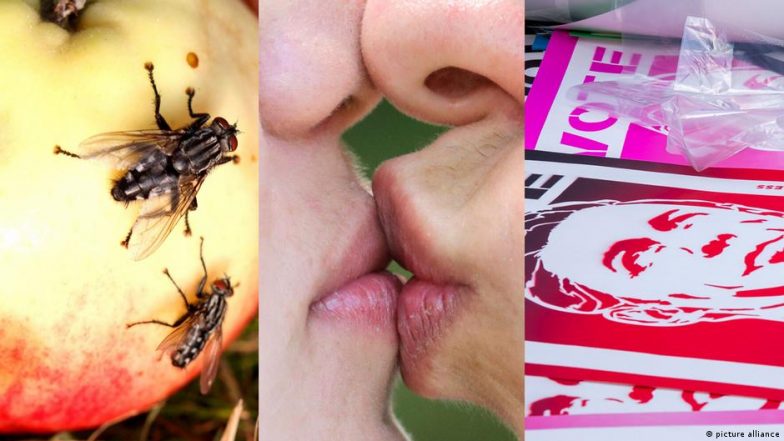
The smell of rotten food can make us recoil. Certain sexual practices can provoke a similar reaction. And in today's polarized political climate, even political opponents can become objects of disgust.
Also Read | Embarrassing Name? How We Live with Names We Don’t Like.
Psychologists have long investigated whether sensitivity to disgust helps explain political beliefs. A review of 24 studies found that people who reported being more easily disgusted tended to hold more socially conservative views.
One explanation begins with evolution.
"We think that it evolved in part to reduce exposure to things that could make you sick," psychologist Yoel Inbar, of the University of British Columbia in Canada, told DW.
What are the three types of disgust?
But disgust is not a single emotion. The Three-Domain Disgust Scale, developed in 2009, distinguishes three types:
Pathogen disgust: Reactions to potential sources of infection, such as rotten food, vomit or bodily waste.
Sexual disgust: Reactions to particular sexual behaviors or situations.
Moral disgust: Reactions to wrongdoing, such as betrayal or cruelty. Researchers debate whether this reflects physical revulsion or moral disapproval.
One theory is that people who are especially wary of germs and disease may also prefer traditional social rules.
Inbar explains that avoiding potential sources of infection can also mean missing out on new experiences.
"Some people are more on the cautious conservative side and some people are more on the exploring risk-taking side when it comes to pathogen exposure," he said.
Indeed, the language of contamination also appears in political rhetoric. During his 2024 presidential campaign, Donald Trump repeatedly described immigrants as "poisoning the blood of our country." Trump has also described himself as a "germaphobe."
Inbar acknowledges that the evidence linking sensitivity to disgust with conservative political beliefs remains uncertain.
"We have hypotheses. I don't know that we have as strong of evidence as I would like," Inbar said.
Do liberals and conservatives feel disgust differently?
Disgust is not exclusively conservative. And what people find revolting can depend on their values.
A 2020 study titled "Is Disgust a "Conservative" Emotion?" found that liberals and conservatives were disgusted by different things.
Conservatives, generally aligned with the Republicans in the US politics, reported greater disgust at examples involving sexual behaviors and drug use, while liberals, generally aligned with the Democrats, reported greater disgust at animal abuse and environmental pollution.
However, when asked how easily disgusted they were in general, there was no clear difference across the political spectrum.
Can our bodies reveal our politics?
Some early studies suggested conservatives showed stronger physical reactions to frightening or disgusting images, measured partly through changes in sweating.
But subsequent research, including a 2020 study by political psychologist Bert Bakker at the University of Amsterdam, struggled to reproduce those findings.
Studies based on questionnaires, however, have generally found that people with more conservative attitudes report being more easily disgusted.
"If bodily reactions don't differ across political groups, why do feelings?" Manos Tsakiris, of Royal Holloway and the Centre for the Politics of Feelings at the University of London, told DW.
How do gut feelings influence political beliefs?
Tsakiris and colleague Mariana von Mohr wondered whether the answer might lie in how people perceive and interpret signals from their bodies.
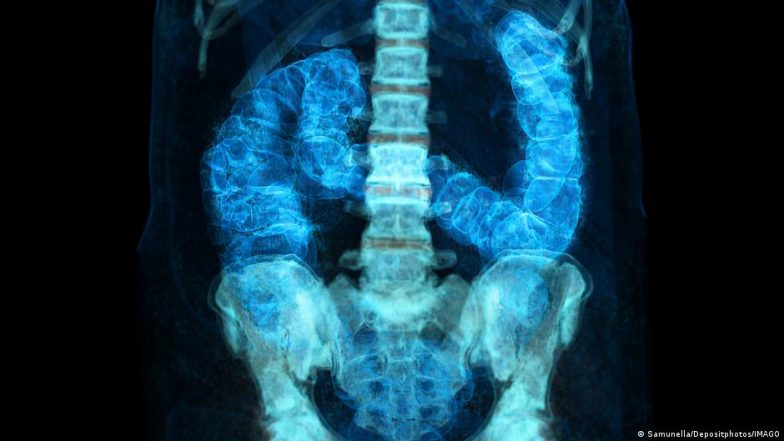
Scientists call the perception of internal sensations, such as hunger, breathing or a racing heart, "interoception." It's sometimes called our eighth sense, alongside the familiar five, plus our senses of balance and body position.
"A bodily signal doesn't arrive with a label attached," Tsakiris told DW. "We have to notice it and make sense of it."
The researchers surveyed 632 US adults, asking how much they noticed and trusted signals from their bodies — a measure known as "interoceptive sensibility."
They found that people who were more easily disgusted by sexual behavior tended to be more conservative, regardless of how aware they felt of their bodies.
But for moral disgust, the link to conservatism was found only among people who reported lower bodily awareness.
What particularly surprised Tsakiris was that perceived bodily awareness alone had no link to political views.
"People who are highly attuned to their bodies were neither more liberal nor more conservative," he said.
Can disgust actually be measured?
Inbar questions whether all forms of disgust are equally useful for studying political attitudes.
He and Joshua Tybur, one of the creators of the Three-Domain Disgust Scale, generally prefer measuring pathogen disgust — reactions to potential sources of disease — rather than sexual disgust.
Questions about sexual disgust may already reflect conservative beliefs about sex.
"It's almost asking people the same thing twice," Inbar said.
The new study found no significant link between pathogen disgust and conservative views.
Inbar wants the findings on bodily awareness and disgust tested again, with predictions set out in advance. For now, he considers them "suggestive at best."
How might politicians exploit feelings of disgust?
Tsakiris suggests that people who struggle to understand their bodily feelings may be more vulnerable to political messages telling them what those feelings mean.
"I know what you're feeling. You're feeling angry or you're feeling disgusted about this thing," he said, illustrating how someone might put an emotional label on another person's unease.
Such labels could influence political behavior, he argues, although the study did not directly test this.
"This is how disgust can do political work: it can turn moral judgments about individuals into judgments about whole groups," he said.
Does disgust influence how people vote?
The research cannot establish whether disgust shapes political beliefs or existing beliefs shape what people find disgusting. Bakker notes that political beliefs can influence how people describe their own personalities, suggesting the relationship could work both ways.
"Voting behavior is very complex and citizens make up their mind about politics in a complex way," he told DW.
Inbar also cautions against exaggerating disgust's importance.
"The thing to emphasize in your story is that the relationship, while it's consistent, is quite small," he said.
"It's one of the many influences on people's politics."
Tsakiris advocates what he calls "critical feeling": questioning our emotional responses to provocative material, including social media posts, just as we question the information itself.
He also emphasizes discussing our feelings with others and listening to different perspectives, even when we disagree.
"Life and politics and democracy is a contact sport," he said.
Edited by: Rosalie Delaney
(The above story first appeared on LatestLY on Oct 26, 2026 02:20 PM IST. For more news and updates on politics, world, sports, entertainment and lifestyle, log on to our website latestly.com).