Early-onset Cancer: Why Cases Are Rising in Under-50s
Across Latin America, early-onset cancer rates have risen, with Chile and Brazil seeing the fastest growth, especially of bowel, breast and cervical cancers.

Across Latin America, early-onset cancer rates have risen, with Chile and Brazil seeing the fastest growth, especially of bowel, breast and cervical cancers. But it is a worldwide trend.The numbers are striking. Some cancer rates have doubled in the past 20 years. It's just not yet clear whether we're seeing a rise in actual cases or whether we're seeing more early-stage cases because of better awareness, diagnosis and treatment in hospitals.
Also Read | How Winning a Nobel Prize Can Give You Delusions of Grandeur.
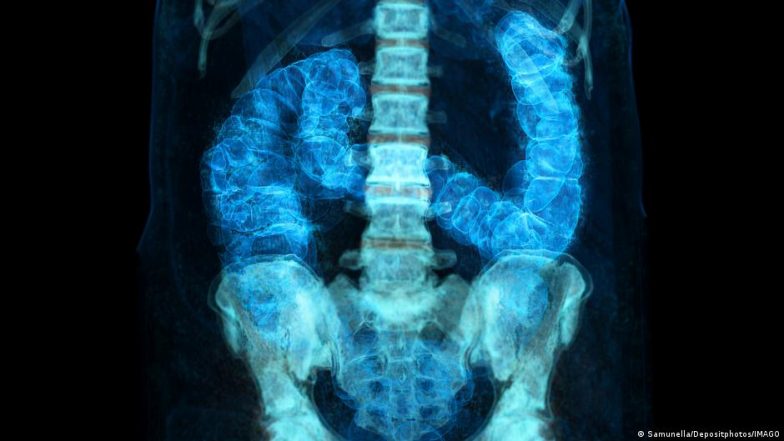
Take, for example, colorectal (or bowel) cancer: In 2001, about one in every 26,000 people under 50 in England were diagnosed with it each year. By 2023, the rate of diagnoses was about one in 12,000. Twice what it was at the turn of the century.
Also Read | Can AI Kill Humans? What Rogue AI Agents Can Actually Do.
That's according to the World Cancer Research Fund (WCRF), an international network of charities, which analyzed registry data from England, the US and the Netherlands. It found the number of new cancer cases had risen for seven cancers in England alone.
So, rates have doubled, but the numbers overall are still small, said Amy Berrington de Gonzalez, a professor of clinical epidemiology at the Institute of Cancer Research in the UK capital London.
"Cancer is still very uncommon among young people," Berrington de Gonzalez told DW. "Three times a small number is still a small number."
But she and other scientists still want to know why this is happening, because it is a worldwide trend. Latin America is a case in point.
Early-onset cancer rates rising in Latin America
A 2025 study analyzed registry data from 50 countries and territories up to 2017. It found early-onset colorectal cancer rising in 27 of those regions.
In Latin America, rates rose in Chile, Argentina, Ecuador, Costa Rica and Puerto Rico. Chile's rise — at almost 4% per year — was among the highest.
In Brazil, the evidence comes directly from hospitals. At the A.C. Camargo Cancer Center in Sao Paulo, the number of colorectal cancer patients under 50 grew by 7.6% per year between 2000 and 2023. That's a five-fold increase.
The number of patients over 50 grew even faster — at 8.1% — or about six-fold.
But since the figures come from a single hospital, they do not show whether cases are rising across Brazil. They may only reflect that this one hospital is treating more patients.
"We need better cancer registration systems," said Berrington de Gonzalez, "especially in countries like Brazil and Mexico, where obesity rates have also been increasing."
Marc Gunter, professor of cancer epidemiology at Imperial College London, said he expected Latin America to follow richer countries as diets there become more Westernized and lifestyles more sedentary. "I think it's already happening," he said.
These six cancers affect young adults most
In another study in 2025, involving 42 countries, Berrington de Gonzalez compared data from two age groups — 20 to 49 years and 50 years and older — between 2003 and 2017.
Six cancers — thyroid, breast, colorectal, kidney, uterine and leukemia — rose among the younger groups in most countries. All but colorectal cancer were seen to rise in older adults, too.
In fact, colorectal cancer stood out. In about a third of the countries, it rose faster in younger adults than in older ones. "It is the one cancer that seems to be increasing in younger people whilst decreasing in older people," said Berrington de Gonzalez.
This has consequences for research. If cancers are rising in all age groups, the causes are likely to be widespread, so studies looking only at young people risk chasing complicated explanations with too little data to test them, she said.
Better awareness could explain the rise in diagnoses
A US study of pancreatic cancer in adults aged 15 to 39 years found the rise was almost entirely made up of early-stage tumors.
Death rates remained unchanged.
The authors said this suggested that instead of the number of cancer cases going up, it was the number of early diagnoses that had gone up. And that can be explained by better awareness in the community, with people getting checked more often.
But the data for colorectal cancer looks different: Some US studies show it rising in advanced stages of the disease as well, which suggests an increase in the number of cases, not just the number of diagnoses.
The link between cancer and obesity
Obesity is an established cause of at least 13 cancers, according to the WHO's International Agency for Research on Cancer (IARC).
According to a 2021 review of existing studies, young adults with obesity were almost twice as likely to develop colorectal cancer before the age of 50.
Obesity has also spread fastest among the young. The WHO reports that obesity rates have doubled among adults since the 1990s and quadrupled among adolescents.
What you consume matters:
Processed meat is classed as carcinogenic
Alcohol is also considered a risk factor
Fiber (vegetables, whole grains and pulses) lowers cancer risk
Some also say ultra-processed foods and microplastics cause cancer. But Gunter said the evidence was inconclusive.
"There's a lot of hype," Gunter said, adding that more research was needed. Berrington de Gonzalez agreed: "Diets have changed, but we don't yet know the role they might play."
How young people can lower their cancer risk
Gunter said individuals should not be blamed for living in societies built around convenience foods and desk jobs, and that lasting change needs public health policy.
But he also said young people can lower their cancer risk by maintaining a healthy weight, moving more, eating more fiber and cutting back on processed meat.
"Going for a walk, being more physically active, eating more fruits and vegetables," he said. "Those things are maybe not so trendy, but they are really important."
For a 30-year-old reading this, Berrington de Gonzalez's message was one of reassurance: Cancer at a young age remains relatively rare.
Edited by: Zulfikar Abbany
(The above story first appeared on LatestLY on Oct 08, 2026 07:40 PM IST. For more news and updates on politics, world, sports, entertainment and lifestyle, log on to our website latestly.com).