Scientists Turn Plastic Waste Into Edible Cookies Using Genetically Engineered Yeast
Researchers at Southern Illinois University Carbondale are developing edible cookies called microbites from plastic waste and agricultural byproducts. Genetically engineered yeast converts broken-down materials into proteins, fats and nutrients, which are shaped into biscuits using 3D printing. The experimental food awaits safety approval before human consumption.

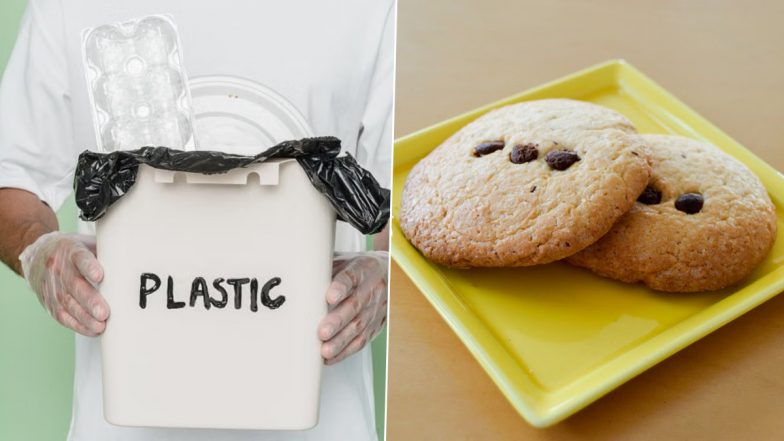
Researchers at Southern Illinois University Carbondale are exploring an unusual method to tackle global pollution and food scarcity by turning discarded plastic bottles and agricultural waste into edible cookies using genetically engineered yeast. The experimental treats, known as microbites, are created by breaking down waste materials into components that microbes can consume and transform into useful nutrients.
The innovative project highlights a radical approach to waste management. As per a report by New Scientist, the research team processes used plastic bottles and sweetcorn stalks through oxidative hydrothermal dissolution, a technique that uses heat to break down tough materials into smaller, manageable chemical components. More Sugar in Fanta, Palm Oil in Maggi: Reuters Report Reveals How Coca-Cola, Nestle and Others Lobbied Against Red Warning Labels in India.
How Genetic Engineering Transforms Waste Into Food
Once the waste is broken down, the resulting components are fed to yeast that has been modified using CRISPR gene-editing technology. This engineered yeast metabolises the material, producing essential proteins, fats, and acids.
The biological process also yields valuable additives like vanilla flavouring and beta-carotene, which the human body converts into vitamin A. Researchers then combine these derived compounds with fibre, starch, and sweeteners, feeding the mixture into a 3D printer to shape the final biscuits.
Commercial Viability And Consumer Perception Challenges
Despite promising aromas that resemble traditional baked goods, the researchers have not yet tasted the microbites, as they await institutional safety approvals. Experts note that scaling this technology for commercial production faces massive logistical hurdles. Viral Video: Humanoid Robot 'Attends' and Dances at Sandwich Shop Opening in Ujjain.
With global plastic production reaching 400 million tons annually, critics argue the method cannot single-handedly solve the wider waste crisis. Furthermore, overcoming psychological stigma regarding artificially derived ingredients and genetically modified organisms remains a significant obstacle for future adoption.
(The above story first appeared on LatestLY on Aug 25, 2026 10:01 PM IST. For more news and updates on politics, world, sports, entertainment and lifestyle, log on to our website latestly.com).