How Winning a Nobel Prize Can Give You Delusions of Grandeur
After being chosen for one of the world's most prestigious awards, some Nobel laureates lose touch with reality and suddenly start spouting unscientific nonsense.

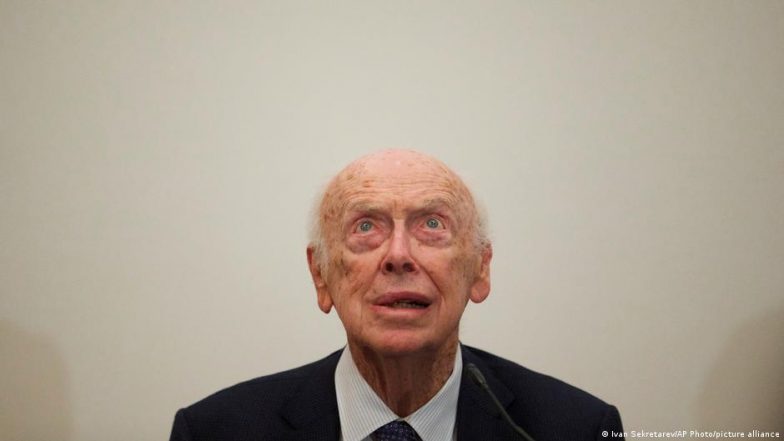
After being chosen for one of the world's most prestigious awards, some Nobel laureates lose touch with reality and suddenly start spouting unscientific nonsense. They're afflicted by what some have called "Nobelitis."Linus Pauling won not one, but two Nobel Prizes — the first, for chemistry, in 1954 for his research into the nature of the chemical bond, and the Peace Prize in 1962 for his work in the anti-nuclear weapons movement.
Also Read | Can AI Kill Humans? What Rogue AI Agents Can Actually Do.
The American chemist not only won two Nobel Prizes, but won them on his own, a rare feat for any scientist. Such an honor often turns laureates into global superstars overnight, with millions hanging on their every word.
Also Read | Elon Musk Reclaims Trillionaire Status After SpaceX Stock Jump.
Nobel laureates can fall victim to Nobelitis
That instant fame can be dangerous, said Nils Hansson, a professor in the Department of History, Theory and Ethics of Medicine at Heinrich Heine University in Düsseldorf. Especially, he said, when these world-renowned experts "start spreading crazy, unproven scientific theories" — ideas that, when disseminated by Nobel laureates, risk being taken seriously.
That's what happened with Pauling. Beginning in the mid 1960s he began claiming that vitamin C was a universal remedy, a cure for everything from cancer to cardiovascular conditions and degenerative diseases like Alzheimer's disease, multiple sclerosis or osteoarthritis.
Pauling developed an alternative treatment he called orthomolecular medicine, based on specific doses of vitamins and minerals for each patient. To this day, some 60 years later, evidence for his methods remains inconclusive.
Pauling's case is a classic example of "Nobelitis," or "Nobel disease" — not an official diagnosis, but an informal term used to describe how some laureates begin to suffer delusions of grandeur later in life. It was first coined by Paul Nurse, president of The Royal Society, the UK's national academy of sciences, and himself a winner of the Nobel Prize.
'Be skeptical of everything'
"Be skeptical of everything, including yourself and your own ideas," Nurse said in a 2019 interview with KU Leuven University in Belgium, when asked what made someone a good scientist. In cases of Nobelitis, that self-skepticism is the first to go.
That was also the case with virologist Luc Montagnier, who was jointly honored in 2008 for his discovery of the human immunodeficiency virus, HIV, with colleague Francoise Barre-Sinoussi in the early 1980s.
Montagnier would later go on to support homeopathic medicine, another alternative treatment of disease and claim that HIV transmission in Africa could be diminished through better hygiene and nutrition.
During the COVID-19 pandemic, Montagnier said the SARS-CoV-2 virus had been created in a lab with parts of the HIV genetic code. "It's difficult for a practicing virologist to say that a Nobel laureate in virology is spreading nonsense," said German virologist Christian Drosten on NDR's Coronavirus Update podcast in May 2020. "But that is utter nonsense."
James Watson, who was never known for his modesty, also let fame go to his head. In 1962, he was awarded the Nobel Prize along with Maurice Wilkins and Francis Crick for their discovery of the structure of the DNA molecule. But in the early 2000s, Watson repeatedly spread racist theories that Black people were less intelligent than white people.
For medical historian Hansson, Watson is a prime example that the Nobel Prize is not automatically awarded to a person who should be considered as a role model.
"You may have made a fantastic discovery, but that doesn't make you a universal genius," he said.
Even Noble Prize winners need to be challenged
But the great expectations of an admiring public may also contribute to the development of Nobelitis. Paul Nurse, who won the Nobel Prize in physiology or medicine in 2001, soon found himself getting daily requests for interviews on all sorts of topics.
"As if suddenly I was acknowledgeable about all workings of the world and of human beings," he told DW.
Nurse had this advice for researchers: "Be careful quite what you say. Talk about things that you do know something about that would be fine. And if you don't know so much or you're not sure about something, be really clear that you're not sure."
Hansson has also noticed that the media eagerly report whatever Nobel laureates say — even when prize winners stray far from their area of expertise.
Nobelitis sufferers are leaders in their fields, and rightly honored for their work with the Nobel. But they're also regular individuals, not immune to megalomania and other behavioral problems — meaning that homeopathy, orthomolecular medicine and other pseudosciences don't automatically become credible just because they're backed by a Nobel Prize winner.
This article was originally written in German.
(The above story first appeared on LatestLY on Oct 07, 2026 03:00 PM IST. For more news and updates on politics, world, sports, entertainment and lifestyle, log on to our website latestly.com).