Donald Trump Shares ‘Trump Strait’ Map As Iran’s 7-Day Strait of Hormuz Proposal Faces Rejection
US President Donald Trump has shared a map of the Strait of Hormuz relabeled as 'Trump Strait', following reports that Washington rejected a seven-day ceasefire proposal from Iran.

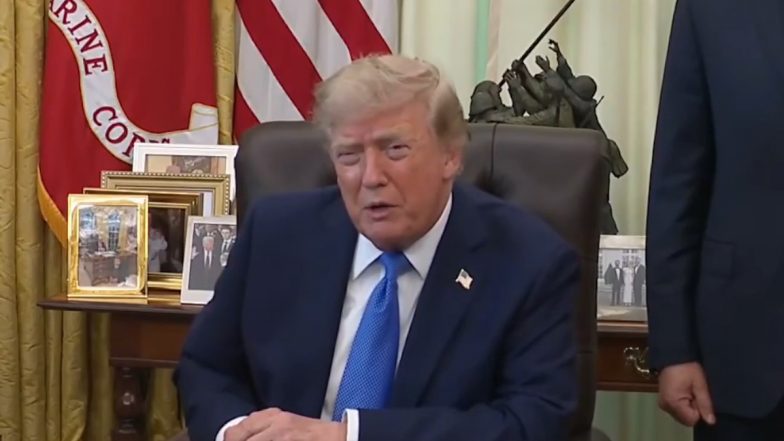
US President Donald Trump has shared a map on Truth Social depicting the Strait of Hormuz under the label “Trump Strait”, shortly after reports said he rejected Iran’s proposal for a seven-day arrangement aimed at reopening the strategic waterway and halting hostilities. The development comes as the Strait of Hormuz remains at the centre of the ongoing US-Iran conflict and growing concerns over global energy supplies.
Iran’s Seven-Day Proposal
Iranian Foreign Minister Abbas Araghchi said Tehran had conveyed a proposal to Washington through Qatari mediators. Under the plan, Iran would reopen the Strait of Hormuz within seven days and resume negotiations on its nuclear programme, provided the US meets a series of conditions. Donald Trump Repeats Claim He Helped End India-Pakistan Conflict, Says Shehbaz Sharif Thanked Him.
Donald Trump Posts Map Showing ‘Trump Strait’ off Iran
New media post from Donald J. Trump
( TS: Sep 25 2026, 8:56 PM ET ) pic.twitter.com/unnQ7EPvvI
— Commentary Donald J. Trump Truth Social Posts On X (@TrumpTruthOnX) September 26, 2026
The reported conditions include an end to the US naval blockade of Iranian ports, relief from sanctions affecting Iranian oil exports and a cessation of hostilities across the region, including Lebanon.
Iran has said the proposal was intended to create a pathway back to diplomacy. Tehran has also indicated that arrangements for the return of international nuclear inspectors could be discussed as part of renewed negotiations. Donald Trump Threatens To ‘Annihilate’ Iran at UNGA, Predicts Deal After Midterm Elections 2026.
Trump Reportedly Rejects Proposal
According to a Wall Street Journal report cited by multiple outlets, Trump rejected the seven-day proposal. The report, based on unnamed US officials, also said Trump had told aides he expected US bombing of Iran to resume after the November congressional elections.
Reuters reported on Saturday that Iran was awaiting an official US response following the reports of Trump's rejection. The Iranian proposal had been presented through mediators, with Tehran saying it could lead to the reopening of the waterway and an end to hostilities.
The White House has separately described US discussions through mediators as positive and constructive, according to reporting cited by the Associated Press, indicating that diplomatic contacts have not entirely stopped.
Trump Shares New Map of Strait
Amid the developments, Trump posted a map of the Strait of Hormuz on Truth Social with the waterway marked “Trump Strait.” The post came after Trump had previously suggested that the strategic waterway could potentially come under US control following the conflict.
The name used in Trump's post does not represent an internationally recognised change to the name of the waterway. The strait remains officially known as the Strait of Hormuz.
US Redirects Commercial Ships
The dispute is also affecting maritime traffic. US Central Command said it had redirected 122 commercial vessels as part of measures connected with the US blockade of Iranian ports, according to figures cited as of September 25.
The continuing disruption has increased uncertainty for shipping operators and energy markets, given the importance of the Strait of Hormuz to international oil and gas trade.
Oil Markets Under Pressure
The Strait of Hormuz is a major global energy chokepoint. Before the current conflict, about one-fifth of the world's traded oil and gas passed through the waterway, according to reporting by the Associated Press.
Oil prices have remained significantly above pre-war levels amid concerns over prolonged disruption. Brent crude was reported above $105 a barrel earlier this week, compared with roughly $72 before the US-Israel war with Iran began. Any sustained disruption to the waterway could therefore affect crude prices, shipping costs, insurance and the wider cost of imported goods.
What Happens Next
The immediate focus is on whether Washington and Tehran can revive negotiations despite the reported rejection of Iran's seven-day proposal. For now, there is no confirmed agreement to reopen the Strait of Hormuz under the proposed framework. The waterway remains a central issue in diplomatic efforts, while military tensions and the potential impact on global energy supplies continue to shape the situation.
(The above story first appeared on LatestLY on Sep 26, 2026 03:57 PM IST. For more news and updates on politics, world, sports, entertainment and lifestyle, log on to our website latestly.com).