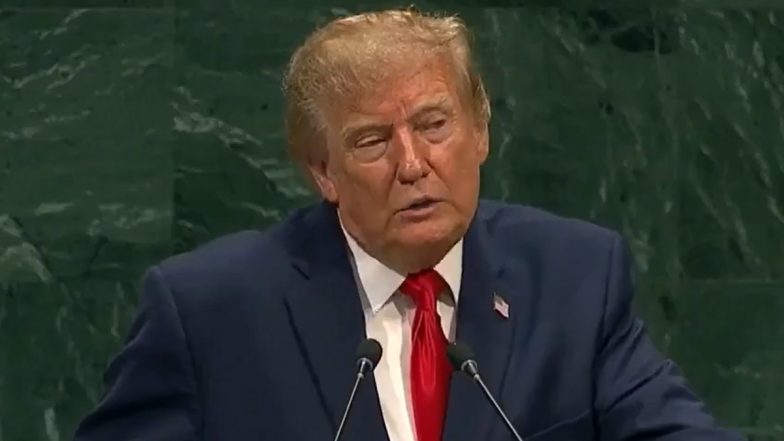
Donald Trump, Xi Jinping Summit Falls Short of Resolving Key Disputes in US-China Ties
A highly anticipated high-level summit between US President Donald Trump and Chinese President Xi Jinping has concluded without achieving breakthrough agreements on major structural disputes, leaving core economic and geopolitical tensions between the world's two largest economies largely unresolved.

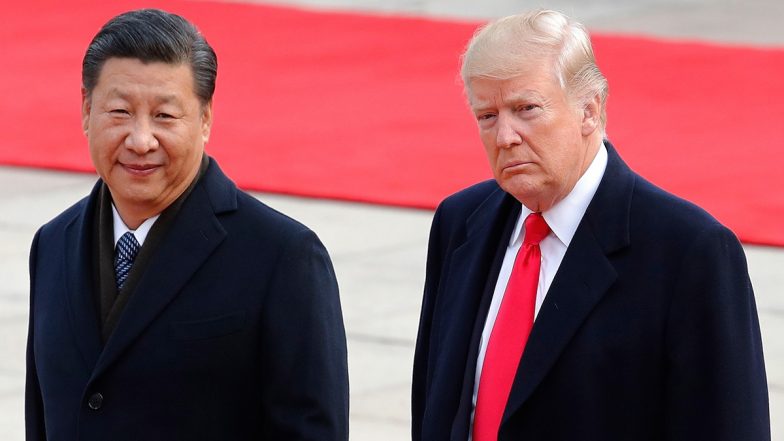
New Delhi, October 2: The summit between Chinese President Xi Jinping and US President Donald Trump in Washington, DC, has helped bring some limited gains in the US-China ties, but has stopped well short of resolving the underlying disputes between the two countries, according to an article in Japan Forward news website.
The two sides extended their existing trade truce, giving them additional time to negotiate, but there was little indication of a broader political settlement. Maritime security in the Indo-Pacific remained largely outside the centre of the discussions, despite growing concerns over China's activities in the South China Sea and around Taiwan, the article observes. Donald Trump Vows to Never ‘Stifle’ AI As Leading Executives Urge Caution.
It highlights that while for Washington and Beijing, the immediate priority was managing their bilateral relationship, for other Asian countries, the more important issue is what that relationship means for their own security and economic choices.
“The current US-China relationship is best described as a period of controlled instability rather than a genuine rapprochement. The two governments have prevented their trade dispute from returning to its most damaging phase,” the article states. Donald Trump Welcomes Xi Jinping to White House for State Visit; Here's What They Discussed.
It points out that several commitments reached earlier this year remain incomplete. China's promised purchases of American agricultural products have fallen short of the $30 billion target, while its commitment to purchase 200 Boeing aircraft remains unrealised. Progress on a proposed bilateral Board of Investment has also been slow, reflecting continuing suspicion over national-security concerns.
The article underscores that China's dominant position in rare-earth processing gives it strategic control of critical minerals which can be used to disrupt global supply chains.
It highlights that while Washington wants greater predictability in Chinese exports, Beijing retains enormous leverage because alternative processing capacity for critical minerals remains limited. Disruptions following China's rare-earth export restrictions have already affected manufacturers in the United States, Japan and Europe.
“For countries such as Japan, India, South Korea and Australia, the lesson has already been absorbed. Each has pursued some form of supply-chain diversification because excessive dependence on a single supplier creates vulnerabilities during periods of geopolitical tension. A US-China agreement on rare earths may reduce immediate uncertainty, but it is unlikely to eliminate the incentive for these countries to develop alternatives,” the article observes.
(The above story first appeared on LatestLY on Oct 02, 2026 02:43 PM IST. For more news and updates on politics, world, sports, entertainment and lifestyle, log on to our website latestly.com).