Robert Mueller Dies: Former FBI Director, Who Investigated Russia-Trump Campaign Ties, Passes Away at 81
At the FBI, Robert Mueller set about almost immediately overhauling the bureau’s mission to meet the law enforcement needs of the 21st century, beginning his 12-year tenure just one week before the Sept. 11 attacks and serving across presidents of both political parties. He was nominated by Republican President George W. Bush.

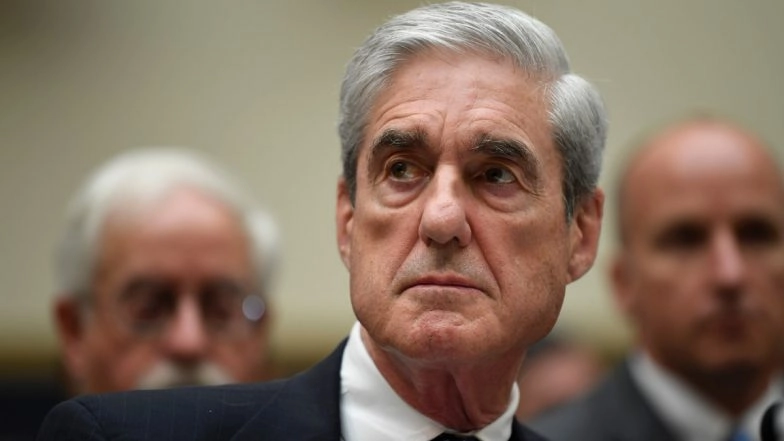
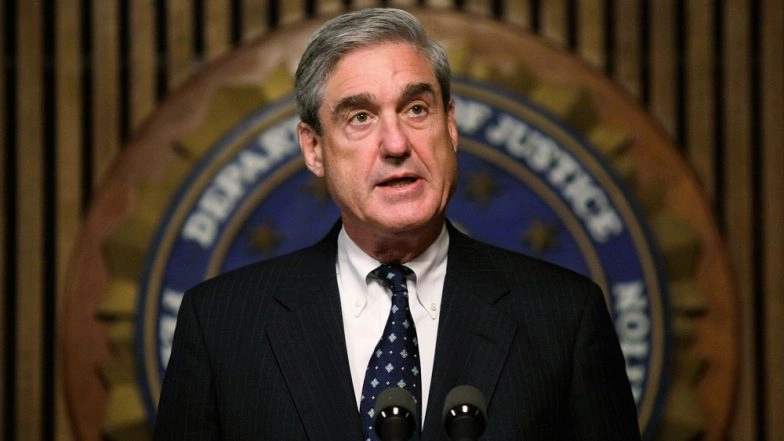
WASHINGTON (ERIC TUCKER), March 21: Robert S. Mueller III, the FBI director who transformed the nation's premier law enforcement agency into a terrorism-fighting force after the Sept. 11, 2001, attacks and who later became special counsel in charge of investigating ties between Russia and Donald Trump's presidential campaign, has died. He was 81. “With deep sadness, we are sharing the news that Bob passed away” on Friday night, his family said in a statement Saturday. “His family asks that their privacy be respected.”
At the FBI, Mueller set about almost immediately overhauling the bureau’s mission to meet the law enforcement needs of the 21st century, beginning his 12-year tenure just one week before the Sept. 11 attacks and serving across presidents of both political parties. He was nominated by Republican President George W. Bush. Donald Trump Slams NATO Allies as ‘Cowards’ Over Iran Conflict, Strait of Hormuz Standoff.
The cataclysmic event instantaneously switched the bureau’s top priority from solving domestic crime to preventing terrorism, a shift that imposed an almost impossibly difficult standard on Mueller and the rest of the federal government: preventing 99 out of 100 terrorist plots wasn’t good enough.
Later, he was special counsel in the Justice Department’s investigation into whether the Trump campaign illegally coordinated with Russia to sway the outcome of the 2016 presidential race. Donald Trump Pays His Respects in Delaware to 6 US Service Members Killed in Middle East.
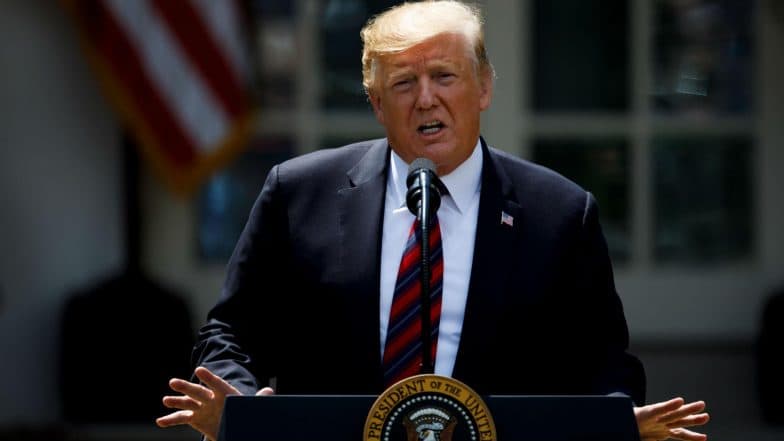
Trump posted on social media about Mueller’s death: “Robert Mueller just died. Good, I’m glad he’s dead.” The Republican president added, “He can no longer hurt innocent people!” The FBI did not immediately respond to a request seeking comment.
A Second Act as an Investigator of a Sitting President
The second-longest-serving director in FBI history, behind only J. Edgar Hoover, Mueller held the job until 2013 after agreeing to Democratic President Barack Obama’s request to stay on even after his 10-year term was up. After several years in private practice, Mueller was asked by Deputy Attorney General Rod Rosenstein to return to public service as special counsel in the Trump-Russia inquiry.
Mueller’s stern visage and taciturn demeanor matched the seriousness of the mission, as his team spent nearly two years quietly conducting one of the most consequential, yet divisive, investigations in Justice Department history. He held no news conferences and made no public appearances during the investigation, remaining quiet despite attacks from Trump and his supporters and creating an aura of mystery around his work.
All told, Mueller brought criminal charges against six of the president’s associates, including his campaign chairman and first national security adviser. His 448-page report released in April 2019 identified substantial contacts between the Trump campaign and Russia but did not allege a criminal conspiracy. He laid out damaging details about Trump's efforts to seize control of the investigation, and even shut it down, though he declined to decide whether Trump had broken the law, in part because of department policy barring the indictment of a sitting president.
But, in perhaps the most memorable language of the report, Mueller pointedly noted: “If we had confidence after a thorough investigation of the facts that the president clearly did not commit obstruction of justice, we would so state. Based on the facts and the applicable legal standards, we are unable to reach that judgment.”
The nebulous conclusion did not deliver the knockout punch to the administration that some Trump opponents had hoped for, nor did it trigger a sustained push by House Democrats to impeach the president -- though he was later tried and acquitted on separate allegations related to Ukraine.
The outcome also left room for Attorney General William Barr to insert his own views. He and his team made their own determination that Trump did not obstruct justice, and he and Mueller privately tangled over a four-page summary letter from Barr that Mueller felt did not adequately capture his report’s damaging conclusion.
Mueller deflated Democrats during a highly anticipated congressional hearing on his report when he offered terse, one-word answers and appeared uncertain in his testimony. Frequently, he seemed to waver on details of his investigation. It was hardly the commanding performance many had expected from Mueller, who had a towering reputation in Washington.
Over the next months, Barr made clear his own disagreements with the foundations of the Russia investigation, moving to dismiss a false-statements prosecution that Mueller had brought against former national security adviser Michael Flynn, even though that investigation ended in a guilty plea. Mueller’s tenure as special counsel was the capstone of a career spent in government.
A Transformation of the FBI Into a National Security Agency
His time as FBI director was defined by the Sept. 11 attacks and its aftermath, as an FBI granted broad new surveillance and national security powers scrambled to confront an ascendant al-Qaida and interrupt plots and take terrorists off the street before they could act. It was a new model of policing for an FBI that had long been accustomed to investigating crimes that had already occurred. When he became FBI director, “I had expected to focus on areas familiar to me as a prosecutor: drug cases, white-collar criminal cases and violent crime,” Mueller told a group of lawyers in October 2012.
Instead, “we had to focus on long-term, strategic change. We had to enhance our intelligence capabilities and upgrade our technology. We had to build upon strong partnerships and forge new friendships, both here at home and abroad.” In response, the FBI shifted 2,000 of the total 5,000 agents in the bureau’s criminal programs to national security.
In hindsight, the transformation was a success. At the time, there were problems, and Mueller said as much. In a speech near the end of his tenure, Mueller recalled “those days when we were under attack by the media and being clobbered by Congress; when the attorney general was not at all happy with me.”
Among the issues: The Justice Department’s inspector general found that the FBI circumvented the law to obtain thousands of phone call records for terrorism investigations.
Mueller decided that the FBI would not take part in abusive interrogation techniques of suspected terrorists, but the policy was not effectively communicated down the line for nearly two years. In an effort to move the FBI into a paperless environment, the bureau spent over $600 million on two computer systems -- one that was 2½ years overdue and a predecessor that was only partially completed and had to be scrapped after consultants declared it obsolete and riddled with problems.
For the nation’s top law enforcement agency, it was a rocky trip through rough terrain. But there were many successes as well, including thwarted terror plots and headline-making criminal cases like the one against fraudster Bernie Madoff. The Republican also cultivated an apolitical reputation on the job, nearly quitting in a clash with the Bush administration over a surveillance program that he and his successor, James Comey, considered unlawful.
He famously stood alongside Comey, then deputy attorney general, during a dramatic 2004 hospital standoff over federal wiretapping rules. The two men planted themselves at the bedside of the ailing Attorney General John Ashcroft to block Bush administration officials from making an end run to get Ashcroft’s permission to reauthorize a secret no-warrant wiretapping program. In an extraordinary vote of confidence, Congress, at the Obama administration’s request, approved a two-year extension for Mueller to remain at his post.
A Marine Who Served in Vietnam Before Becoming a Prosecutor
Mueller was born in New York City and grew up in a well-to-do suburb of Philadelphia. He received a bachelor’s degree from Princeton University and a master’s degree in international relations from New York University. He then joined the Marines, serving for three years as an officer during the Vietnam War. He led a rifle platoon and was awarded a Bronze Star, Purple Heart and two Navy Commendation Medals. Following his military service, Mueller earned a law degree from the University of Virginia.
Mueller became a federal prosecutor and relished the work of handling criminal cases. He rose quickly through the ranks in U.S. attorneys’ offices in San Francisco and Boston from 1976 to 1988. Later, as head of the Justice Department’s criminal division in Washington, he oversaw a range of high-profile prosecutions that chalked up victories against targets as varied as Panamanian dictator Manuel Noriega and New York crime boss John Gotti.
In a mid-career switch that shocked colleagues, Mueller threw over a job at a prestigious Boston law firm to join the homicide division of the U.S. attorney’s office in the nation's capital. There, he immersed himself as a senior litigator in a bulging caseload of unsolved drug-related murders in a city rife with violence.
Mueller was driven by a career-long passion for the painstaking work of building successful criminal cases. Even as head of the FBI, he would dig into the details of investigations, some of them major cases but others less so, sometimes surprising agents who suddenly found themselves on the phone with the director.
“The management books will tell you that as the head of an organization, you should focus on the vision,” Mueller once said. But “for me there were and are today those areas where one needs to be substantially personally involved,” especially in regard to “the terrorist threat and the need to know and understand that threat to its roots.”
Two terrorist attacks occurred toward the end of Mueller’s watch: the Boston Marathon bombing and the Fort Hood shootings in Texas. Both weighed heavily on him, he acknowledged in an interview two weeks before his departure. “You sit down with victims’ families, you see the pain they go through and you always wonder whether there isn’t something more” that could have been done, he said.
(The above story first appeared on LatestLY on Mar 21, 2026 11:49 PM IST. For more news and updates on politics, world, sports, entertainment and lifestyle, log on to our website latestly.com).