Vladimir Putin Is Spending USD 26 Billion Trying To Live Forever: Here’s How Russia’s Longevity Project Works
Russian President Vladimir Putin is backing a massive USD 26 billion state-funded longevity program that aims to slow aging, extend human lifespans and potentially transform the future of medicine through gene therapy, organ printing and advanced transplantation technologies.

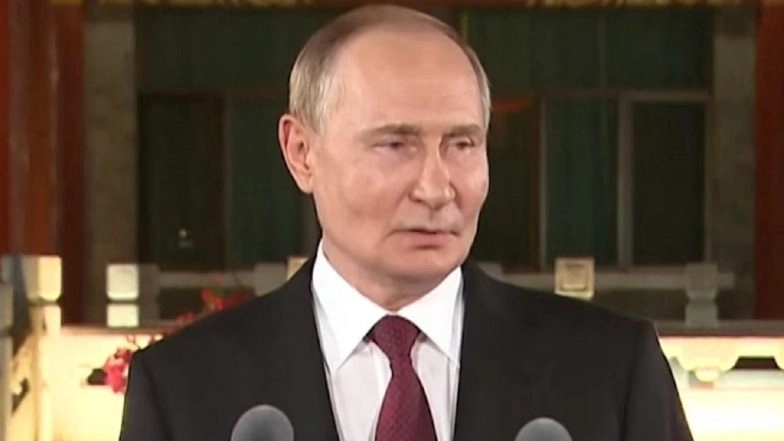
Russian President Vladimir Putin is backing a massive USD 26 billion state-funded longevity program that aims to slow aging, extend human lifespans and potentially transform the future of medicine through gene therapy, organ printing and advanced transplantation technologies.
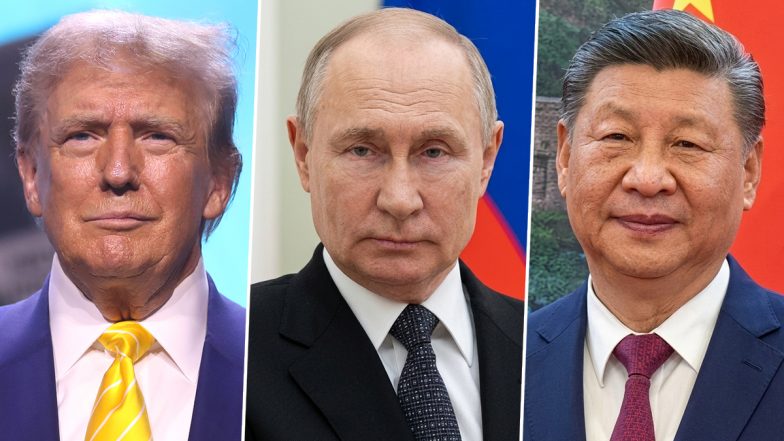
The initiative gained global attention after Vladimir Putin was reportedly caught on a hot mic discussing the possibility of achieving near-immortality through organ replacement during a conversation with Chinese President Xi Jinping at a military parade in Beijing last year. While the project is officially a national health and science program, it has also fueled speculation about Putin's long-standing fascination with aging and longevity.
Known as "New Health Preservation Technologies," the Kremlin-backed initiative seeks to develop breakthrough treatments capable of slowing cellular aging and reducing age-related diseases. Russian officials recently announced that scientists are working on a gene-therapy treatment designed to delay the aging process, describing it as one of the country's most promising medical research projects. Putin Visits China to Reaffirm Russia Ties as Xi Also Seeks Stability with Trump.
A major focus of the program is the creation of replacement organs. Russian researchers are investing in bioprinting technology, which uses 3D printers to create living tissues, and xenotransplantation, a process that involves growing human-compatible organs inside specially bred miniature pigs. Scientists involved in the project have suggested that functional human organ replacement could become possible by 2030.
The longevity drive is being led by several influential figures within Putin's inner circle, including his daughter Maria Vorontsova, an endocrinologist involved in state genetics programs, and physicist Mikhail Kovalchuk, head of the Kurchatov Institute. Both have become key advocates for Russia's anti-aging research agenda. Russian President Vladimir Putin Says India-Russia Cooperation Is Not Aimed Against Anyone, Including US.
Supporters say the initiative could help address one of Russia's biggest demographic challenges. The Kremlin has stated that the program aims to save around 175,000 lives by the end of the decade and improve health outcomes in a country where male life expectancy remains significantly below that of many Western nations.
However, critics question whether the ambitious goals can be achieved. Some scientists argue that many of the project's claims have yet to be supported by extensive peer-reviewed research published in leading international journals. Others warn that Russia's scientific isolation following Western sanctions could make major breakthroughs more difficult.
Vladimir Putin has long cultivated an image of strength and vitality through highly publicized displays of physical fitness, from ice-water plunges and hockey matches to outdoor expeditions. During the COVID-19 pandemic, he also became known for strict health precautions and lengthy isolation protocols, reinforcing perceptions that concerns about health and longevity are deeply personal as well as political.
Whether Russia ultimately succeeds in developing revolutionary anti-aging treatments remains uncertain. But with USD 26 billion committed to the effort, Vladimir Putin's longevity project has become one of the world's most ambitious attempts to push back against aging and explore the possibility of dramatically extending human life.
(The above story first appeared on LatestLY on May 29, 2026 06:34 PM IST. For more news and updates on politics, world, sports, entertainment and lifestyle, log on to our website latestly.com).