
Business News | India's Private Space Sector Enters New Growth Phase, Shifts Focus to Scaling Businesses: Industry Leaders
Get latest articles and stories on Business at LatestLY. India's private space sector is entering a new phase of growth, with the focus shifting from capability building to scaling businesses and expanding the adoption of space-based technologies across the economy, industry leaders said on the sidelines of National Space Day 2026.

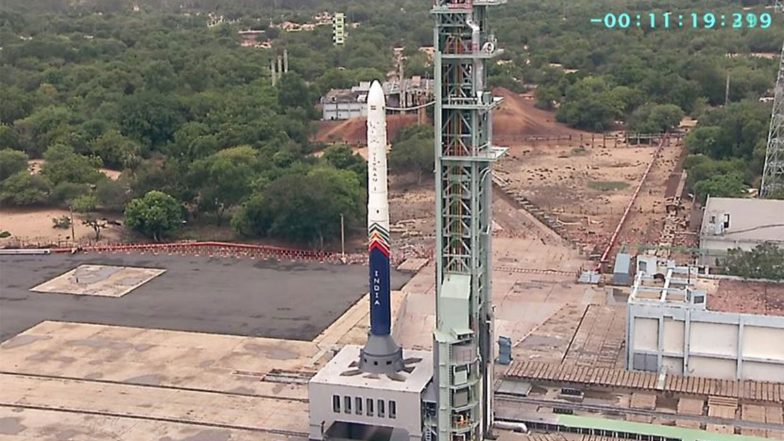
New Delhi, [India] August 23 (ANI): India's private space sector is entering a new phase of growth, with the focus shifting from capability building to scaling businesses and expanding the adoption of space-based technologies across the economy, industry leaders said on the sidelines of National Space Day 2026.
The theme of this year's National Space Day, "Towards Viksit Bharat - Innovating, Collaborating and Aspiring to Global Space Leadership," comes as India's space ecosystem continues to expand, with more than 440 registered space startups and cumulative investment in Indian space startups reaching USD 618.5 million.
Also Read | India at Asian Games 2026 Aichi-Nagoya: List of Indian Participants and Sports They Will Take Part In.
Lt Gen AK Bhatt, Director General, Indian Space Association (ISpA), said India's private space ecosystem has "come a remarkable distance in a relatively short time" and is now moving beyond capability creation towards market opportunities.
"India is emerging as a full-stack space economy, with growing strengths across launch, satellite infrastructure and a range of downstream space applications," Bhatt said, adding that recent successes by private space companies have demonstrated India's ability to build capabilities at a globally competitive level, sending an important signal to investors and international partners.
He said the next phase of growth would be shaped equally by downstream adoption, particularly in Earth observation, satellite communications and geospatial intelligence. These applications are enabling solutions across sectors such as agriculture, climate monitoring, urban planning, disaster management, connectivity and national security.
Krishanu Acharya, CEO and Co-Founder, Suhora Technologies, said the focus of India's private space story needs to increasingly move towards downstream applications.
"India's private space story has largely been told through rockets and launch vehicles, but the more sustainable growth engine is downstream," Acharya said, while pointing to the role of satellite data in surveillance, disaster response and other real-world applications.
Viasat India Managing Director Gautam Sharma said satellite communications has become an important part of the country's infrastructure.
"Satellite communications is no longer a niche capability; it is critical national infrastructure," Sharma said, highlighting its role in defence, disaster response, maritime operations and remote regions that terrestrial networks cannot reach.
Sharma also highlighted the growing collaboration between global companies and India's emerging space ecosystem.
"We are also equally invested in the wider ecosystem taking shape especially with the opening of the space sector. We are working closely with Indian startups, researchers and academic institutions like IIT Hyderabad and IIT Chennai, and combining our global satellite expertise with the country's rapidly maturing talent, helping them build the next generation of technologies from within India," he said.
As India targets an increase in the size of its space economy from about USD 8.4 billion to approximately USD 44 billion by 2033, industry leaders said sustained growth would depend on manufacturing capabilities, robust supply chains, long-term capital, specialised talent and the ability to convert space capabilities into globally competitive businesses. (ANI)
(The above story is verified and authored by ANI staff, ANI is South Asia's leading multimedia news agency with over 100 bureaus in India, South Asia and across the globe. ANI brings the latest news on Politics and Current Affairs in India & around the World, Sports, Health, Fitness, Entertainment, & News. The views appearing in the above post do not reflect the opinions of LatestLY)