
Business News | India's Rice Export Earnings Rise 12.9% in April-August; BIRC to Focus on Policy, Incentives
Get latest articles and stories on Business at LatestLY. India's rice export earnings rose 12.9 per cent to Rs 45,739 crore during April-August 2026, with stable trade policies, accessible incentives and better market access needed to sustain the growth, according to the Indian Rice Exporters' Federation (IREF).

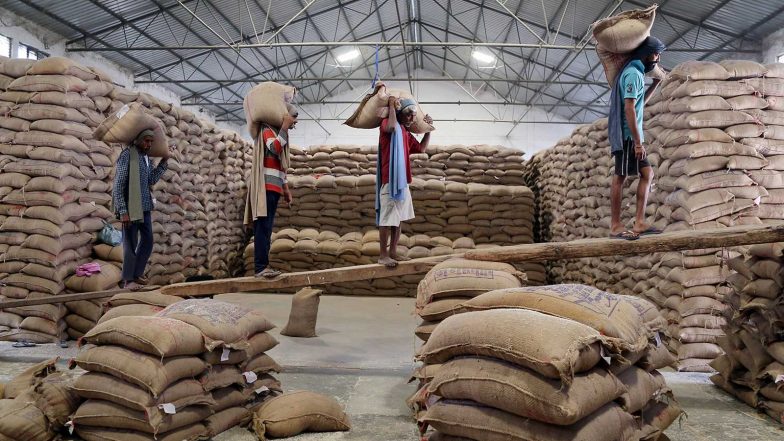
New Delhi [India], October 14 (ANI): India's rice export earnings rose 12.9 per cent to Rs 45,739 crore during April-August 2026, with stable trade policies, accessible incentives and better market access needed to sustain the growth, according to the Indian Rice Exporters' Federation (IREF).
Basmati rice exports contributed Rs 22,864 crore, up 11.6 per cent, while non-Basmati exports reached Rs 22,874 crore, registering growth of 14.2 per cent over April-August 2025, the federation said in a release. The figures reflect growth in export value in rupee terms rather than physical shipment volumes.
Also Read | Emraan Hashmi Escapes Unscathed As Car Flip Stunt Goes Wrong on 'Gunmaaster G9' Set in Bengaluru.
Against this backdrop, the Bharat International Rice Conference (BIRC) 2026, scheduled for October 23-25 at Bharat Mandapam in New Delhi, will examine trade policies, export incentives and opportunities to expand India's presence in international markets.
Dev Garg, National Vice President of IREF, stressed the need to translate policy announcements into benefits exporters can access.
“An incentive matters to an exporter only when it can be accessed, claimed and translated into a real business benefit. Likewise, a trade agreement creates an opportunity only when the exporter understands whether their product qualifies,” Garg said.
“At BIRC 2026, we want to close that gap between policy announcements and practical results—helping businesses enter new markets, manage costs and build dependable export relationships.”
The conference will hold a dedicated session, “Policy Shifts 2026: Trade Schemes, Incentives and Rice Export Opportunities,” on October 24. It will examine support programmes, eligibility requirements, documentation and the process of claiming export incentives.
Discussions will also cover import duties, tariff concessions, trade agreements, government procurement policies and changing import regulations in destination markets.
Bipin Aggarwal, Vice President (Kakinada), IREF, and Director of Andhra Pradesh-based rice exporter CLRK, said policy consistency and timely incentives were crucial for non-Basmati exporters.
“Our industry works on tight margins, and changes in export regulations, freight costs or import duties can directly affect our ability to secure international orders,” he said.
“We need a policy framework that supports long-term export commitments, simplifies access to incentives and helps Indian rice compete in price-sensitive markets across Africa and Asia.”
Meanwhile, IREF said substantial rice reserves were likely to cushion exports against a projected decline in production.
Citing the US Department of Agriculture (USDA), the release said India's rice production is projected to fall from approximately 154 million tonnes in 2025-26 to 147 million tonnes in 2026-27 amid adverse weather conditions.
Government rice stocks have been reported above 38 million tonnes, nearly four times the prescribed October buffer norm of 10.25 million tonnes, according to the release.
IREF expects reserves to remain comfortably above buffer requirements even with a reduction in stocks, supporting domestic food security and export supplies.
The conference session will also examine export credit, insurance, guarantees and warehouse-receipt financing.
A proposed “BIRC 2026 Rice Export Policy Watch” will identify five major policy developments that could influence India's rice trade over the next 12 months, distinguishing between measures already in force, announced changes, proposed reforms and trade agreements under negotiation.
IREF said policy stability and accessible incentives would be critical to diversifying export markets, strengthening India's presence in Africa, Europe and Asia, and encouraging investment in processing, quality improvement and value-added products. (ANI)
(The above story is verified and authored by ANI staff, ANI is South Asia's leading multimedia news agency with over 100 bureaus in India, South Asia and across the globe. ANI brings the latest news on Politics and Current Affairs in India & around the World, Sports, Health, Fitness, Entertainment, & News. The views appearing in the above post do not reflect the opinions of LatestLY)