How Much Sunscreen Should You Apply? The Two-Finger Rule Explained
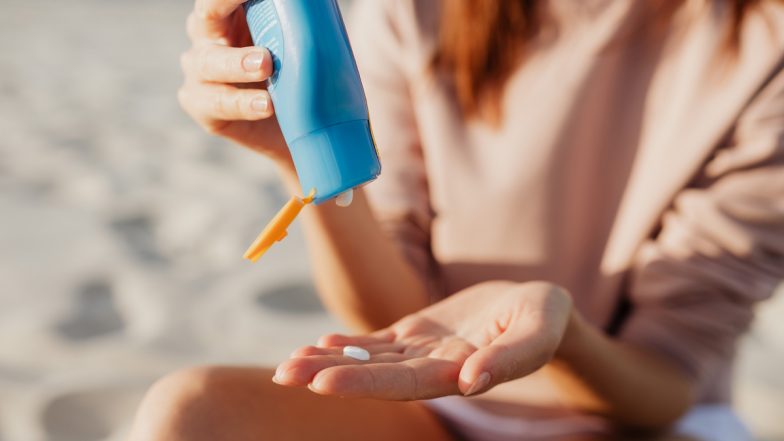
Standard laboratory testing measures sunscreen efficacy at two milligrams per square centimeter of skin. In everyday practice, the most reliable measurement is the two-finger rule: dispensing two full strips of product along the length of the index and middle fingers to cover the face and neck entirely.

Most people treat sunscreen like an umbrella: something to reach for only when heading directly into harsh outdoor elements. Yet, according to dermatologist Dr. Chytra V. Anand, co-founder of SKINQ, UV defense is far more nuanced than simply slathering on lotion before stepping under the open sky. From window-lit living rooms to simmering kitchen stovetops, daily sun protection requires rethinking everyday habits.
The Window Dilemma: Why Indoor Rays Still Count
Sitting near a sunlit window might feel harmless, but standard glass primarily blocks UVB rays—the main culprit behind sunburn. UVA rays, responsible for deep cellular damage, premature aging, and stubborn pigmentation, pass straight through standard windowpanes.
The Exposure Factor: Proximity matters. Sitting directly beside a sun-drenched window yields substantially higher exposure than working in an interior room with minimal natural light.
Visible Light: Ambient and visible light can aggravate hyperpigmentation, particularly for those managing conditions like melasma. Daily application remains a low-effort barrier against subtle, cumulative damage.
Kitchen Heat vs. Sun Protection
Standing over a gas stove in a hot, humid kitchen often triggers facial flushing and flare-ups. While heat does not create pigmentation out of thin air, sustained high temperatures can act as an inflammatory trigger that aggravates existing melasma.
Sunscreen is formulated to filter UV radiation and visible light, not thermal energy. Relying on SPF alone will not neutralize heat exposure. The real defense lies in combining adequate sun protection with practical kitchen adjustments, such as improving ventilation, using exhaust fans, and stepping away from direct stovetop heat whenever possible.
The SPF 30 vs. 50 Debate: Practical Protection on a Budget
Upgrading to SPF 50 is often marketed as mandatory, but a broad-spectrum SPF 30 formula provides roughly 97% protection against UVB rays—making it a dependable, cost-effective choice for daily indoor or low-exposure routines.
While SPF 50 filters marginally more UVB rays (about 98%) and remains the better option for prolonged outdoor activity or hyperpigmentation-prone skin, volume and technique matter far more than the number on the bottle. A generously applied layer of SPF 30 consistently outperforms a pea-sized dot of SPF 50 stretched thin to save money.
Navigating Breakouts in Humid Weather
High humidity often tempts acne-prone individuals to skip sun protection entirely out of fear of clogged pores. Sunscreen itself does not inherently cause acne; rather, heavy, occlusive carriers trapped beneath sweat create the issue.
Look for terms like non-comedogenic, oil-free, and fluid or gel-based.
Lightweight chemical filters or fluid mineral suspensions allow the skin to breathe without sacrificing broad-spectrum coverage.
The Two-Finger Rule and the Reapplication Clock
Standard laboratory testing measures sunscreen efficacy at two milligrams per square centimeter of skin. In everyday practice, the most reliable measurement is the two-finger rule: dispensing two full strips of product along the length of the index and middle fingers to cover the face and neck entirely.
Skimping on volume drastically reduces the SPF rating on the label. To maintain that protective shield throughout the day, reapplication every three hours is key—particularly after sweating, wiping the face, or spending extended periods near bright windows.