
India News | DGCA Likely to Ask Airlines to Randomly Test over 25% of Flight Crew Each Year for Psychoactive Substances Using Urine Samples
Get latest articles and stories on India at LatestLY. The Directorate General of Civil Aviation (DGCA) is set to make it mandatory for airlines to randomly test more than 25 per cent of their flight crew every year for psychoactive substances through urine samples and this testing requirement would apply to all Indian airlines, top official sources said.

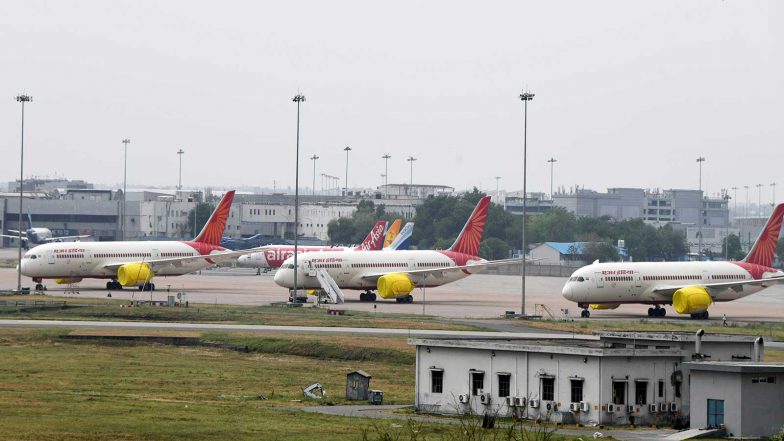
New Delhi [India], August 19 (ANI): The Directorate General of Civil Aviation (DGCA) is set to make it mandatory for airlines to randomly test more than 25 per cent of their flight crew every year for psychoactive substances through urine samples and this testing requirement would apply to all Indian airlines, top official sources said.
They said the pilot of AI-2379 flight between Phuket and Delhi has been de-rostered. The flight experienced a sudden loss of altitude and some passengers were injured.
Also Read | PM Narendra Modi Ranks No 1 in Social Media Performance Report Presented at Cabinet Meeting.
From August 13, Air India has been undertaking full screening of all its group pilots for any substances or medications that are not permitted under prevailing regulations, sources said, adding that Air India is submitting these test reports to DGCA which is looking into it.
The preliminary report of the AI-2379 incident will come out in the next 10 days, the sources said.
Also Read | Vande Mataram Row: Congress Reaffirms 1937 Stand, Says Only First Two Stanzas Will Be Sung.
The DGCA's proposed move comes a day after the Federation of Indian Pilots (FIP) submitted a formal representation seeking the introduction of oral-fluid testing as a complementary method under the existing psychoactive-substance testing framework for pilots.
Under the existing DGCA framework, random urine-based testing is required with at least 10 per cent annual coverage of applicable personnel. The FIP has recommended raising the minimum annual random testing coverage to at least 25 per cent of pilots.
The federation has proposed a risk-based hybrid model in which oral-fluid testing could be used for high-volume, random and airport-based screenings, while urine testing would be retained for situations requiring longer detection windows or specific medical requirements.
FIP has also stressed that detection of a substance should not, by itself, be considered proof of impairment. It recommended that the testing process include initial screening, confirmatory laboratory testing, medical review and final regulatory determination.
The federation has sought a 12-month controlled pilot programme to assess the suitability of oral-fluid testing. It has also recommended a mandatory Pilot Psychoactive-Substance and Medication Awareness Programme, including a "Check Before You Take" approach to educate pilots about prescription, over-the-counter and herbal medicines.
The FIP recommendations came in the wake of the AI-2379 incident, during which the flight reportedly experienced a sudden 300-foot altitude drop over Odisha, leaving 20 passengers and four cabin crew members injured.
The aircraft's reported triple hydraulic failure is separately under scrutiny by the DGCA and the Aircraft Accident Investigation Bureau (AAIB). (ANI)
(The above story is verified and authored by ANI staff, ANI is South Asia's leading multimedia news agency with over 100 bureaus in India, South Asia and across the globe. ANI brings the latest news on Politics and Current Affairs in India & around the World, Sports, Health, Fitness, Entertainment, & News. The views appearing in the above post do not reflect the opinions of LatestLY)