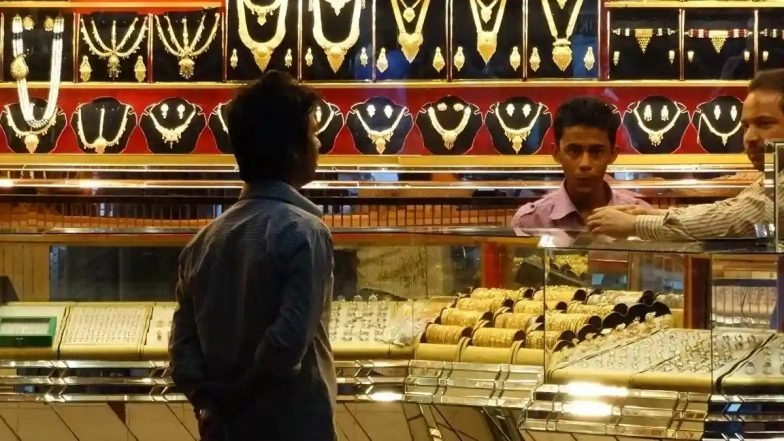
Gold Price Falls INR 6,000 in 2 Days, Silver Drops INR 15,500: What’s Behind the Sharp Decline?
Indian precious metals markets witnessed a significant downturn over the past two trading sessions, with gold plummeting by INR 6,000 per 10 grams and silver shedding INR 15,500 per kilogram on the Multi Commodity Exchange (MCX).

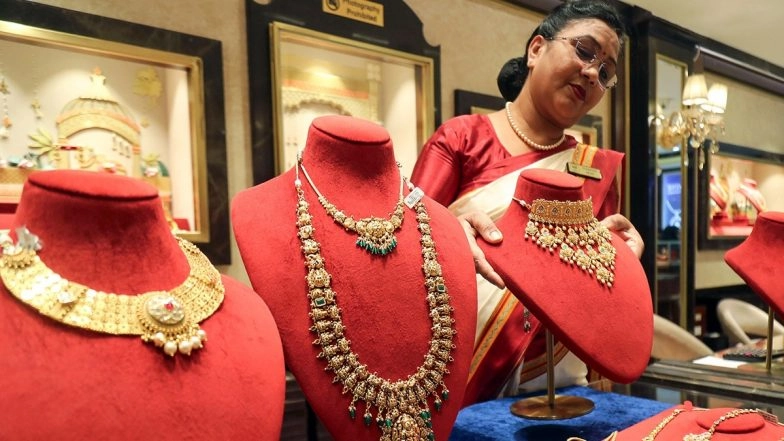
Indian precious metals markets witnessed a significant downturn over the past two trading sessions, with gold plummeting by INR 6,000 per 10 grams and silver shedding INR 15,500 per kilogram on the Multi Commodity Exchange (MCX). This sharp correction is largely attributed to a strengthening US dollar and increasing global expectations of aggressive interest rate hikes, prompting a re-evaluation of non-yielding assets. The sudden drop has stirred market sentiment, raising questions about the immediate trajectory of these traditional safe havens.
The Recent Correction
The sell-off has been pronounced, pushing gold and silver prices to their lowest levels in approximately 12 weeks. On June 24, 2026, MCX gold futures declined by 1.6%, or INR 2,415 per 10 grams, to an intraday low of INR 1,44,114. Silver also saw a substantial drop of 1.8%, or INR 4,176 per kilogram, hitting an intraday low of INR 2,21,658. This two-day cumulative fall underscores a significant shift in the market's perception of precious metals' value amidst evolving macroeconomic indicators. Gold Rate Today, June 25, 2026: Check 22K and 24K Gold Prices in Delhi, Mumbai, Chennai and Other Cities.
Global Headwinds and Monetary Policy Shifts
A primary catalyst for the recent decline is the robust performance of the US dollar, which has surged to a one-year high against a basket of major currencies. A stronger dollar makes dollar-denominated commodities like gold and silver more expensive for international buyers, thereby dampening demand. Compounding this effect are hawkish signals emanating from the US Federal Reserve. While the Federal Open Market Committee (FOMC) maintained the federal funds rate at 3.50%-3.75% at its June 17, 2026 meeting, officials indicated a more restrictive monetary policy outlook. Market participants are now pricing in a 25-basis-point interest rate hike by October 2026, with some analysts, like Bank of America, even forecasting three quarter-point hikes through the remainder of the year. Higher interest rates typically reduce the appeal of non-yielding assets such as gold, as they increase the opportunity cost of holding them compared to interest-bearing investments. Easing geopolitical tensions in the Middle East have also contributed to reduced safe-haven demand for bullion. Dubai Gold Rate Today: 18K, 22K, 24K Gold Prices for June 25, 2026.
Analyst Perspectives and Investor Reaction
Market analysts anticipate continued volatility for both gold and silver throughout 2026. Vedika Narvekar, Research Analyst at Anand Rathi Shares and Stock Brokers, noted that gold remains vulnerable to testing the $4,000/oz support level, with a possibility of retreating towards $3,800/oz if the tightening cycle is more aggressive. However, not all views are uniformly bearish. While retail investors and exchange-traded funds (ETFs) have shown some profit-taking and outflows, central banks globally continue to demonstrate robust buying interest, acting as a significant underlying support for gold prices. In the first quarter of 2026, central banks purchased a net 244 tonnes of gold, surpassing the five-year average, suggesting a structural demand independent of short-term market fluctuations. In India, physical gold demand has been subdued due to seasonal weakness and previously elevated prices, leading to a moderation in purchases of jewellery, bars, coins, and digital gold. The India jewellery market is projected to see slower demand in 2026, with consumers potentially shifting to lighter designs.
Historical Context
Historically, gold prices have shown sensitivity to monetary policy decisions and currency strength. Periods of rising interest rates and a strong US dollar have often coincided with corrections in precious metal values, as seen in various cycles since the 1970s. Market corrections of 15-47% are considered a normal feature of gold bull markets, often clearing speculative excesses and creating new entry points for patient investors, rather than signaling an end to the broader upward trend. The current market dynamics, therefore, reflect a pattern observed in previous cycles where a hawkish monetary stance challenges the appeal of precious metals.
What to Watch Next
The immediate future of precious metal prices will largely hinge on global central bank policies, particularly the Federal Reserve's stance on interest rates. Upcoming inflation data, employment figures, and any shifts in geopolitical stability will provide further direction. While the short-term outlook appears cautious, the long-term fundamentals for gold, supported by central bank diversification and its role as a hedge against systemic risks, continue to draw attention from a segment of the market. Market participants will need to closely monitor these intertwined global economic signals to navigate the evolving landscape of precious metal investments.
(The above story first appeared on LatestLY on Jun 25, 2026 10:15 AM IST. For more news and updates on politics, world, sports, entertainment and lifestyle, log on to our website latestly.com).