Why Is Stock Market Down Today, June 3, 2026?
Indian benchmark equity indices, the S&P BSE Sensex and NSE Nifty 50, experienced a significant downturn in early trading today, reflecting heightened global anxieties and persistent foreign capital withdrawals. The market slump, which saw the Sensex drop over 700 points and the Nifty fall below the 23,300 mark, underscores the immediate impact of escalating US-Iran geopolitical uncertainties and continued selling pressure from Foreign Institutional Investors (FIIs).

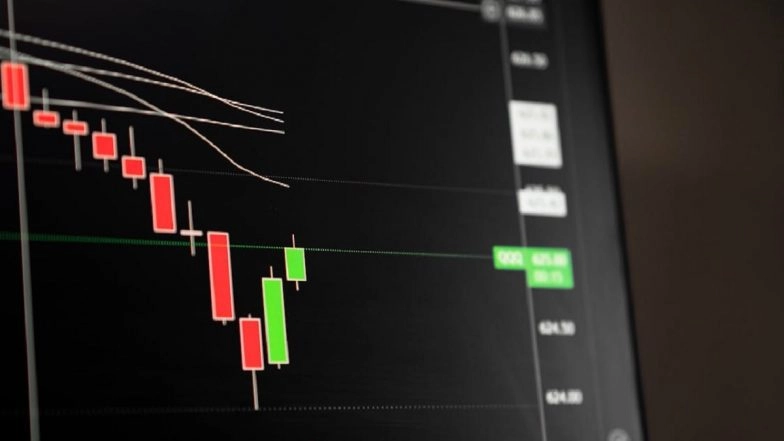
Indian benchmark equity indices, the S&P BSE Sensex and NSE Nifty 50, experienced a significant downturn in early trading today, reflecting heightened global anxieties and persistent foreign capital withdrawals. The market slump, which saw the Sensex drop over 700 points and the Nifty fall below the 23,300 mark, underscores the immediate impact of escalating US-Iran geopolitical uncertainties and continued selling pressure from Foreign Institutional Investors (FIIs).
What Happened
On Wednesday, June 3, Indian stock markets opened sharply lower, with the Sensex declining by nearly 1% and the Nifty 50 following suit. The S&P BSE Sensex commenced trading at 74,507.70, down 0.19%, while the Nifty 50 opened at 23,416, a decline of 0.29%. During intraday trade, the Nifty 50 fell as much as 0.8% to 23,290.45, and the Sensex shed over 700 points to 73,297. This decline came after a brief recovery on Tuesday, which had seen the indices snap a four-day losing streak, buoyed by gains in IT stocks and value buying. The market volatility index, India VIX, initially saw a jump, signalling increased investor apprehension, though some reports later indicated an easing of VIX to around 15-16 levels, suggesting a marginal improvement in risk appetite. Stocks To Buy or Sell Today, June 3, 2026: Adani Ports, Canara Bank and Concord Biotech Among Shares That May Remain in Focus on Wednesday.
Geopolitical Shadows and Crude Oil Spike
A primary catalyst for the current market unease stems from the intensifying geopolitical tensions between the United States and Iran. Recent reports indicate fresh missile and drone strikes between the two nations, further jeopardising efforts towards a potential ceasefire agreement. The conflict, which began in late February 2026, has significantly impacted global energy markets, earning it the moniker "Third Gulf War". Concerns surrounding potential disruptions in the Strait of Hormuz, a critical global shipping route for oil, have pushed crude oil prices higher. On Wednesday, Brent crude rose over 1% to USD 97.05 a barrel, while US West Texas Intermediate (WTI) crude also climbed above USD 94.77. India, a major oil importer, is particularly vulnerable to rising crude prices, which can exacerbate inflation and impact the nation's import bill and currency. The effective closure of the Strait of Hormuz has already led to a substantial reduction in global oil supply, significantly driving up prices for critical fuels like diesel and jet fuel. Stock Market Holidays in May 2026: Full List of BSE and NSE Holiday Dates.
The Foreign Investor Exodus
Another significant factor weighing on Indian equities is the sustained selling by Foreign Institutional Investors (FIIs). FIIs have been net sellers in the Indian market for the eleventh consecutive month in May 2026, with a substantial net outflow of INR 55,963.33 crore. Cumulative net equity investments by foreign investors have plummeted to approximately INR 7.3 trillion as of June 1, 2026, marking a near-decade low since 2016. Analysts point to several global factors contributing to this outflow, including a strong US dollar making American assets more attractive, high crude oil prices impacting India's macroeconomic stability, and a global capital shift towards economies perceived to be more directly tied to the artificial intelligence (AI) infrastructure buildout. While FIIs have been pulling back, Domestic Institutional Investors (DIIs) have consistently provided a counterbalance, absorbing a significant portion of the selling pressure. DIIs recorded a net inflow of INR 82,668.93 crore in May 2026, helping to provide a crucial floor to the market.
Analyst Voices and Market Outlook
Market analysts are closely monitoring the evolving situation. Strategists at Kotak Institutional Equities anticipate muted FPI flows given India's relatively lower attractiveness compared to other emerging markets, especially those with stronger exposure to the AI and semiconductor cycles. Shrikant Chouhan, Head of Equity Research at Kotak Securities, suggests that while the market's short-term structure appears weak, temporary oversold conditions could lead to a technical bounce-back. Despite the current headwinds, some analysts, like those at Motilal Oswal Financial Services, emphasize that historical data suggests geopolitical shocks typically lead to short-term volatility, with markets often recovering within 6 to 12 months unless there are severe disruptions to economic activity or supply chains. The IT sector, despite being a drag on Wednesday, had seen a rebound on Tuesday due to positive commentary from global AI companies, indicating some resilience within specific sectors.
The Path Ahead
Investors will be keenly watching several key events and indicators in the coming days and weeks. The Reserve Bank of India's Monetary Policy Committee meeting (June 3-5), with its decision expected on Friday, will be a critical domestic event, particularly regarding signals on future interest rate trajectory. Progress in the ongoing India-US trade talks in New Delhi (June 1-4) could also provide some positive impetus. Globally, developments in the US-Iran peace negotiations and fresh macro data releases, including EU CPI and US employment figures, will continue to influence sentiment. The trajectory of crude oil prices, the movement of the Indian rupee, monsoon progression, and rural consumption trends will remain crucial for the market's direction.
The current market correction highlights the interconnectedness of global financial markets and India's vulnerability to external shocks. While immediate concerns persist, India's underlying domestic growth story, supported by resilient DII inflows, could provide a cushion against prolonged instability.
Disclaimer: The information provided in this article is based on news reports and is not intended as investment advice. Investing in stocks involves risk. LatestLY advises its readers to consult with a financial advisor before making any investment decisions.
(The above story first appeared on LatestLY on Jun 03, 2026 09:46 AM IST. For more news and updates on politics, world, sports, entertainment and lifestyle, log on to our website latestly.com).