BKC Car Free Fridays: Are Private Cars Completely Banned for Office-Goers?
Mumbai's Bandra Kurla Complex (BKC) has launched a voluntary 'Car-Free Fridays' initiative aimed at encouraging nearly two lakh employees to use public transport. Led by MMRDA and supported by around 90 companies, the campaign seeks to reduce congestion, emissions and parking pressure. Authorities have clarified that participation is voluntary and not a ban on private vehicles.

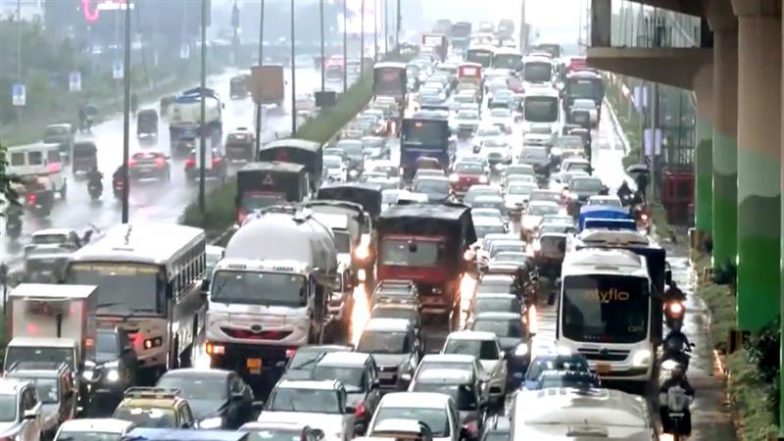
Employees working in Mumbai's Bandra Kurla Complex (BKC) will be encouraged to opt for public transport every Friday under a new mobility initiative aimed at reducing traffic congestion and easing pressure on the city's busiest commercial district. The campaign, spearheaded by the Mumbai Metropolitan Region Development Authority (MMRDA), targets nearly two lakh professionals who commute to BKC daily.
Officials have described the programme as a first-of-its-kind effort for a major corporate hub in India. However, authorities have clarified that the initiative is not a restriction on private vehicles and participation will remain entirely voluntary. Mumbai Water Tanker Strike From June 8: City Faces Fresh Water Supply Concerns Amid 10% Cut.
Are Private Cars Completely Banned for Office-Goers in BKC?
This is an awareness initiative aimed at encouraging more people to consider public transport for their commute and helping reduce congestion, emissions and parking pressure in BKC.
Participation is voluntary. The campaign is focused on promoting sustainable travel choices…
— MMRDA (@MMRDAOfficial) June 6, 2026
BKC Car Free Fridays: Awareness Campaign, Not a Ban
Following questions from commuters about whether the programme would affect senior citizens, people with health conditions or those travelling for medical reasons, MMRDA clarified that the campaign is intended to raise awareness about sustainable transport options rather than impose any mandatory restrictions.
"This is an awareness initiative aimed at encouraging more people to consider public transport for their commute and helping reduce congestion, emissions and parking pressure in BKC. Participation is voluntary. The campaign is focused on promoting sustainable travel choices wherever possible and creating greater awareness about the benefits of public transport." Mumbai Water Crisis: Reservoirs Drop to 15% As Weak Monsoon Forecast by IMD Puts BMC on High Alert.
Officials stressed that employees who need to use private vehicles, including those with medical requirements or other personal circumstances, can continue to do so.
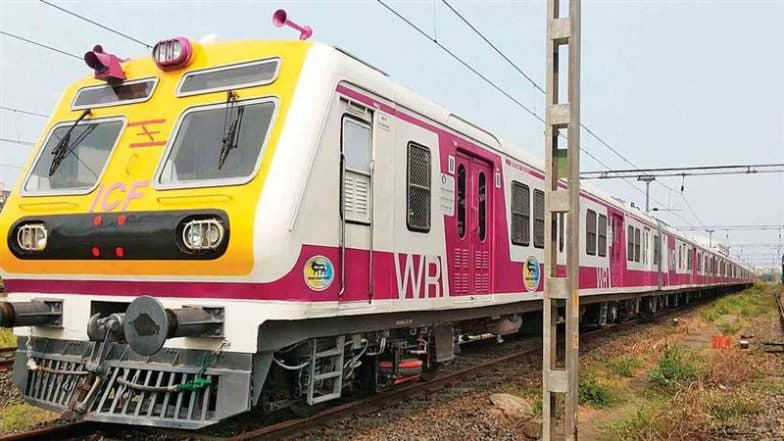
The initiative is being implemented through a partnership involving MMRDA, the Brihanmumbai Electric Supply and Transport (BEST), Mumbai Metro Rail Corporation Limited (MMRCL), Mumbai Traffic Police, auto-rickshaw unions and urban mobility experts from WRI India.
Nearly 90 companies and organisations operating within BKC have extended support to the campaign. MMRDA has also instructed its approximately 2,000 employees and contractual staff to participate wherever feasible.
The programme will be monitored over the next three to four months, with authorities reviewing commuter feedback and operational challenges on a regular basis.
Why Friday Was Chosen
According to officials, Friday was selected after assessing workplace travel patterns. Authorities believe employees generally have more flexibility at the end of the week, with fewer time-sensitive meetings and lower pressure to reach offices at a fixed hour.
Mondays, on the other hand, were considered less suitable due to tighter work schedules and heavier commuter dependence on personal transport.
BKC is already connected through multiple public transport options. The Aqua Line (Metro Line 3) provides direct metro access to the business district, while nearby Bandra and Kurla railway stations serve suburban rail commuters.
BEST currently operates more than 100 bus services in and around BKC every day, carrying an estimated 25,000 to 30,000 passengers. Several feeder routes also connect the railway stations to office clusters within the district. Authorities are additionally working with auto-rickshaw operators to strengthen first-mile and last-mile connectivity.
While transport infrastructure has expanded significantly in recent years, commuting within BKC remains a challenge for many workers.
Several commuters have pointed to difficulties in travelling the final stretch between metro stations, bus stops and office buildings. Limited feeder services, inconsistent auto availability and pedestrian infrastructure gaps continue to discourage wider use of public transport.
Data reviewed during stakeholder discussions showed that 52 per cent of BKC's workforce still relies on private vehicles, taxis and auto-rickshaws for daily travel despite improved metro connectivity. Only 25 per cent currently use public transport regularly, while more than half of commuters spend over two hours travelling each day.
To address these issues, authorities have proposed a series of mobility upgrades. Dedicated turning lanes and U-turn facilities are being planned to improve bus movement and reduce waiting times.
Corporate campuses are being encouraged to open internal access roads to pedestrians, making it easier to move between transport hubs and office buildings.
Long-term proposals include shaded walkways, green canopies, all-weather pedestrian corridors and cooling measures such as mist blowers to improve walking conditions.
Efforts are also underway to improve feeder connectivity from Metro Line 3 stations through better integration with auto-rickshaw and bus services.
Authorities are also seeking support from employers to encourage behavioural change. A commuter survey found that 82 per cent of respondents would consider switching to public transport if services became more reliable and better integrated.
Participating companies are being encouraged to offer incentives such as reimbursement of commuting costs, employee reward programmes and workplace recognition initiatives for those who regularly choose public transport.
Officials hope the campaign will help reduce congestion, lower vehicle emissions and improve commuting efficiency in one of Mumbai's most crowded business districts.
The initiative's long-term success, however, is likely to depend on whether improvements in last-mile connectivity and commuter convenience can persuade more office-goers to leave their cars behind voluntarily. If successful, the BKC experiment could serve as a model for similar mobility initiatives in other commercial centres across Mumbai and beyond.
(The above story first appeared on LatestLY on Jun 08, 2026 08:43 PM IST. For more news and updates on politics, world, sports, entertainment and lifestyle, log on to our website latestly.com).