Creamy Layer Status Cannot Be Decided by Income Alone: MP High Court
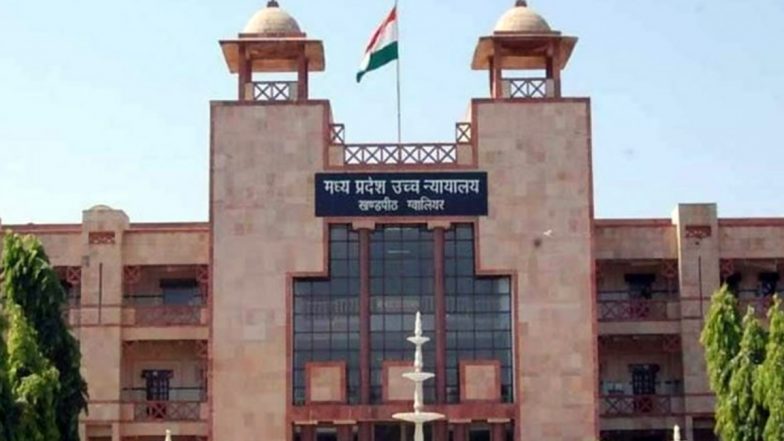
The Madhya Pradesh High Court's Gwalior Bench has set aside orders denying an Other Backward Classes (OBC) certificate to a woman applicant after finding that her creamy layer status could not be determined solely on the basis of her father's salary income.


The Madhya Pradesh High Court's Gwalior Bench has set aside orders denying an Other Backward Classes (OBC) certificate to a woman applicant after finding that her creamy layer status could not be determined solely on the basis of her father's salary income. Justice Milind Ramesh Phadke passed the order on September 29, 2026, in a petition filed by Ragini Rathore, who had challenged the rejection of her OBC certificate application. The court directed the competent authority to reconsider her case afresh.
The dispute arose after the Sub-Divisional Officer (Revenue), Isagarh, rejected Rathore's OBC certificate application in October 2020. The rejection was based on her father's gross salary income of Rs 16,99,282 for the preceding three years, which authorities considered to be above the prescribed creamy layer income ceiling. Rathore subsequently challenged the decision before the Additional Collector, Ashoknagar. Her appeal was dismissed in November 2022, with the authorities maintaining the same income-based reasoning.
Court Examines Parents' Service Status
Before the High Court, Rathore argued that the authorities had mechanically applied the income criterion without examining her father's employment status and the applicable rules governing OBC creamy layer determination. According to her petition, her father had initially been appointed as a Civil Judge Class-II and was promoted to Civil Judge Class-I on June 16, 2008, after attaining the age of 40.
She also submitted that her father had no source of income other than his salary and that she was unemployed and dependent on her parents. The petitioner relied on the Supreme Court's March 2026 judgment in Union of India & Others v. Rohith Nathan & Others, which held that parental salary income cannot by itself determine whether an OBC candidate falls within the creamy layer. The Supreme Court said the status and category of the post held by a candidate's parents must also be considered.
MP High Court Sets Aside Earlier Orders
The Gwalior Bench observed that the controversy could not be resolved simply by looking at the amount of salary received by the petitioner's father. The court noted that the authorities had not properly examined the relevant government circulars, the father's service status, the date of his promotion and the principles laid down by the Supreme Court. It therefore set aside both the SDO's rejection order and the Additional Collector's appellate order.
The matter has now been remanded to the competent authority for fresh consideration. The authority has been directed to examine the applicable circulars, the father's service particulars, the nature of his income and the binding judicial precedents. The court also directed the authority to pass a reasoned order, preferably within six weeks, after giving the petitioner an opportunity to be heard. Importantly, the High Court clarified that it had not expressed any final opinion on whether Rathore was actually entitled to an OBC certificate.
Supreme Court Ruling Forms Key Background
The Madhya Pradesh High Court's decision comes against the backdrop of the Supreme Court's March 2026 ruling on OBC creamy layer determination. In that case, the Supreme Court held that creamy layer status cannot be determined solely through parental income. It said the status and category of the post held by the parents are also relevant under the framework governing OBC reservation.
The Supreme Court's ruling arose from cases involving OBC candidates who had cleared the Civil Services Examination but were denied reservation-related benefits after authorities classified them as creamy layer primarily on the basis of parental income. The court upheld decisions of the Delhi, Madras and Kerala High Courts and directed the Centre to reconsider the affected candidates' claims in accordance with the principles laid down in its judgment.
The latest Madhya Pradesh High Court order similarly emphasises that authorities must examine the applicable status-based criteria and relevant service details rather than relying on an income figure in isolation. For Rathore, however, the issue remains open. The competent authority will have to reconsider her application and determine her eligibility under the applicable OBC rules.
(The above story first appeared on LatestLY on Oct 01, 2026 08:52 PM IST. For more news and updates on politics, world, sports, entertainment and lifestyle, log on to our website latestly.com).