Does Saying 'Maro Sale Ko' During a Fight Show Intent To Kill? Delhi High Court Answers
The Delhi High Court has acquitted Mukesh Kumar in a 1983 DTC bus murder case after his appeal was pending for 22 years. The court ruled that shouting 'Maro Sale Ko' during an altercation implies an intent to hurt, not kill, and fails to prove common intention. It also flagged unreliable witness identification and a lack of evidence.

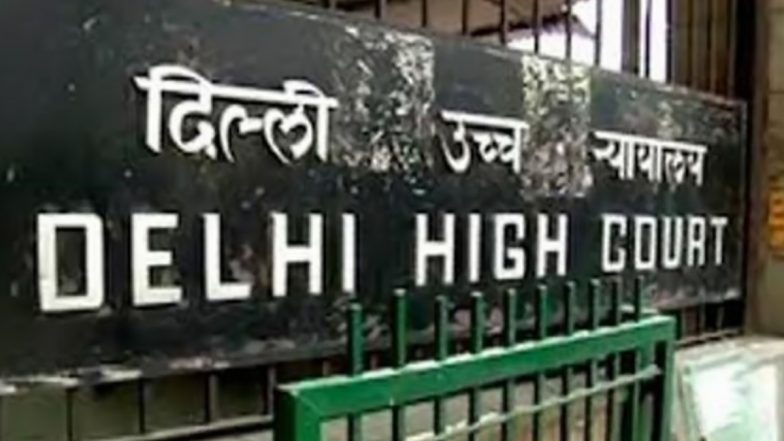
The Delhi High Court has acquitted a man convicted in a 42-year-old murder case, ruling that uttering the phrase "Maro Sale Ko" during a sudden altercation is insufficient to establish a common intention to kill. A Division Bench of Justices Navin Chawla and Ravinder Dudeja overturned a 2004 trial court judgment that had sentenced the accused, Mukesh Kumar, to life imprisonment for a fatal stabbing inside a Delhi Transport Corporation (DTC) bus in 1983.
The High Court extended the benefit of doubt to Kumar, clarifying that the colloquial use of the word "maro" can mean to beat rather than to commit murder. “The use of the words ‘Maro Sale Ko’ by themselves also does not imply the intention to kill; they can also be attributed to the intention to hurt,” the Bench observed. IAF Viral Video Soldier Dismissal: Delhi High Court Upholds Ouster of Airman Sachin Kumar Solanki Over Disparity Claims.
Altercation on Route 431 Led to Fatal Stabbing
The case originated from an incident on December 1, 1983, inside a DTC bus travelling on route number 431. According to the prosecution, a group of young men began misbehaving with two women passengers. When a passenger named Vinod Kumar and his friends intervened to protect the women, a violent confrontation broke out inside the moving vehicle.
During the scuffle, co-accused Balvinder Singh allegedly drew a knife and stabbed Vinod Kumar, who later succumbed to his injuries. The prosecution alleged that Mukesh Kumar, positioned at the rear of the bus, actively instigated the attack by shouting “Maro Saale Ko". Following an investigation, Delhi Police arrested four individuals, charging them with murder and attempt to murder under the Indian Penal Code (IPC).
High Court Flags Weak Identification and Conflicting Testimony
In its review, the High Court found major discrepancies in how the accused was identified. During the initial investigation, the arrested men had refused to participate in a Test Identification Parade (TIP), arguing that the eyewitnesses had already seen them while in police custody. The Bench noted that because substantial evidence indicated the witnesses had viewed the suspects before the formal identification parade, the subsequent identification of Kumar in court became legally unreliable. Furthermore, two key eyewitnesses admitted during cross-examination that they did not actually see the specific individual who shouted from the back of the bus. The bus conductor, who was positioned near the rear, also failed to support the prosecution’s version of events.
Prosecution Failed to Prove 'Common Intention'
A central focus of the appeal was whether Kumar could be held liable for murder under Section 34 of the IPC, which establishes criminal liability for acts done by multiple individuals in furtherance of a "common intention". The High Court emphasised that no weapon was ever attributed to Kumar, and his alleged involvement was restricted entirely to the verbal shout. The Bench noted that the prosecution failed to provide evidence that Kumar had a prior plan with the principal assailant or even knew that the other men were carrying knives. Supreme Court Clears Vinesh Phogat for Asian Games Trials, Upholds Delhi High Court Order.
Citing established legal precedent, the court reiterated that verbal exhortation is inherently weak evidence because of the common tendency to falsely implicate bystanders during a public brawl. With his conviction and life sentence set aside, Kumar was cleared of all criminal charges after his appeal remained pending before the High Court for 22 years.
(The above story first appeared on LatestLY on Jun 20, 2026 03:12 PM IST. For more news and updates on politics, world, sports, entertainment and lifestyle, log on to our website latestly.com).