No Valid Driving Licence? Insurers Not Liable To Pay Accident Compensation, Says Supreme Court
The Supreme Court has held that insurance companies cannot be made liable to pay accident compensation when the driver at the wheel did not hold a valid driving licence at the time of the crash. The ruling came on Thursday as the Court set aside a Punjab and Haryana High Court order that had fastened liability on an insurer despite the driver's licence having expired.

The Supreme Court has held that insurance companies cannot be made liable to pay accident compensation when the driver at the wheel did not hold a valid driving licence at the time of the crash. The ruling came on Thursday as the Court set aside a Punjab and Haryana High Court order that had fastened liability on an insurer despite the driver's licence having expired.
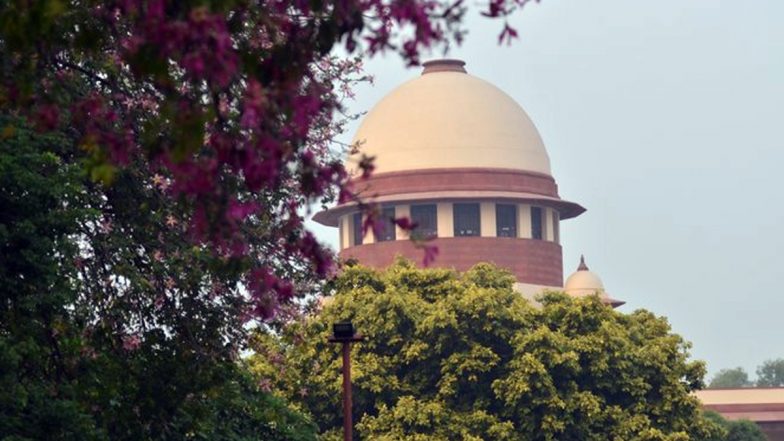
A bench of Justice Sanjay Karol and Justice Nongmeikapam Kotiswar Singh delivered the verdict while hearing an appeal filed by Reliance General Insurance Company Ltd. The Court ruled that once it is established that the driver lacked a valid licence, the insurer's liability abates, and the burden shifts to the vehicle owner and the driver.
The Case
The matter arose from a road accident on October 14, 2009, in which a vehicle struck a two-wheeler. The Motor Accidents Claims Tribunal had found that the driver did not possess a valid licence at the time of the accident and had directed the owner and driver to pay compensation of INR 86,95,947. Supreme Court Can Never Deny Hearing of Any Case, Says CJI Surya Kant; Clarifies 'Don't Waste Our Time' Remark.
The Punjab and Haryana High Court later reversed that finding. It relied on a communication from the Motor Licensing Officer, which cited a "technical error" during data transfer to an outsourced agency, resulting in the loss of records for 2007 to 2010. On this basis, the licence was certified as valid for that period, and the High Court held the insurer liable to pay the compensation.
Reliance General Insurance challenged this finding before the Supreme Court.
What the Supreme Court Found
Setting aside the High Court's decision, the judgment authored by Justice Karol concluded that the driver's licence had in fact expired, and that it was renewed only in 2010 after payment of a penalty of INR 200 for the lapsed period. Why Has the Supreme Court Banned Uploads of Court Hearing Videos on Social Media?
Referring to its earlier decision in Beli Ram v. Rajinder Kumar (2022), the Court held that since the driver was not validly licensed at the time of the accident, the insurer could not be held responsible for the award.
The Court stated that the insurer could not be made to bear the compensation, and that final responsibility would rest with the employer and the driver. It directed the insurer to pay the claimants first and then recover the amount from the owner and driver, applying the "pay and recover" principle that is now well established in motor accident jurisprudence.
Court Flags the Human Cost
The bench acknowledged that placing the financial burden on the vehicle owner and driver could be severe, given the scale of the award. It observed that requiring an ordinary driver or owner to pay such a large sum could disrupt their lives, and noted that this hardship arises specifically from a failure to keep the licence renewed without a break in validity. Had the licence remained valid throughout, the Court noted, the insurer would have been bound to honour the award.
Court Calls for Awareness Drive
Beyond deciding the case, the Court used the occasion to flag a broader concern: many road accident disputes trace back to lapsed or improperly renewed driving licences. It urged the Union Ministry of Road Transport and Highways, along with state transport departments, to run nationwide awareness campaigns on the importance of holding a valid licence.
The bench also called for stronger compliance mechanisms and a simplified process for licence issuance and renewal. It further pointed to related concerns, including the regulation and affordability of driving schools, and the need for test and application processes to be accessible in regional languages.
Case Details
The case was titled Reliance General Insurance Company Ltd. versus Om Parkash & Ors. Senior advocate Atul Nanda appeared for the insurer, while senior advocate Rameshwar Singh Malik represented the respondents.
The ruling reinforces a consistent line of precedent holding that a valid driving licence is a core condition of a motor insurance policy, and that its absence shifts liability away from the insurer, even as courts continue to use the "pay and recover" mechanism to ensure accident victims are compensated without delay.
(The above story first appeared on LatestLY on Jul 30, 2026 10:45 PM IST. For more news and updates on politics, world, sports, entertainment and lifestyle, log on to our website latestly.com).