Supreme Court Asks Centre To Examine Statutory Rules for Minors' Social Media Accounts; Here's Why
The Supreme Court asked the Centre to examine statutory rules ensuring social media platforms comply with Indian contract law regarding minors, noting that agreements signed by children are void under the Indian Contract Act. A petition is seeking mandatory safeguards for children under eighteen who access social media and digital platforms.

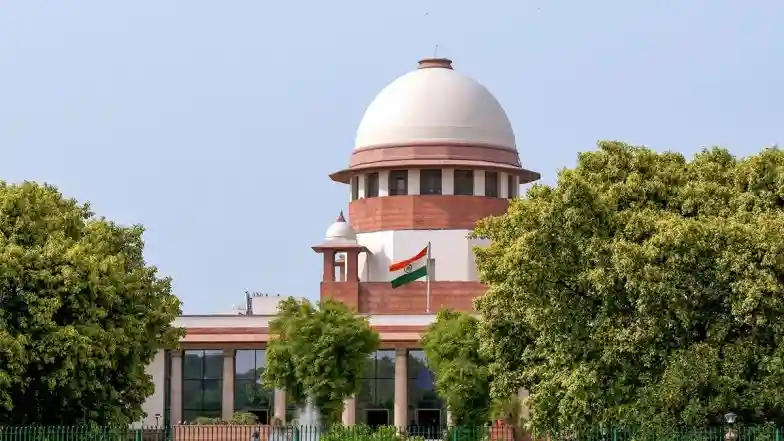
The Supreme Court has asked the Central government to examine whether statutory rules can be implemented to ensure that social media platforms comply with Indian contract laws regarding minors. A Bench comprising Chief Justice of India (CJI) Surya Kant and Justices Joymalya Bagchi and V Mohana heard a public interest litigation (PIL) filed by the NGO Just Rights for Children Alliance. The petition seeks mandatory safeguards for children under eighteen who access social media and digital platforms.
Legal Incompetence and Void Contracts
The petition raised concerns over minors independently creating accounts by accepting digital platforms' terms of service, despite Section 11 of the Indian Contract Act rendering minors legally incompetent to enter into contracts, reports Bar and Bench. The plea advocates for age-verification mechanisms and parental consent requirements rather than a total ban on internet access for children. How Does the Supreme Court Plan To Recover Unpaid Traffic Challans Through Electricity Bills?
Senior Advocate H.S. Phoolka, appearing for the petitioner, argued that waiting for broader data protection frameworks is unnecessary because these agreements are already void under existing legislation. "Under the existing Indian law, these contracts are void. We don't need to wait for the Data Protection Act. Existing law bars them," Phoolka said.
Bench Directives and Government Response
Justice Bagchi urged the Centre to issue formal directions requiring intermediaries to alter their platforms in line with Indian legal standards. "Please pass directions under the intermediary rules that they fashion their software, or whatever the platform is called, in conformity with Indian law. The software has to be in conformity with Indian law," Justice Bagchi said. CBSE Third-Language Rule: Supreme Court Extends Exemption to Class 6 Students.
The Bench also emphasised that any mandate must carry statutory backing rather than functioning merely as an executive guideline. Solicitor General Tushar Mehta informed the Court that the government would review the matter. "Something can be done, something should be done and will be done," Mehta told the Court.
(The above story first appeared on LatestLY on Sep 29, 2026 09:29 AM IST. For more news and updates on politics, world, sports, entertainment and lifestyle, log on to our website latestly.com).