Supreme Court Questions Misuse of POCSO Act in Consensual Adolescent Relationships
The Supreme Court is questioning the blanket criminalisation of consensual adolescent relationships under the POCSO Act. Justices noted that the 15-18 age group is an 'age of experimentation' and expressed concern that the law is being weaponised against teenage couples in cases of elopement. The court is now exploring how to better differentiate between abuse and consensual romance.


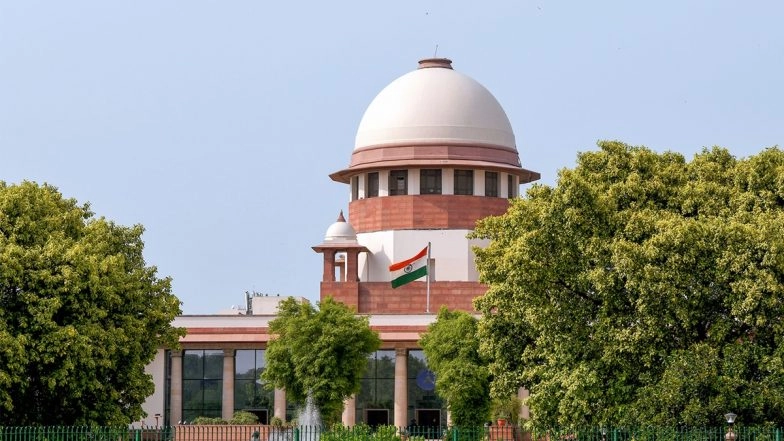
The Supreme Court of India has raised significant concerns regarding the widespread invocation of the Protection of Children from S*xual Offences (POCSO) Act in cases involving consensual s*xual relationships between teenagers. During a hearing on July 13, a Bench of Justices B.V. Nagarathna and R. Mahadevan questioned whether the stringent penal provisions of the Act should apply to voluntary relationships among adolescents, describing the 15–18 age group as "an age of experimentation".
Questioning the 'Blanket' Criminalisation
The Bench expressed apprehension over how the POCSO Act - originally designed to shield minors from s*xual exploitation and abuse - is increasingly being used by families to initiate criminal proceedings when teenage girls elope or enter into relationships that are disapproved of by parents. Can Husbands Be Prosecuted for Violent S*x With Wives Despite Marital Rape Exemption? Supreme Court To Decide.
“How can the state prevent the elopement of a girl and a boy? POCSO concerns the s*xual assault and exploitation of children,” the court observed. The judges highlighted that, in many instances, criminal cases are filed to protect "so-called honour", effectively weaponising the legislation against young couples.
Legal Reality vs Developmental Norms
The POCSO Act defines a child as any person below the age of 18, and it does not recognise the concept of consent for individuals within this age range. Consequently, any s*xual activity - even if entirely consensual and devoid of coercion - is automatically classified as statutory rape or aggravated penetrative s*xual assault, carrying severe minimum sentences. The Supreme Court’s recent observations come as part of an ongoing suo motu petition (In Re: Right to Privacy of Adolescents) initiated by the court in 2023. The case seeks to examine the rights of adolescents and address the growing friction between the law’s rigid age-of-consent threshold and the reality of adolescent s*xuality.
A Growing Call for Nuance
The court’s stance aligns with an emerging judicial discourse advocating for a more nuanced approach to adolescent relationships. Various High Courts across India have previously noted that the law should distinguish between genuine cases of abuse and consensual romantic experiences. Legal experts and child rights advocates have long pointed to the "gap between legislative intent and ground reality", noting that the current framework often results in the incarceration of teenage boys and the institutionalisation of girls in children's homes, causing lasting trauma. Why Supreme Court Did Not Initiate Contempt Against Petitioner Who Abused CJI, Threw Case Papers.
While the Law Commission of India, in its 2023 report, advised against altering the legal age of consent to avoid weakening protections against child trafficking and exploitation, it did suggest exploring "guided judicial discretion" in sentencing to prevent gross injustice in cases of de facto consensual relationships. As the Supreme Court continues to deliberate on this suo motu petition, its observations are expected to shape future discourse on whether India should introduce a "close-in-age" exemption - a legal mechanism that would allow the law to differentiate between exploitative acts and developmentally normal adolescent exploration.
(The above story first appeared on LatestLY on Jul 19, 2026 12:36 PM IST. For more news and updates on politics, world, sports, entertainment and lifestyle, log on to our website latestly.com).