Supreme Court Reduces Law Practice Requirement for Judicial Service From 3 Years to 1 Year, New Rules From April 2027
The Supreme Court on Friday upheld its May 2025 ruling that mandated law practice as a condition for entry into judicial service, but reduced the experience prescribed at the bar from three years to one year in a key judgment on the recruitment of judicial officers.

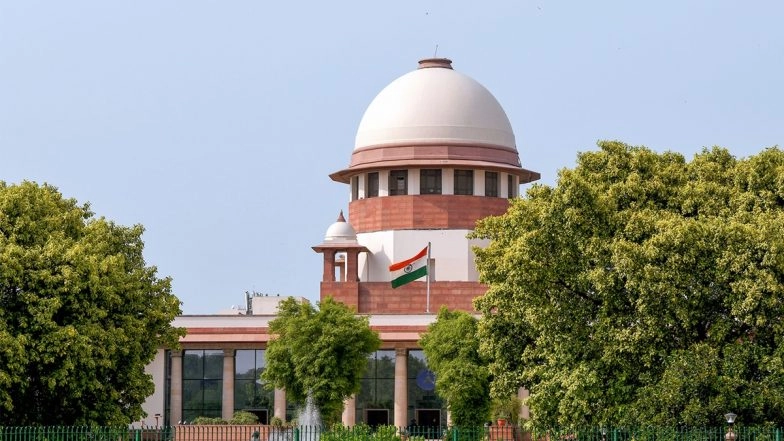
The Supreme Court on Friday upheld its May 2025 ruling that mandated law practice as a condition for entry into judicial service, but reduced the experience prescribed at the bar from three years to one year in a key judgment on the recruitment of judicial officers. Candidates who succeed at the judicial service exam will now have to undergo one year of intensive training at the State Judicial Academy, followed by six months of clerkship under the District Judge or Higher Judicial Service and six months under a sitting High Court judge, effectively substituting the remaining two years of practice prescribed under the earlier judgment.
Transition Period Till March 2027
The new rules will become applicable only from April 1, 2027, with the Court granting a key exemption for a transition period running up to March 31, 2027. For candidates applying within that date, no law practice experience will be required, and they shall be deemed to have completed one year of law practice. "The direction is that all law graduates will be eligible to apply notwithstanding the three-year practice requirement, having regard to the fact that more than one year has elapsed since the judgment under review was pronounced. Such candidates, for the purposes of their applications, will be deemed to have completed one year of active practice and shall not be required to produce a certificate of practice in respect of the said period," the Court said. However, these candidates will still have to undergo the prescribed training and clerkship. Casteist Slurs Inside Closed Room Not SC/ST Act Offence, Supreme Court Rules.
How the Training and Clerkship Will Work
"Candidates seeking to pursue the aforesaid recruitment shall, upon appointment, be designated as Trainee Judicial Officers. They shall undergo one year of intensive training at the concerned State Judicial Academy. This will, in effect, be equivalent to one year of practice at the Bar for the purposes of the three-year requirement," the order said. During the training period, the Trainee Judicial Officer will receive an emolument equivalent to one half of the gross remuneration payable to a Judicial Magistrate First Class. No More ‘Someone Else’s Problem’: Supreme Court Issues Nationwide Orders on Waste Management.
Upon successful completion of training, Trainee Judicial Officers will undergo a further year of structured law clerkship. "The first six months shall be spent as a law clerk under the supervision of the Principal District Judge or members of the higher judicial service, and the remaining six months under the supervision of sitting judges of the concerned High Court. The aforesaid one-year period of law clerkship shall also be treated as equivalent to one year of practice at the Bar for the purposes of satisfying the three-year requirement," the Court said, adding that clerkship emoluments will match those paid during Academy training.
Upon completion of the clerkship, a sitting High Court judge under whose supervision the trainee has served will submit a reasoned evaluation report on the trainee's progress and suitability. If the report is found satisfactory, the Trainee Judicial Officer will be appointed to the regular post and become entitled to the regular pay scale and other service benefits attached to it.
Rules for Candidates Applying After March 2027
The above training and clerkship conditions will also apply to candidates applying after March 2027, but they will additionally need to prove one year of law practice. "Such practice shall be subject to verification through issuance of a certificate of practice, which shall not be issued unless the candidate's presence and participation in effective judicial proceedings have been duly recorded in accordance with the mechanism prescribed by the Court," the top court ruled.
The Bench and the Dissent
The judgment was passed by a bench comprising Chief Justice of India (CJI) Surya Kant and Justices Augustine George Masih and K Vinod Chandran, on a batch of review petitions challenging the May 2025 verdict. Justice Chandran dissented and upheld the May 2025 verdict in its entirety. The review petitions had assailed the Supreme Court's May 2025 judgment, which ruled that candidates must have at least three years of practice as lawyers to be eligible to appear for the Civil Judge (Junior Division) examination.
Background to the Case
In its May 2025 judgment, the Court had said the three-year practice requirement would apply prospectively and would not affect recruitment processes already initiated before the ruling. It also held that the period of practice would be counted from the date of provisional enrolment, and directed that candidates who succeed at the judicial exam must undergo at least one year of training before presiding over a court. The bench comprising then CJI BR Gavai and Justices AG Masih and K Vinod Chandran had directed all High Courts and state governments to amend their service rules accordingly.
Following the judgment, multiple review petitions were filed challenging the direction. Senior Advocate Colin Gonsalves filed a review petition citing Law Commission reports issued between 1924 and 1986 that opposed making prior bar practice mandatory for judiciary entry, as well as the Second Judicial Pay Commission Report of 2022, which recommended that such eligibility requirements be introduced only after wider consultation. Advocate Chandra Sen Yadav also filed a plea arguing the requirement violated Articles 14 and 16 of the Constitution, and raised concerns over its impact on candidates from economically weaker sections and socially disadvantaged communities.
Key Takeaways
- Till March 31, 2027, law graduates can apply without law practice and will be deemed to have completed one year of practice for eligibility.
- After selection, they will serve as Trainee Judicial Officers, undergoing one year of intensive training at the State Judicial Academy, followed by six months clerkship under the District Judge or Higher Judicial Service and six months under a sitting High Court judge.
- For law graduates applying on or after April 1, 2027, candidates must have at least one year of active law practice before applying, in addition to the same training and clerkship.
- High Courts must amend the relevant judicial service rules within three months, and the new scheme will operate for five years before being reviewed by the Supreme Court.
(The above story first appeared on LatestLY on Aug 21, 2026 11:50 AM IST. For more news and updates on politics, world, sports, entertainment and lifestyle, log on to our website latestly.com).