UPI Payments New Rule FAQs: Who Pays, How Much and Which Transactions Are Exempt?
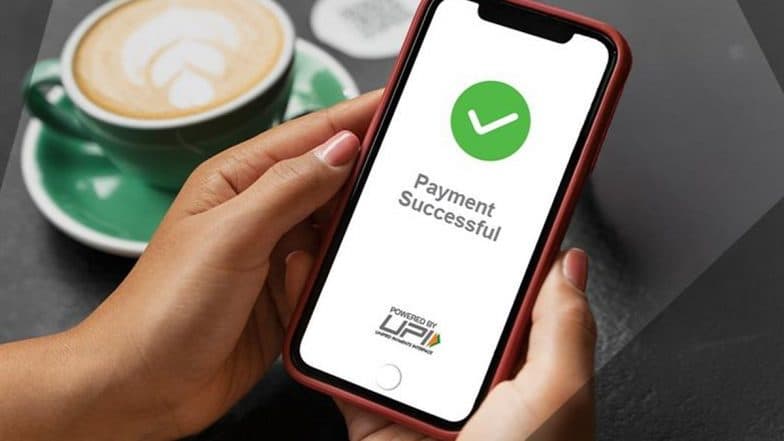
The National Payments Corporation of India (NPCI) has clarified how the new Merchant Discount Rate (MDR) framework will work for UPI transactions above INR 2,000, putting an end to much of the confusion over whether users will have to pay for making high-value digital payments.

The National Payments Corporation of India (NPCI) has clarified how the new Merchant Discount Rate (MDR) framework will work for UPI transactions above INR 2,000, putting an end to much of the confusion over whether users will have to pay for making high-value digital payments.
Under the framework, a 0.4% MDR will apply to eligible person-to-merchant (P2M) UPI transactions above INR 2,000 from October 15, 2026. The charge will be borne by merchants, not consumers. For transactions of INR 75,000 and above, the MDR will be capped at Rs 300 per transaction. Person-to-person (P2P) UPI transfers will remain free. UPI Payments Beyond INR 2,000 May Attract Charges, NPCI Guidelines Soon: Report.
UPI Payments Up To INR 2,000 Remain Free
The NPCI has made clear that there will be no MDR on UPI payments up to INR 2,000. Such transactions account for more than 95% of P2M UPI transaction volume, according to the FAQ.
Consumers will also continue to make UPI payments without paying a transaction fee. There is no monthly limit or quota after which individual users will have to pay for using UPI.
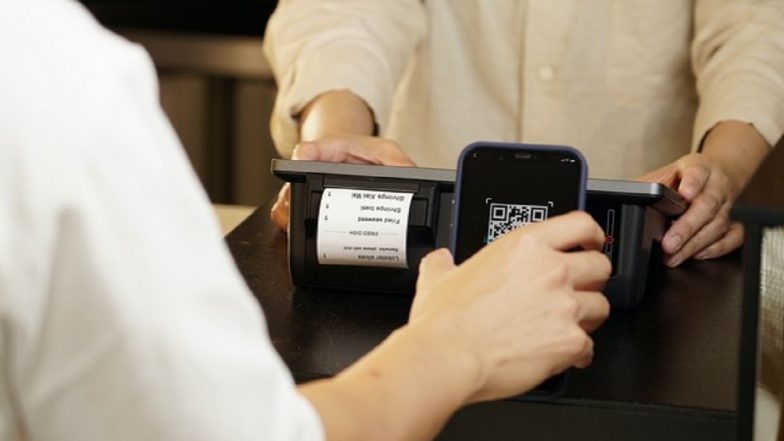
The same applies to routine QR-code payments at local shops and vendors. Customers will not be charged an additional fee simply for scanning a UPI QR code.
What Is The New UPI MDR?
MDR, or Merchant Discount Rate, is the fee associated with processing a digital payment. Under the new UPI framework, the standard MDR for eligible P2M transactions above INR 2,000 will be 0.4%.
For example, a Rs 3,000 merchant payment would attract an MDR of Rs 12, while a Rs 50,000 payment would attract Rs 200. UPI Charges: No Fees on Transactions up to INR 2,000, RuPay Debit Cards, Says Government.
For payments of Rs 75,000 or more, the charge will be capped at Rs 300. Therefore, a Rs 1 lakh payment will attract Rs 300 rather than Rs 400.
When Will UPI MDR Start?
The finalized MDR framework will take effect from October 15, 2026.
The NPCI said the lead time is intended to allow banks, payment aggregators, fintech companies and corporate accounting platforms to update their systems and billing infrastructure before implementation.
Will UPI Users Have To Pay The Charge?
No. The MDR is a merchant-side charge.
Consumers making UPI payments will continue to use the system without a transaction fee. The framework also prohibits merchants from passing the MDR on to customers through an additional UPI payment charge.
This means that if a product is listed at a particular price, the customer is not supposed to pay more simply because the payment is made through UPI.
Person-to-Person UPI Transfers Will Stay Free
There is no MDR on P2P transactions.
Users can continue sending money to family members, friends or their own linked bank accounts without paying a UPI transaction fee, irrespective of the amount, subject to normal transaction and security limits.
The new MDR framework specifically concerns direct account-to-merchant-account P2M payments.
Small Merchants And Street Vendors Get Protection
The NPCI FAQ provides a separate exemption for small merchants operating under the P2PM framework.
Small vendors receiving up to Rs 1 lakh a month through UPI QR codes under this category will continue to receive payments without MDR. A payment above Rs 2,000 does not automatically make such a merchant liable for MDR if the merchant remains within the exempt P2PM classification.
Existing QR codes and soundboxes will also continue to work. Small merchants will not have to replace their QR infrastructure merely because of the new MDR framework.
Banks and payment service providers will monitor transaction levels for P2PM accounts. Merchants receiving more than Rs 1 lakh through UPI for three consecutive months can be moved into the regular P2M category.
GST registration is not required solely to qualify for the P2PM zero-MDR protection, with eligibility instead linked to the applicable merchant category and transaction threshold.
Special Rs 5 MDR For Some Sectors
Certain categories will have a flat MDR instead of the standard 0.4% rate for transactions above Rs 2,000.
The NPCI FAQ identifies sectors including railways, telecom services, insurance and fuel for a Rs 5 per-transaction MDR.
For example, eligible insurance premium payments and fuel purchases above Rs 2,000 will attract the flat Rs 5 charge rather than a percentage-based MDR. Certain utility payments, such as electricity and water bills, will also fall under the designated industry category with a Rs 5 MDR above the threshold.
Educational fee payments have also been placed under a specialised category, with the FAQ stating that transactions above Rs 2,000 will benefit from flat-fee structures or capped processing rates rather than the standard percentage-based MDR.
What About UPI Credit Cards And Credit Lines?
The new MDR framework does not apply in the same way to credit-linked UPI payments.
UPI transactions made using RuPay credit cards linked to UPI or pre-sanctioned bank credit lines are governed by separate credit-product rules. The MDR framework announced for direct UPI account-to-merchant payments is therefore distinct from these credit-funded transactions.
Capital Market UPI Payments Get Lower MDR
UPI payments involving capital-market transactions will have a separate MDR structure.
The FAQ sets the rate at 0.02% of the transaction value, with a maximum cap of Rs 300. The category covers payments involving mutual funds, securities, SEBI-registered stockbrokers, dealers and investment platforms.
The lower rate is intended to support retail participation in formal financial markets.
Why Is UPI MDR Being Introduced?
The NPCI said the objective is to create a more sustainable financial model for India's rapidly expanding digital payments infrastructure.
Revenue from MDR is expected to support infrastructure resilience, cybersecurity, fraud detection, technical systems and customer service. The NPCI said UPI processes billions of transactions every month and that maintaining servers, bandwidth, fraud-prevention systems and banking technology involves significant costs.
The FAQ cited industry estimates putting the annual cost of maintaining UPI operations at around Rs 20,000 crore. The new threshold-based model is intended to provide a more predictable source of funding while keeping most everyday transactions free.
Dedicated Fund For Small Merchants
The NPCI also proposed a dedicated fund to support digital payment infrastructure and merchant onboarding, particularly in Tier 3 to Tier 6 centres, the Northeast, Jammu and Kashmir and Ladakh.
The fund could also support notified government schemes and provide incentives for payment adoption among small merchants.
The detailed framework is expected to be finalised in consultation with the Reserve Bank of India within three months, according to the FAQ.
Will UPI Apps Charge A Platform Fee?
No. The FAQ states that UPI app providers will not be permitted to impose a separate platform fee or other charge on UPI payments.
Recurring UPI payments, including eligible AutoPay mandates for utility bills, OTT subscriptions and recurring investments, are also not covered by the prescribed MDR described in the FAQ.
What Does The New Rule Mean For Consumers?
For most UPI users, there will be little immediate change.
Payments of up to Rs 2,000 will remain free, P2P transfers will remain free regardless of amount, and consumers will not have to pay the merchant MDR separately. The main change will be on the merchant side for eligible P2M transactions above Rs 2,000 once the framework takes effect on October 15.
The move therefore introduces a commercial cost for certain higher-value merchant payments while retaining zero-cost UPI access for consumers and protecting small-value transactions and eligible micro-merchants.
DISCLAIMER: This article is strictly for informational and educational purposes to raise awareness about the said topic. LatestLY DO NOT host, distribute, or provide links to sexually explicit content, leaked videos, or pirated material. Any search terms or keywords mentioned are solely for the purpose of explaining the viral trend and its associated dangers. We strongly condemn the circulation of non-consensual intimate imagery (NCII) and advise all readers to refrain from searching for or sharing such content, as doing so may lead to severe legal consequences.
(The above story first appeared on LatestLY on Sep 15, 2026 07:48 PM IST. For more news and updates on politics, world, sports, entertainment and lifestyle, log on to our website latestly.com).