What Is a Pressure Group? Abhijeet Dipke Explains Why CJP Chose This Path (Video)
Cockroach Janta Party (CJP) founder Abhijeet Dipke has announced that the organisation will function as a political pressure group instead of entering electoral politics. The decision follows the group's 37-day student protest over the NEET-UG paper leak issue. Here’s what a pressure group is, how such organisations influence public policy, and whether CJP can operate under this model.

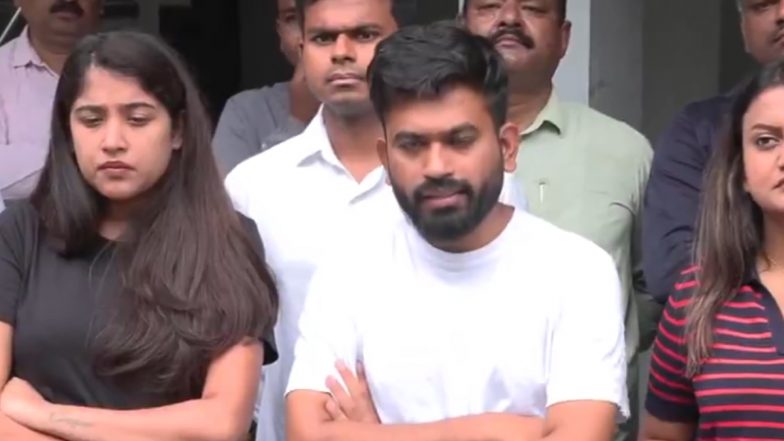
Cockroach Janta Party (CJP) founder Abhijeet Dipke has announced that the organisation will function strictly as a political pressure group rather than enter mainstream electoral politics. Speaking to reporters ahead of a core committee meeting in Chhatrapati Sambhajinagar on August 5, 2026, Abhijeet Dipke said the country currently needs a people-led public movement instead of another political party.
The announcement comes weeks after CJP led a 37-day student protest at Jantar Mantar over the NEET-UG paper leak controversy. According to the organisation, the protest culminated in the resignation of Union Education Minister Dharmendra Pradhan. CJP’s Abhijeet Dipke Named in Zero FIR Filed Under POCSO Act Over Juvenile Participation at Jantar Mantar Protest.
Abhijeet Dipke Wants CJP to Act as a 'Pressure Group'
#WATCH | Chhatrapati Sambhaji Nagar, Maharashtra | Cockroach Janta Party (CJP) Founder Abhijeet Dipke says, "For now, CJP will be a pressure group because what India needs right now is a pressure group." https://t.co/jeZip0gQpj pic.twitter.com/afVxO6DQvU
— ANI (@ANI) August 5, 2026
What Is a Pressure Group?
A pressure group is an organised body that seeks to influence government policies, legislation and public decision-making without contesting elections or holding political office.
Unlike political parties, pressure groups focus on advancing specific causes or protecting the interests of particular communities or sectors. They often act as a bridge between citizens and policymakers by presenting demands, research and policy recommendations. CJP Founder Abhijeet Dipke Urges PM Narendra Modi To ‘Become an Influencer’, Warns of Renewed Protests (Video).
How Do Pressure Groups Work?
Pressure groups use different methods to influence governments and institutions depending on the political system and their objectives.
Some of the most common strategies include:
- Lobbying: Meeting ministers, lawmakers and bureaucrats to present policy proposals and recommendations.
- Media Campaigns: Using television, newspapers, digital platforms and social media to shape public opinion.
- Public Protests: Organising demonstrations, marches and strikes to draw attention to key issues.
- Boycotts: Encouraging consumers to avoid products or companies to exert economic pressure.
- Litigation: Challenging government decisions through courts when policy advocacy does not succeed.
Countries such as the United States and the United Kingdom have well-established lobbying systems, while public campaigns and protests remain common tools globally.
India's History of Pressure Groups
India has a long tradition of pressure groups influencing public policy before and after Independence.
Business organisations such as the Federation of Indian Chambers of Commerce and Industry (FICCI), established in 1927, played an important role during the freedom movement and later contributed to economic policymaking.
Farmer groups, labour unions, environmental organisations and civil society bodies have also influenced legislation and public debate on issues ranging from labour rights to environmental protection.
Are Pressure Groups Effective?
Pressure groups have contributed to changes in laws, corporate policies and government decisions across the world.
Environmental organisations have campaigned for restrictions on hazardous chemicals, while trade unions have pushed for improved wages and workplace safety.
However, experts note that their effectiveness often depends on factors such as public support, organisational strength, funding and access to policymakers. Critics also argue that well-funded pressure groups may exercise disproportionate influence compared with smaller public-interest organisations.
Can CJP Function as a Political Pressure Group?
According to Abhijeet Dipke, the Cockroach Janta Party does not plan to contest elections or become a conventional political party at present.
Instead, the organisation intends to operate as a public accountability movement that seeks to influence policy through public mobilisation and advocacy rather than electoral politics.
Whether the CJP succeeds as a pressure group will depend on its ability to sustain public support and effectively engage with policymakers on issues it seeks to address.
(The above story first appeared on LatestLY on Aug 05, 2026 01:41 PM IST. For more news and updates on politics, world, sports, entertainment and lifestyle, log on to our website latestly.com).