Hanuman Jayanti 2026: When Is Hanuman Jayanti? Know Date and Significance of Hanuman Janmotsav
Hanuman Jayanti will be celebrated across India on Thursday, April 2, marking the birth of Lord Hanuman. The Purnima Tithi begins at 7:06 AM on April 1 and ends at 7:41 AM on April 2. Devotees plan to visit temples, recite the Sundar Kand, and offer prayers for strength and protection, observing traditional rituals to honour the 'Rudra Avtar'.

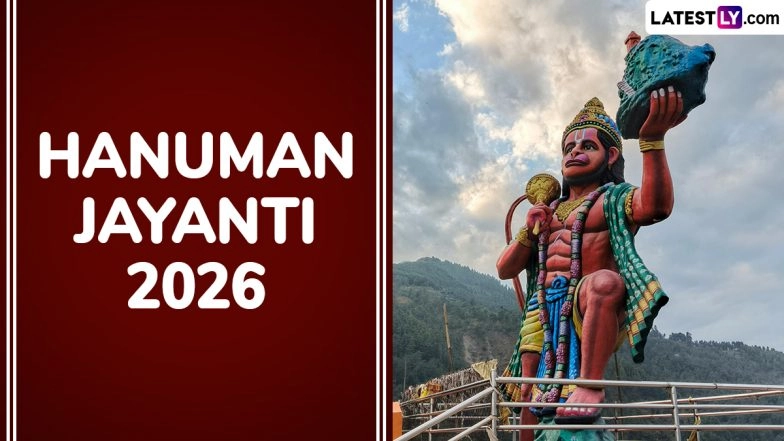
Mumbai, April 1: Devotees across India are preparing to celebrate Hanuman Jayanti, the birth anniversary of Lord Hanuman, on Thursday, April 2. This significant Hindu festival, also known as Hanuman Janmotsav, is observed annually on the Purnima Tithi (full moon day) of the Shukla Paksha in the month of Chaitra. Regarded as a symbol of strength, devotion, and perseverance, Lord Hanuman is worshipped by millions who seek his protection and blessings for courage and fearlessness.
Hanuman Jayanti Date and Auspicious Timings
While the festival falls on April 2, the religious observation is tied to the lunar calendar. According to the Chaitra Purnima schedule, the Purnima Tithi is set to begin at 7:06 AM on April 1, 2026, and will conclude at 7:41 AM on April 2. Most temples and households will observe the primary celebrations and major rituals on the morning of April 2 to align with the sunrise timings and the concluding hours of the Tithi. ‘Ramayana’: FIRST Look of Ranbir Kapoor As Lord Rama To Be Unveiled on Hanuman Jayanti 2026, Makers Confirm (View Post).
Religious Significance and Mythology
Hanuman Jayanti commemorates the birth of Hanuman to his mother Anjani and father Kesari during the Treta Yuga. Believed to be an incarnation of Lord Shiva, he is often referred to as "Rudra Avtar" or "Pawan Putra" (the son of the wind). The deity holds a unique place in Indian culture, particularly for those involved in physical sports, wrestling, and martial arts, who view him as a patron and spiritual guide. Mythology highlights his childhood as being filled with extraordinary divine abilities, most notably the tale of him attempting to swallow the sun, mistaken for a fruit, which showcased his immense power from a young age.
Traditions and Modern Observances on Hanuman Jayanti
Celebrations typically begin early in the morning with devotees taking a holy bath, followed by prayers. Many observe a fast and visit temples dedicated to the Lord, which are often decorated with flowers and lights for the occasion. Common rituals include:
- Recitation of Scriptures: Devotees often organise the Akhand Ramayana Path or the Sundar Kand Path, as it is believed that worshipping Lord Ram is the most effective way to please Lord Hanuman.
- Offerings: Idols are adorned with new clothes, garlands, and silver or gold leaf (vark). Offerings of desi ghee lamps and homemade 'bhog' prasad are standard practices.
- Charity: Many communities set up food and water stalls (Bhandaras) to serve the underprivileged, a practice considered highly meritorious on this day. Bank Holiday List April 2026: State-Wise Closures, Saturdays and Sundays.
Regional Variations of Hanuman Jayanti and Cultural Impact
While the Chaitra Purnima celebration is most common in North India, various regions observe the deity's birth at different times of the year based on local calendars. However, the April celebration remains one of the most widely recognised national events, bringing together diverse communities through shared hymns and public processions. In addition to spiritual activities, the festival increasingly sees a digital footprint, with many using the occasion to share traditional mantras such as "Om Ham Hanumate Namah" and "Om Anjani Sutaye Namah" across social platforms.
(The above story first appeared on LatestLY on Apr 01, 2026 08:14 AM IST. For more news and updates on politics, world, sports, entertainment and lifestyle, log on to our website latestly.com).