Quit India Movement Day 2026: Date, Lesser-Known Facts and Impact
Discover lesser-known facts about the Quit India Movement Day 2026, also known as Bharat Chhodo Andolan, observed on August 8. This article uncovers the hidden catalysts, the spontaneous nature of the uprising after leaders' arrests, the crucial role of women, and the internal divisions during this pivotal moment in India's freedom struggle.

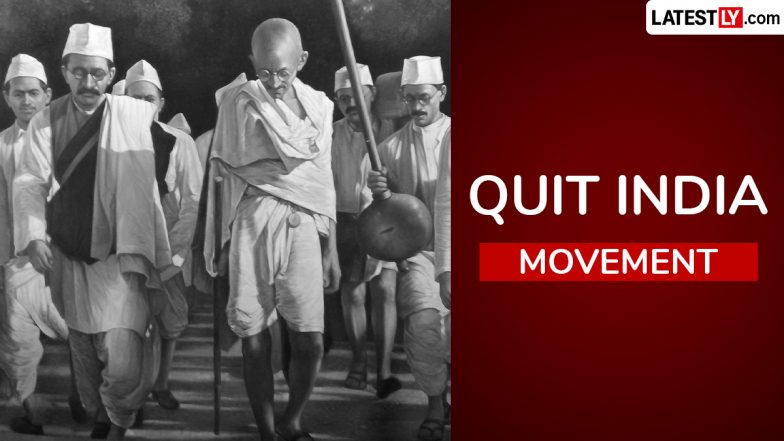
Every year, August 8th marks a significant chapter in India's freedom struggle - Quit India Movement Day. In 2026, we once again commemorate the momentous call given by Mahatma Gandhi in 1942, urging the British to leave India immediately. While the iconic slogan "Do or Die" resonates deeply, the "Bharat Chhodo Andolan" was far more complex than commonly perceived, a powerful mass movement driven by a multitude of factors and unsung heroes. This year, let's unearth some lesser-known facts that truly shaped this pivotal moment.
The Unseen Catalysts: World War II and the Cripps Mission
The Quit India Movement didn't emerge in a vacuum. It was profoundly influenced by the backdrop of World War II. Great Britain, without consulting Indian leaders, unilaterally declared India a party to the war against the Axis powers in 1939. This unilateral decision fueled immense resentment across the subcontinent. Adding to the discontent was the failure of the Cripps Mission in March 1942. Sent by the British Parliament, the mission offered India 'Dominion Status' after the war in exchange for its full cooperation. However, Indian leaders, including the Indian National Congress, rejected this proposal, demanding complete and immediate independence. This rejection solidified Gandhi's belief that direct action was necessary, pushing for the 'Quit India' resolution.
Beyond the Leadership: A Spontaneous Uprising and Underground Heroes
Following Gandhi's "Do or Die" speech at Gowalia Tank Maidan (now August Kranti Maidan) in Bombay (Mumbai) on August 8, 1942, prominent figures like Mahatma Gandhi, Jawaharlal Nehru, and Sardar Vallabhbhai Patel were arrested and imprisoned without trial in the early hours of August 9, 1942. This left a leadership vacuum at the national level, transforming the movement into a mass uprising characterized by widespread civil disobedience and audacious underground activities.
The movement saw extensive acts of sabotage against symbols of British authority. Protesters attacked 550 post offices and 250 railway stations, damaged numerous rail lines, destroyed 70 police stations, and burned or damaged 85 other government buildings. There were also approximately 2,500 instances of telegraph wires being cut across the country, particularly in Bihar, highlighting the people's determination. Many national leaders went underground, continuing their struggle by broadcasting messages over clandestine radio stations and distributing pamphlets.
Women's Indomitable Spirit: Unsung Heroines of the Movement
The Quit India Movement also stands as a testament to the immense and often understated contributions of women. Defying both colonial authority and societal norms, women emerged from the domestic sphere to actively participate in nationalist politics. Figures like Aruna Asaf Ali, who bravely presided over the AICC session and hoisted the national flag in Bombay after the major leaders were arrested, became a symbol of resistance and a prominent leader of the underground movement. Other courageous women included Sucheta Kripalani, Kasturba Gandhi, Sarojini Naidu, and Usha Mehta, who formed groups, mobilized masses, and endured imprisonment for the cause of independence.
A Divided Front and British Exploitation
While the Quit India Movement showcased widespread national sentiment, it's a lesser-known fact that it did not receive universal support from all sections of Indian society. The Muslim League, many princely states, the Hindu Mahasabha, and Indian businessmen who benefited from wartime spending largely did not support the movement. The Viceroy's Council, which had an Indian majority, also supported the British government. Furthermore, discriminatory British policies during WWII exacerbated public anger. Examples include the seizure of boats in Bengal and Orissa, ostensibly to prevent Japanese misuse, which caused immense hardship, and the creation of segregated 'black' roads for Indian refugees and 'white' roads for European refugees in regions like Assam, Bengal, and Orissa. These actions underscored the British administration's deep-seated prejudices and further fueled the demand for self-rule.
The Enduring Legacy
Although the Quit India Movement was effectively suppressed by 1944, leading to over 100,000 arrests and severe repression, it was far from a failure. It proved to the British that they could no longer rule India without consent and that decolonization was inevitable after World War II. The movement shifted the political conversation from mere 'reforms' to urgent 'exit strategies', unifying Indians across diverse backgrounds and inspiring a new generation of leaders.
As we are set to observe Quit India Movement Day on August 8, 2026, it serves as a powerful reminder of the collective resolve and sacrifices made by millions. It's an occasion to reflect on the often-overlooked details and the diverse contributions that forged the path to India's freedom, inspiring us to uphold the values of national unity, democracy, and civil courage.
(The above story first appeared on LatestLY on Aug 03, 2026 12:51 PM IST. For more news and updates on politics, world, sports, entertainment and lifestyle, log on to our website latestly.com).