DR Congo Ebola Outbreak: WHO Warning, Deaths and Bundibugyo Strain Risks
An accelerating Ebola outbreak in eastern DR Congo caused by the rare Bundibugyo strain has led to over 2,000 deaths, according to UN News. Active armed conflict, lacking approved vaccines, and undetected community transmission are driving the virus to double every 20 days, prompting urgent WHO containment warnings across the region.

- Read in
- हिंदी
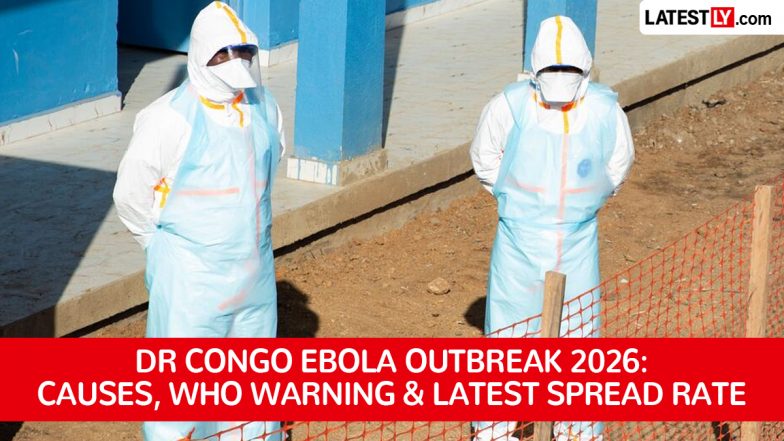
An accelerating Ebola outbreak in the eastern Democratic Republic of the Congo (DRC) is spreading faster than any previously recorded epidemic of the virus, prompting stark warnings from global health officials. According to reports by UN News, deaths associated with the current outbreak have surpassed 2,000, with total confirmed and suspected cases exceeding 4,300 across multiple eastern provinces.
First officially declared in mid-May 2026, the epidemic is doubling in size roughly every 20 days. World Health Organization (WHO) Director-General Dr. Tedros Adhanom Ghebreyesus warned that if current transmission rates continue unchecked, the outbreak is on track to eclipse the 2014–2016 West African Ebola epidemic, which was previously the deadliest on record. Congo Ebola Outbreak Could Surpass 2014-16 Epidemic That Killed Over 11,000, WHO Warns.
A Rare Strain with Limited Treatment Options
A primary factor driving the severity of the surge is the specific pathogen involved. Genetic sequencing conducted by health agencies revealed that the outbreak is caused by the Bundibugyo ebolavirus strain.
Unlike the more common Zaire strain, which saw effective vaccines and therapeutic protocols deployed during prior DRC outbreaks, the Bundibugyo species currently has no widely approved vaccine or specific medical treatment. While clinical trial enrollments and diagnostic testing tools have been rapidly authorized by the WHO to evaluate candidate therapies, medical teams are largely restricted to providing supportive care, such as rehydration and managing secondary infections. DR Congo Ebola Outbreak: 2,100 Dead, Virus Spreads to 6th Province.
Active Conflict and Broken Infrastructure
The geography and security climate of eastern DRC pose severe operational hurdles for international containment teams. The epicenter in Ituri province, along with affected health zones in North and South Kivu, overlaps with regions burdened by persistent armed conflict and mass displacement.
- Attacks on Facilities: Non-state armed groups and local violence have repeatedly targeted health workers and treatment centers. The WHO reported that an Ebola treatment facility in Bunia was recently attacked, disrupting essential care.
- Movement Constraints: Active fighting and damaged roads severely limit the movement of medical supplies, diagnostic samples, and aid convoys.
- Population Displacement: With nearly one million internally displaced people in Ituri alone, frequent population movements make contact tracing and case isolation exceptionally difficult.
Undetected Transmission Chains and Community Spread
Data highlighted by UN News indicates that containment efforts are struggling to keep up with viral transmission. More than 80% of newly identified infections are being detected outside known contact monitoring lists. This reveals that numerous chains of transmission are proceeding unnoticed within local communities.
Furthermore, roughly two-thirds of Ebola-related deaths are occurring within home communities rather than inside designated health centers. Fear of disease stigma, widespread misinformation, and traditional caregiving and burial practices continue to foster unscreened exposure among family members.
Vulnerable Populations and Regional Risk
The crisis is taking a severe toll on children and mothers. UN Children's Fund (UNICEF) data cited by UN News shows that over 300 children have died since the start of the outbreak, accounting for nearly a third of all fatalities. Disrupted healthcare access has caused routine health service usage to drop by over 40% in key health zones, heightening risks for pregnant women and vulnerable pediatric patients.
Cross-border transmission has also emerged as a critical concern. Cases linked to the eastern DRC outbreak have been confirmed in neighboring Uganda, prompting WHO and regional authorities to elevate preparedness protocols across adjacent border regions, including South Sudan and Rwanda.
Global Mobilization and Next Steps
In response to the escalating crisis, international agencies led by the WHO, UNICEF, and Africa CDC are expanding emergency operations. Priority measures include:
- Expanding Diagnostic Capacity: Increasing operational testing centers to shorten turnaround times for case identification.
- Community Engagement: Deploying thousands of local community health workers to address misinformation and facilitate safe, dignified burials.
- Accelerating Clinical Trials: Testing candidate therapeutics directly within treatment centers in Ituri.
Health officials stress that while the outbreak's pace presents an unprecedented challenge, early diagnosis and supportive intervention remain effective in saving lives and stabilizing infection rates.
(The above story first appeared on LatestLY on Aug 14, 2026 11:09 AM IST. For more news and updates on politics, world, sports, entertainment and lifestyle, log on to our website latestly.com).