Does E20 Petrol Attract Ants? BPCL Calls Viral Claims ‘Baseless’ in Fact Check
BPCL has dismissed viral social media claims that E20 ethanol-blended petrol attracts ants to vehicle fuel caps, calling them 'baseless' and scientifically unsupported. The company said fuel-grade ethanol is processed to remove sugars and contains insect-repelling denaturants. It also clarified that petrol’s smell remains dominant and there is no evidence linking E20 fuel to insect attraction.

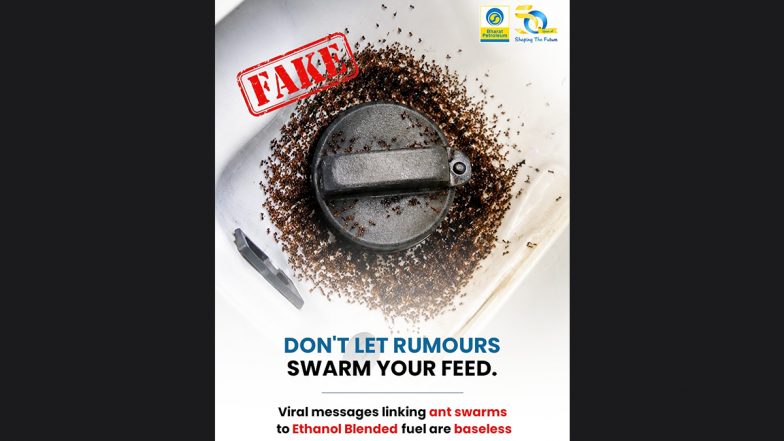
State-run oil marketing company Bharat Petroleum Corporation Limited (BPCL) has dismissed viral social media claims linking E20 ethanol-blended petrol to ants gathering around vehicle fuel filler caps, saying there is no scientific evidence supporting such assertions.
The clarification comes amid growing online speculation suggesting that ethanol in fuel may be attracting insects. BPCL has categorically rejected the claim, stating that the composition and properties of fuel-grade ethanol make such an occurrence highly unlikely. Does Ethanol Petrol Really Attract Ants? The Science Behind the Viral Sikkim Video.
BPCL Clarifies Viral Claim on E20 Fuel and Ants
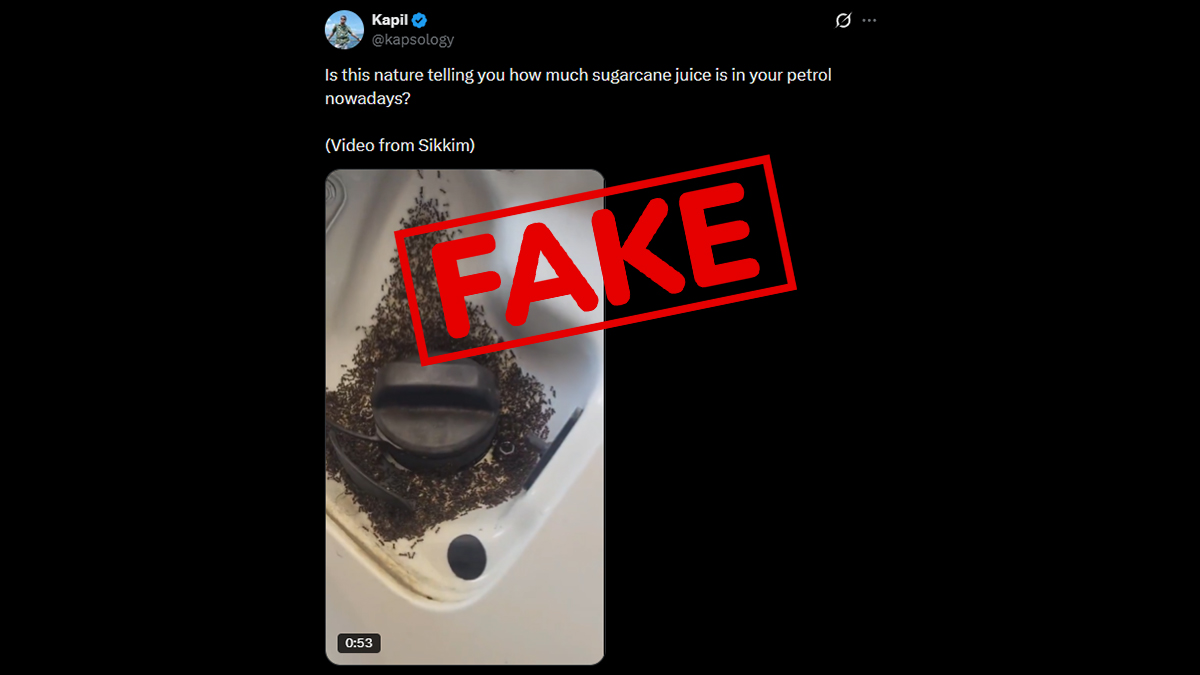
BPCL has examined the claims circulating on social media regarding ants congregating around vehicle fuel filler caps and their alleged association with E20 petrol.
Fuel-grade ethanol used for petrol blending is produced through fermentation and distillation processes that… pic.twitter.com/1qED7xBBhe
— Bharat Petroleum (@BPCLimited) June 17, 2026
What Did BPCL Say?
In a statement shared on social media platform X, BPCL said it had examined the viral claims and found no scientific basis for them. "BPCL has examined the claims circulating on social media regarding ants congregating around vehicle fuel filler caps and their alleged association with E20 petrol," the company said.
The company further clarified that fuel ethanol used in blending is processed to eliminate substances that could attract insects. "Fuel-grade ethanol used for petrol blending is produced through fermentation and distillation processes that eliminate residual sugars from the final product. Further, fuel ethanol contains denaturants, which are repellent to insects," BPCL said. Does E20 Petrol Void Car Insurance? Govt Debunks Fake Social Media Claims.
Does Ethanol Smell Attract Insects?
Addressing another commonly circulated claim, BPCL said that ethanol’s odour is not a factor that could attract ants, as petrol’s smell remains dominant after blending. "Upon blending, the characteristic hydrocarbon odour of petrol remains dominant over any inherent ethanol odour," BPCL stated.
The company also noted that ethanol-blended petrol has lower vapour emissions compared to conventional petrol, further reducing any possibility of attraction. "In addition, ethanol-blended petrol exhibits lower fuel vapour formation compared to conventional petrol. As a result, there is no identifiable attractant associated with E20 fuel that would cause ants or other insects to congregate around vehicle fuel caps," the company said.
BPCL concluded that the viral claims circulating online are unfounded and not supported by scientific evidence. "Therefore, claims suggesting a link between E20 fuel and ant attraction have no scientific basis," the company said.
The company added that "the claims being circulated on social media are baseless and are not supported by scientific evidence."
Why E20 Fuel Is Being Rolled Out
India has been expanding the use of ethanol-blended petrol as part of its broader energy strategy aimed at reducing crude oil imports, improving energy security, and supporting domestic agriculture.
The government has been steadily increasing the availability of E20 fuel, which contains 20 per cent ethanol blended with petrol, across fuel stations in the country.
While concerns and observations from vehicle users have circulated online, BPCL’s clarification underscores that there is no scientific evidence linking E20 petrol to insect attraction. The company maintains that ethanol-blended fuels are engineered to meet strict fuel-quality standards and safety norms.
Fact check
Ants gathering around vehicle fuel filler caps are linked to the use of E20 petrol.
The claim is fake.
(The above story first appeared on LatestLY on Jun 18, 2026 12:04 AM IST. For more news and updates on politics, world, sports, entertainment and lifestyle, log on to our website latestly.com).