Does Ethanol Petrol Really Attract Ants? The Science Behind the Viral Sikkim Video
A viral video from Sikkim purportedly showing ants swarming a car’s fuel cap sparked rumors that India’s ethanol-blended petrol contains sweet sugarcane residue. However, it is clarified that the distillation process removes all sugar. The insects are actually drawn to the fruity chemical odor of ethanol vapors, which mimics their natural pheromones.

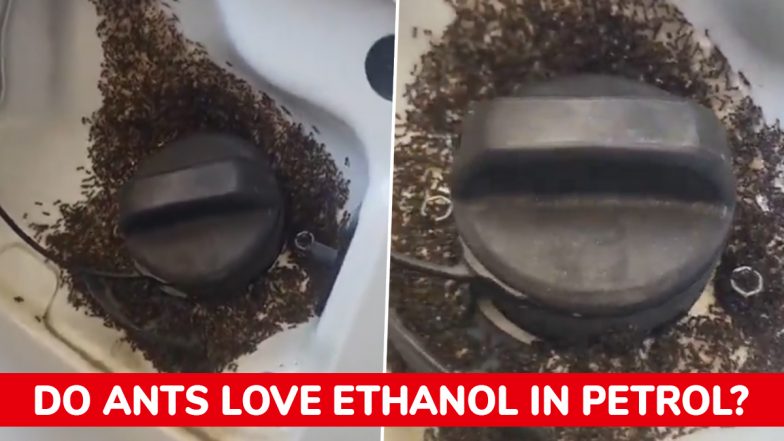
A viral video reportedly filmed in Sikkim has sparked an intense online debate regarding India's transition to ethanol-blended petrol. The footage, which widely circulated on platforms like X (formerly Twitter) and Instagram, depicts a large cluster of ants swarming the fuel inlet of a vehicle. The clip has generated widespread speculation among motorists, with many claiming that because ethanol is heavily derived from sugarcane in India, the fuel retains a "sweetness" that actively attracts insects. However, entomologists and automotive experts state that while the insect activity around fuel tanks is a real phenomenon, the popular "sugarcane juice" theory is scientifically inaccurate.
The Origin of the Viral Rumor
The controversy gained traction after a vehicle owner in Sikkim recorded dozens of ants gathering near their car’s fuel cap immediately after refueling. On social media, captions quickly linked the incident to India’s nationwide rollout of E20 and E85 ethanol fuels, with users joking that nature was revealing "how much sugarcane juice is in your petrol."
Many commenters expressed immediate concern over vehicle maintenance, fearing that the insects could crawl into fuel lines, clog fuel pumps, or compromise engine performance. The visual of insects targeting fuel caps led to immediate assumptions that the fuel had a sugary residue. List of Countries Using High-Ethanol Fuel: Who Uses E100?
The Science: Smell, Not Sugar
Chemical and biological experts have clarified that ants are completely incapable of tasting or extracting sugar from blended gasoline. The fermentation and distillation processes used to convert sugarcane, corn, or damaged food grains into fuel-grade ethanol completely remove all sucrose and sugar content. What remains is pure alcohol.
Instead, the attraction is entirely olfactory. Ethanol has a pungent, slightly sweet, or fruity chemical odor that mimics the natural pheromones and chemical signals insects use to locate nesting environments or food sources. Ants do not congregate around the fuel to eat it; rather, their sensory organs misinterpret the evaporating chemical vapors as a biological cue. Has Nitin Gadkari Announced 15% Isobutanol Blending for Diesel Vehicles?
A Broader Insect Trend
The phenomenon extends beyond ants. Agricultural and automotive studies in India have previously documented that certain boring insects - specifically Ambrosia beetles - are highly attracted to the scent of ethanol vapors escaping from vehicle fuel systems.
When vehicles are parked in the sun, fuel inside the tank expands and vaporizes, releasing concentrated odors through rubber hoses and fuel caps. In some documented cases, these chemical vapors have misled beetles into boring small holes directly into rubber fuel lines, mistaking the vehicle parts for decaying softwood trees where they naturally nest. This behavior has previously been flagged by safety agencies as a potential cause for minor fuel leaks.
Expert Recommendations for Vehicle Owners
Automotive mechanics advise that while a swarm of ants around a fuel cap is an annoyance, it does not mean a fuel tank has been corrupted by sugar. To prevent insects from targeting vehicles, experts recommend simple lifestyle adjustments.
Drivers are advised to park their vehicles in shaded areas or use covers to reduce heat buildup inside the fuel tank, minimizing the release of escaping vapors. Additionally, checking for and immediately wiping down any fuel spillage around the inlet during refueling can prevent the initial buildup of chemical scents that draw insects to the vehicle.
(The above story first appeared on LatestLY on Jun 15, 2026 04:50 PM IST. For more news and updates on politics, world, sports, entertainment and lifestyle, log on to our website latestly.com).