Rajasthan Hotel Woman and Waiter Viral Video: The Dark Reality of Social Media 'Honeytraps'
Viral 'Rajasthan hotel woman and waiter' clip is a staged honeytrap designed to drive users to scam links. Behind the 'full video' teasers on X, Instagram, and Telegram lie malware, identity theft, and phishing traps. Learn how digital voyeurism fuels cybercrime and why platforms must act.

- Read in
- हिंदी
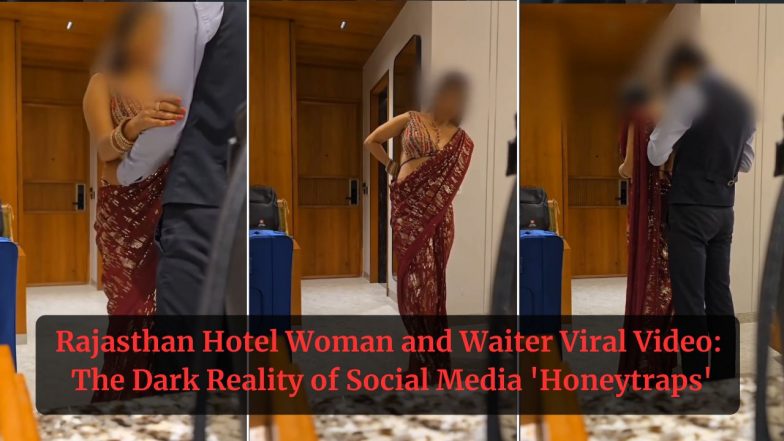
A troubling trend has taken hold across social media platforms like X (formerly Twitter), Instagram, and messaging apps like Telegram. A video recently began circulating showing a woman in a saree inside a hotel room, allegedly "seducing" a male housekeeping staff member in Jaipur, Rajasthan. The video is framed with provocative captions:
"At a hotel in Rajasthan, a woman asks a waiter for recommendations on good places to visit in the state, mentioning that she is visiting India from Nepal for the first time. She then gradually draws him into her trap, and the situation escalates further..."
The clip cuts off at a sensational moment with text overlays reading: "What happened after this is a DARK SECRET" or prompts urging users to check the "link in bio" or join a specific Telegram channel for the full unedited video.
While thousands of users flood the comment section asking for "Full video?" or "Telegram link?", the truth behind this viral media is far more manipulative: the entire video is staged. It is a scripted, engineered piece of clickbait designed to exploit basic human curiosity, push sleazy content onto mainstream feeds, and lure unsuspecting users into dangerous digital traps.
Here is why this trend is fundamentally unethical, how it operates as a cybersecurity menace across social platforms and messaging apps, and why digital voyeurism is becoming a severe societal risk.
1. Unethical Scripted Sleaze: Social Media Platforms and Telegram Under the Scanner
The proliferation of staged "honeytrap" or "hotel room" videos highlights a glaring loophole in platform moderation. These videos are deliberately choreographed using actors or content creators to look like candid, hidden-camera footage. The goal is simple: maximise watch-time, boost algorithmic reach, and monetise voyeuristic curiosity.
The Failure of Moderation on X, Instagram, and Telegram
Platforms like X and Instagram have community guidelines regarding adult content, non-consensual sexual media, and deceptive practices. Yet, creators bypass these filters by riding the line of "softcore" suggestiveness, topping just short of explicit nudity while heavily implying it in captions and cutoffs.
However, the primary funnel for these scams frequently leads directly to Telegram. Because Telegram has historically operated with minimal public moderation, bad actors use Instagram and X as "top-of-funnel" bait to drive traffic into private or semi-public Telegram channels. Once inside these unmonitored spaces, users are exposed to explicit material, illegal trading, and aggressive phishing links far beyond the reach of mainstream social media filters. Also Read: The Telegram 'A-P-P-P': Privacy, Piracy, and Pornography.
Why Telegram and Social Networks Are Facing Regulatory Fire
This unchecked ecosystem is no longer flying under the radar. Following high-profile legal crackdowns globally, including the arrest and indictment of Telegram CEO Pavel Durov in France over the platform's failure to curb illicit activities, organised crime, and exploitation, Telegram and major social networks are facing unprecedented regulatory pressure. Countries worldwide are scrutinising messaging platforms and considering strict bans or compliance mandates. Also Read: Telegram CEO Pavel Durov Declared Internationally Wanted by Russia Over Charges of Abetting Terrorism.
Furthermore, the unrestricted access of teens to hyper-sexualised, deceptive content on these apps has forced governments, such as Australia and several U.S. states, to pass or consider legislation banning or heavily restricting social media access for teenagers under 16. If platforms and messaging networks fail to purge accounts that trade in staged sleaze and illegal redirects, regulatory crackdowns will inevitably accelerate. Also Read: Social Media Ban for Children Under 15 Approved in France: Which Other Countries Have Age Limits? List Here.
2. The Phishing Trap: What Really Lies Behind 'Full Video', Link in Bio' and 'Join Channel'
The ultimate objective of these staged videos is rarely just social media views; it is conversion. The comment sections of these posts are populated by automated bots shouting "Full video link in bio" or "Join Telegram for uncensored clip."
How the Multi-Stage Scam Works
When a user succumbs to curiosity and clicks the profile link or joins the suggested Telegram channel, they are rarely shown a video. Instead, they enter a coordinated cyber-exploitation loop:
Telegram Bot Traps: Prompts in Telegram require users to "Verify Age" or "Forward this channel link to 5 groups to unlock access." This turns victimised users into unwitting spammers who spread the phishing link to their own contacts.
Fake Social Media Logins: External links direct users to cloned login pages (resembling Instagram, Facebook, or Telegram) asking for account authorisation. Entering credentials hands account control straight to cybercriminals.
Malware and Spyware Drops: Landing pages execute "drive-by" downloads, installing adware, keyloggers, or mobile banking trojans disguised as "HD Video Players" or "Codec Updates."
Financial Fraud & Premium Services: Users are asked to enter mobile numbers or pay nominal verification fees via UPI or credit cards, resulting in drained bank accounts or hidden recurring subscriptions.
Falling for the "full video" lure doesn't just waste time; it jeopardises personal privacy, financial security, and online identity.
3. The Weaponisation of Digital Voyeurism
At its core, the popularity of these staged clips exposes a deeper, more concerning societal issue: the normalisation of digital voyeurism. Also Read: From '19-Minute MMS Video' Mystery to Smriti Jain Jaisalmer Case: The Viral Leaks and Digital Voyeurism of 2025.
Eroding the Concept of Consent and Privacy
Digital voyeurism thrives on the thrill of watching someone in a private space without their knowledge, or in this case, believing that is what is happening. By packaging these scripted videos as "real" hidden-camera footage involving hotel staff or unsuspecting service workers, content creators normalise the invasion of privacy.
When viewers consume and share this content, they participate in an ecosystem that degrades the fundamental right to personal space. It creates a culture where anyone in a hotel, gym, changing room, or private residence is viewed as potential fodder for viral content.
Exploitation of Service Workers
Framing these staged videos around hotel waiters, room service personnel, Swiggy and Zomato food delivery partners or domestic workers adds an insidious layer of class exploitation. It paints service workers as easy targets for staged scandals, potentially causing real-world damage to hospitality employees who may face suspicion or reputational damage due to online tropes.
Recognising the Honeytrap Bait and Demanding Accountability
The "Rajasthan hotel woman and waiter" video is not a hidden secret or a breaking news scandal; it is a calculated, unethical piece of staged clickbait designed to trade on sleaze and drive users into dangerous Telegram channels and phishing portals.
Social media networks and messaging apps must take immediate responsibility. Accounts that create, amplify, or monetise staged voyeuristic content should face swift deletion, and platform operators must actively shut down the "full link in bio" and Telegram bot schemes that fuel cybercrime.
For everyday users, the lesson is simple: do not take the bait. When faced with sensationalised "leaks," dramatic cutoffs, or promises of "full videos on Telegram," recognise them for what they truly are: digital traps designed to compromise your security and exploit your attention.
DISCLAIMER: This article is strictly for informational and educational purposes to raise awareness about the said topic.
LatestLY DO NOT host, distribute, or provide links to sexually explicit content, leaked videos, or pirated material. Any search terms or keywords mentioned are solely for the purpose of explaining the viral trend and its associated dangers. We strongly condemn the circulation of non-consensual intimate imagery (NCII) and advise all readers to refrain from searching for or sharing such content, as doing so may lead to severe legal consequences.
(The above story first appeared on LatestLY on Jul 29, 2026 08:58 PM IST. For more news and updates on politics, world, sports, entertainment and lifestyle, log on to our website latestly.com).