Identity Verification for Marketplaces: Where It Fits in Fraud Prevention
Marketplace fraud is often treated as a problem for buyers and sellers because they are the ones who lose money directly. But platforms also pay a price. Identity fraud can drive trustworthy users away, increase disputes and support costs, reduce seller quality, and put additional pressure on compliance teams.

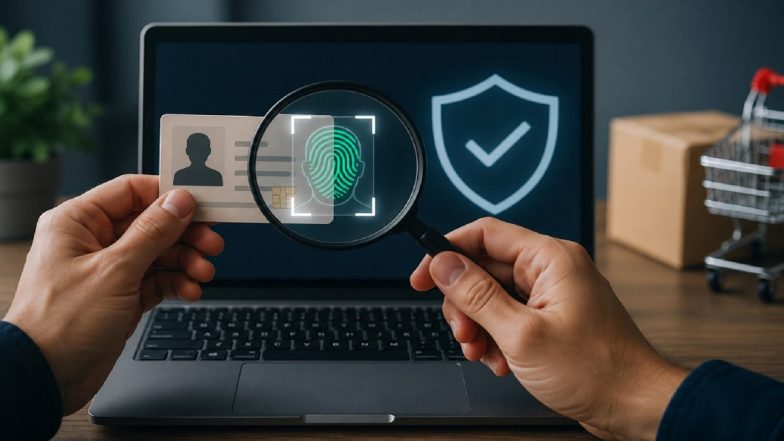
Marketplace fraud is often treated as a problem for buyers and sellers because they are the ones who lose money directly. But platforms also pay a price. Identity fraud can drive trustworthy users away, increase disputes and support costs, reduce seller quality, and put additional pressure on compliance teams.
Marketplace identity verification can help address these risks by giving platforms stronger evidence about who is behind an account. But requiring every user to verify their identity before every transaction would create unnecessary friction. The better approach is to introduce stronger checks when the risk justifies them.
Here is where identity verification fits into marketplace fraud prevention, and how platforms can use it without making the user experience unnecessarily complicated.
Why should marketplaces care about identity verification?
A marketplace may not suffer an immediate financial loss when one user scams another. Over time, however, repeated fraud can damage trust in the platform itself.
Secondhand marketplaces illustrate the problem particularly well. Buyers often purchase from private sellers, have limited guarantees, and cannot inspect an item before paying. In a Which? survey reported by The Guardian, 32% of buyers said they had been scammed on secondhand marketplaces over a two-year period. Reported problems included receiving incorrect items, empty packages, and counterfeit goods.
When scam reports repeatedly mention the same platform, users may start to associate the marketplace itself with risk.
Counterfeits create a similar problem. Seller identity verification cannot prove that every product is genuine, a verified seller can still create a misleading listing. Platforms therefore still need listing moderation, brand-reporting mechanisms, and product checks.
What identity verification provides is a stronger evidence trail. The marketplace can establish who received a payout or determine whether the same seller is attempting to return using different account details.
Buyer fraud matters too. Buyers can falsely claim an item never arrived, return a different product, file fraudulent “not as described” complaints, or initiate chargebacks after receiving their purchase.
Identity verification cannot determine whether a package was delivered or whether a refund request is legitimate. But it becomes useful when abusive behavior repeats across accounts, devices, cards, or addresses.
The goal, therefore, is not to make identity verification the marketplace's only fraud control. It is to use identity as another reliable signal when the platform needs stronger evidence about who is behind an account.
What should seller verification cover?
Seller verification may initially look like a standard Know Your Business (KYB) process: establish that a company exists, validate its registration information, and confirm that the person operating the account is authorized to represent it.
Marketplaces, however, rarely serve registered companies alone. Sellers may include sole proprietors, creators, small resellers, micro-merchants, and private individuals.
Many platforms therefore need a tiered KYB/KYC model: business checks for companies, personal identity checks for individuals, and stronger verification as sellers request greater privileges or financial access.
Match verification to seller privileges
The objective should not be to collect every possible piece of information from every seller. Verification should correspond to what the seller can do.
For example:
⦁ A new individual seller could begin with basic account information and low listing limits.
⦁ Before the first payout, the marketplace could require identity document verification and a payout account check.
⦁ Access to higher-risk categories such as luxury goods, branded electronics, cosmetics, or jewelry could require additional seller verification.
⦁ Sellers of controlled or age-restricted products may need business and licensing checks.
⦁ A sudden increase in sales, payout-account change, or spike in disputes could trigger re-verification.
Major marketplaces already incorporate merchant identity checks into seller onboarding. Amazon, for example, requires sellers to provide identity, contact, business, and banking information as part of its verification process.
For controlled products, identity alone may not be enough. Depending on the product and jurisdiction, a marketplace may also need to establish that a seller has the appropriate license or authorization to sell products such as alcohol, tobacco and nicotine products, firearms, or prescription pharmaceuticals.
Give legitimate sellers something in return
Verification creates friction, particularly when a new seller is asked to submit an identity document or business information before making a first sale. Platforms can offset that friction by connecting verification with meaningful benefits.
A verified seller badge, for example, can increase buyer confidence for higher-value purchases, new sellers, cross-border orders, and categories where counterfeiting is common.
Verification can also unlock higher transaction limits, access to restricted categories, faster payout eligibility, fewer fund holds after a clean sales history, and clearer account-recovery procedures. In other words, verification should not only restrict fraudulent sellers. It can also help trustworthy sellers build credibility faster.
What about buyer verification?
Buyer verification requires a more selective approach. Most buyers are not regulated counterparties, and asking every customer to scan an ID during checkout could significantly increase friction. For routine purchases, marketplaces can usually start with other risk signals, such as payment information, device history, delivery addresses, account age, transaction patterns, and connections to other accounts.
Identity verification can then become a step-up measure when risk increases. This approach matters because the verification request should feel proportional to the action. A customer buying an inexpensive everyday item may see an ID scan as excessive. The same customer may find additional verification reasonable when purchasing restricted goods, recovering a compromised account, or completing a high-value transaction.
Age-restricted products are a strong use case
Age-restricted products provide one of the clearest cases for buyer verification. When marketplaces sell alcohol, tobacco and nicotine products, adult content, gambling services, or other age-restricted goods and services, payment information or account history alone does not prove the buyer's age. Common approaches include self-declaration—such as entering a birth date or clicking an “I am over 18” button—and ID checks at delivery.
Both have limitations. Self-declaration is easy to bypass, while delivery checks may fail if a package is left unattended or handed to someone other than the buyer. Online identity verification can add stronger evidence earlier in the transaction. A buyer can scan an identity document and, when required, complete a selfie and liveness check. The system can then verify the date of birth, assess the document, and check whether the person presenting it matches the portrait.
Online verification does not necessarily replace legally required checks at delivery, but it can help stop underage transactions before fulfillment and provide evidence of how age was verified.
Account recovery is another important trigger
Buyer verification can also protect sensitive account actions. An account takeover can be difficult to detect because a fraudster may have the correct password or access to the user's email or phone number.
Additional identity verification may therefore be appropriate when someone tries to recover an account after suspicious activity, change contact details, add a new payment method, modify a delivery address after ordering, or access sensitive stored information.
How marketplace identity verification works
Document and selfie verification can provide stronger evidence that an account is connected to a real person rather than simply an email address, phone number, payment card, or device.
A typical verification flow has five stages.
1. Trigger verification at the right moment
The first step is deciding when stronger proof is actually necessary. Common triggers include seller onboarding, the first payout, changes to payout details, access to higher-risk categories, high-value purchases from unusual accounts, account recovery, and proof of age for restricted products. Risk-based triggers allow routine users to continue with minimal friction while applying stronger controls to actions that create greater exposure.
2. Capture the identity document
The user photographs or scans a passport, driver's license, national ID card, residence permit, or another supported document. The system checks whether the image is suitable for processing—for example, whether the text is readable, the entire document is visible, and glare or blur is limited. Good capture guidance is important because a failed verification attempt does not necessarily indicate fraud. Poor lighting, camera problems, or a worn document can also cause difficulties.
3. Verify the document
Once captured, the document can be analyzed and its data extracted. Depending on the document type, verification can include checking the holder's name and date of birth, expiration date, document number, issuing country, MRZ or barcode data, document layout, security elements, and signs of tampering or digital manipulation.
4. Match the selfie
The user then takes a selfie, which is compared with the portrait in the identity document. This provides additional evidence that the person completing verification is the document's legitimate holder rather than someone using another person's genuine ID. For marketplaces, face matching can support seller onboarding, payout access, age-restricted transactions, account recovery, and other higher-risk actions.
5. Check liveness
Liveness detection establishes whether the person taking the selfie is physically present during verification. This helps defend against attempts to fool biometric checks using printed photographs, replayed videos, screens, masks, or deepfakes. For online marketplaces, this is particularly important because verification happens remotely without an employee or agent physically inspecting the user.
Building marketplace trust without turning every transaction into KYC
Marketplace identity verification works best when it is selective. Sellers may need stronger verification before receiving payouts, accessing higher-risk categories, or gaining additional privileges. Buyers may need step-up checks when purchasing restricted products, recovering accounts, or performing actions associated with greater risk.
The objective is not to verify everyone in the same way. Instead, marketplaces can match the level of verification to the level of risk. Routine transactions can remain simple, while higher-risk actions trigger stronger identity checks. This approach also makes identity verification more useful as part of a broader fraud prevention strategy. Document checks, biometric verification, payment and device signals, transaction history, delivery data, and behavioral patterns can work together rather than relying on any single control.
The result is a better balance between security and user experience. Marketplaces gain stronger evidence about who is behind an account when it matters most, while legitimate buyers and sellers avoid unnecessary verification during everyday activity. Ultimately, the goal is not to turn every marketplace interaction into a KYC process. It is to make stronger proof of identity available at the moments when trust alone is no longer enough.
(All articles published here are Syndicated/Partnered/Sponsored feed, LatestLY Staff may not have modified or edited the content body. The views and facts appearing in the articles do not reflect the opinions of LatestLY, also LatestLY does not assume any responsibility or liability for the same.)