Supreme Court Tightens Traffic Rules: Unpaid Challans Can Block RC, PUC and Licence Renewal
This significant order, issued recently, compels motorists across India to clear their pending fines or face immediate consequences for their vehicle registration, pollution under control (PUC) certificates, and even driving licences, fundamentally altering the landscape of traffic enforcement and civic responsibility.

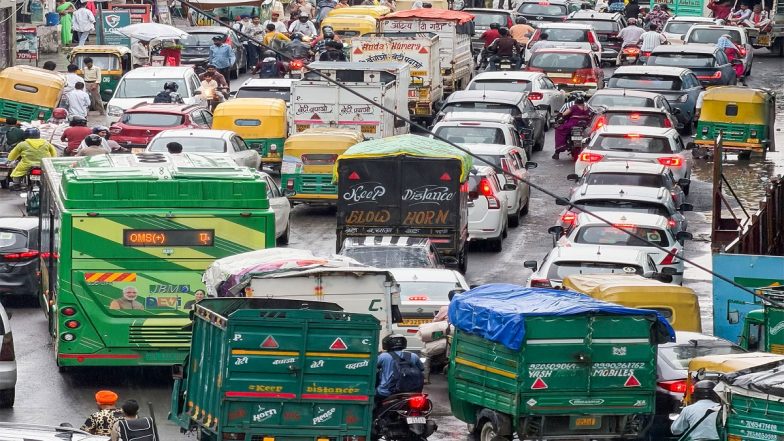
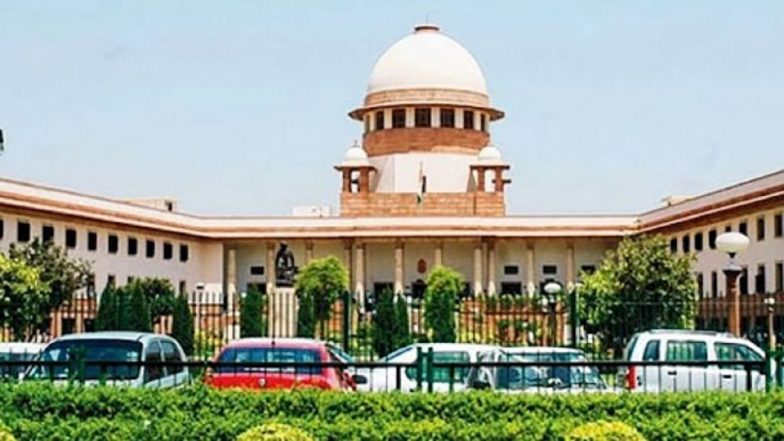
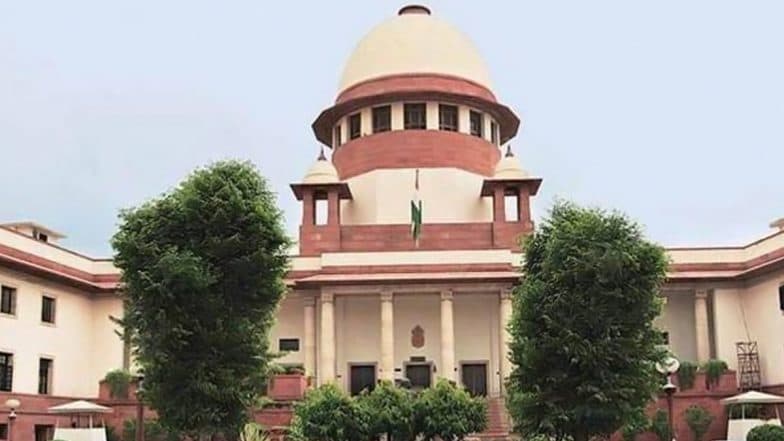
In a landmark directive, the Supreme Court has mandated a stringent crackdown on unpaid traffic challans, linking outstanding dues directly to crucial vehicle-related services. This significant order, issued recently, compels motorists across India to clear their pending fines or face immediate consequences for their vehicle registration, pollution under control (PUC) certificates, and even driving licences, fundamentally altering the landscape of traffic enforcement and civic responsibility.
What Happened
On September 28, in the ongoing road-safety case of 'S. Rajasekaran vs Union of India', the Supreme Court delivered a decisive order instructing states and Union Territories to take rigorous action against vehicles with outstanding e-challans. The court's directive makes it clear that merely issuing challans is insufficient; recovery and compliance are paramount. Under the new mandate, authorities are directed to freeze several online vehicle services for motorists with unpaid fines. These include the renewal of registration certificates (RC), issuance of duplicate RCs, updating of owner's addresses, and the issuance of fitness certificates. Furthermore, no PUC centre will be permitted to issue a Pollution Under Control certificate until pending traffic fines are cleared. Vehicles with outstanding e-challans will also be blacklisted on the central Parivahan portal, effectively blocking their sale or transfer of ownership until the dues are settled. For repeat offenders, the Supreme Court has directed that the renewal of their driving licence be suspended, and steps be taken to suspend existing licences, referencing an amended Rule 21(25) from 2026 that categorises five or more offences within a year as a public nuisance. Random vehicle checks are also explicitly ordered, with provisions for impounding vehicles if unpaid challans are found. SC Clarifies E-Challan Order: No Direction to Link Traffic Fines With Electricity Bills.
Why It Matters
This judicial intervention addresses a colossal backlog of unpaid traffic fines that has plagued the nation's road safety efforts. The Supreme Court was informed that approximately ₹49,194.05 crore remained outstanding against e-challans issued across the country, with only about ₹26,175.05 crore having been recovered. This staggering figure underscores a significant gap between traffic violation detection and the actual enforcement of penalties. The court emphasised that the purpose of e-challans is not merely to document violations but to ensure the recovery of fines, thereby fostering a culture of compliance and accountability among motorists. The move is poised to have far-reaching consequences for millions of vehicle owners, aiming to translate digital enforcement into tangible behavioral change on Indian roads. How Does the Supreme Court Plan To Recover Unpaid Traffic Challans Through Electricity Bills?
Background & Context
India introduced the e-challan system to streamline traffic enforcement, enhance transparency, and reduce corruption, moving away from traditional paper-based methods. Leveraging technology like CCTV cameras and automated systems, the e-challan system allows for digital detection and processing of violations. The Motor Vehicles Act, 1988, significantly strengthened by the 2019 amendment, has progressively increased penalties for various traffic offences, aiming to deter violations and improve road safety. Despite these efforts, a substantial portion of e-challans remained unpaid, with estimates showing that in some periods, nearly two-thirds of all fines went unremitted. This persistent "e-challan logjam" highlighted the need for more robust recovery mechanisms, as the existing system often saw cases transferred to virtual courts after 60-90 days, but without a concrete pathway for recovery affecting core vehicle services. The latest Supreme Court order directly targets this enforcement lacuna by integrating payment compliance with essential vehicle documentation and services.
Stakeholder Views
The Supreme Court's strict posture is likely to be welcomed by road safety advocates who have long pushed for more effective enforcement mechanisms to curb dangerous driving behaviours. Experts often argue that the effectiveness of enforcement should be measured by its impact on road-user behaviour rather than just the number of challans issued. For motorists, while the directive introduces an immediate imperative to clear outstanding fines, it is expected to foster greater discipline. Transport authorities, now armed with a powerful judicial mandate, will be significantly empowered to ensure compliance, potentially leading to a marked improvement in fine collection rates. The integration of various government portals like VAHAN and SARATHI with the e-challan system, a long-standing objective, will now see stricter implementation, making it harder for defaulters to circumvent the system.
What to Watch Next
The immediate focus will be on how states and Union Territories implement the Supreme Court's comprehensive directions. The Ministry of Road Transport and Highways (MoRTH) has been directed to establish a public dashboard, updated monthly, to monitor state-wise data on electronic surveillance, enforcement devices, and the ratio of violations detected to challans issued. This will bring a new level of transparency and accountability to enforcement efforts. Furthermore, the court has directed all states and UTs to implement the Standard Operating Procedure prepared by MoRTH on October 28, 2025, and comply with Section 136A of the Motor Vehicles Act, 1988. The bench also suggested exploring innovative recovery methods, such as linking unpaid traffic fines with electricity bills, though this remains a suggestion for states to examine, not a direct order. The push for AI-enabled electronic enforcement capable of detecting 12 categories of violations also signifies a technological shift in policing India's roads.
This judicial intervention marks a pivotal moment for road safety in India. By establishing a clear and unavoidable link between traffic discipline and fundamental vehicle services, the Supreme Court's order is set to drive a significant shift towards a more compliant and responsible motoring culture, potentially leading to safer roads for everyone.
(The above story first appeared on LatestLY on Oct 04, 2026 10:22 AM IST. For more news and updates on politics, world, sports, entertainment and lifestyle, log on to our website latestly.com).