Donald Trump Calls on Israel and Iran To ‘Immediately Stop Shooting’ As Tensions Escalate
US President Donald Trump has called on Israel and Iran to 'immediately stop shooting' after the two countries exchanged attacks in their most serious confrontation since a ceasefire began two months ago. The appeal comes as regional tensions rise, diplomatic efforts face challenges, and concerns grow over the stability of the fragile ceasefire in the Middle East.

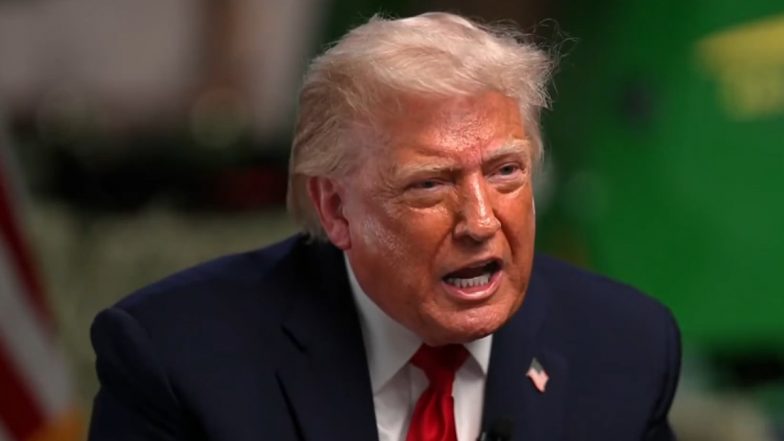
US President Donald Trump on Monday, June 8, called for an immediate halt to hostilities between Israel and Iran, urging both sides to stop exchanging attacks amid renewed tensions in the Middle East.
In an extremely short post on his Truth Social platform, Donald Trump demanded Israel and Iran to “immediately stop shooting”. His appeal came as the two countries traded strikes on Monday in what has been described as the most serious confrontation since a ceasefire began in the region two months ago. Israel and Iran Trade Strikes, Threatening To Drag Region Back to Full-Scale War.
Donald Trump Calls on Israel and Iran To ‘Immediately Stop Shooting’
US President Donald Trump said on Monday that Israel and Iran must immediately stop exchange of attacks. "Israel and Iran must immediately stop 'shooting'," Trump wrote on Truth Social.
The comments reflect growing concern in Washington over the risk of further escalation between the regional rivals, whose latest exchanges have raised questions about the durability of the ceasefire that has largely held since earlier fighting subsided. Iran-Israel War: India Issues Travel Advisory for Citizens in Iran, Asks To Leave Country Immediately.
Trump has leaned on Israel to stop its attacks on Lebanon to allow room for a deal to end the wider war with Iran. However, Israel launched strikes on the southern suburbs of Beirut yesterday, apparently ignoring the US president’s warning not to.
The latest strikes have drawn attention to the challenges facing diplomatic efforts aimed at reducing tensions across the region and securing a broader political settlement.
Israeli Prime Minister Benjamin Netanyahu is facing domestic political pressure to continue his war on Lebanon, particularly from far-right elements of his fragile coalition.
Netanyahu, who is facing domestic political pressure to continue his war on Lebanon, particularly from far-right elements of his fragile coalition, is therefore derailing peace talks but escaping any serious reprimand for doing so from Washington.
The situation highlights the competing pressures confronting Israel's leadership as it balances military operations, coalition politics and international diplomatic efforts.
Israel and Iran traded strikes on Monday, the most serious confrontation since a ceasefire began two months ago in the Middle East region. The renewed exchange has increased concerns that the conflict could widen further if diplomatic efforts fail to contain the violence. While international actors continue to push for de-escalation, the latest developments suggest the ceasefire remains fragile.
The latest tensions come amid ongoing efforts by regional and international stakeholders to prevent a broader conflict involving Israel, Iran and allied groups across the Middle East. Trump's call for both sides to stop attacks adds to diplomatic pressure aimed at preserving the ceasefire and creating conditions for renewed negotiations.
For now, the situation remains fluid, with attention focused on whether both sides will scale back military actions or continue retaliatory strikes in the days ahead.
(The above story first appeared on LatestLY on Jun 08, 2026 03:53 PM IST. For more news and updates on politics, world, sports, entertainment and lifestyle, log on to our website latestly.com).