Donald Trump Signals Possible NATO Exit Amid Growing Rift With Allies Over Iran Conflict
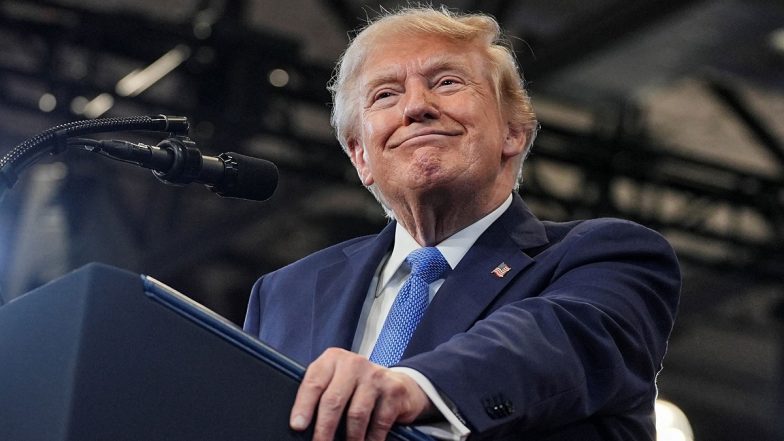
US President Donald Trump stated on Wednesday that he is 'seriously considering' withdrawing the United States from NATO, intensifying a long-standing rift with European allies.

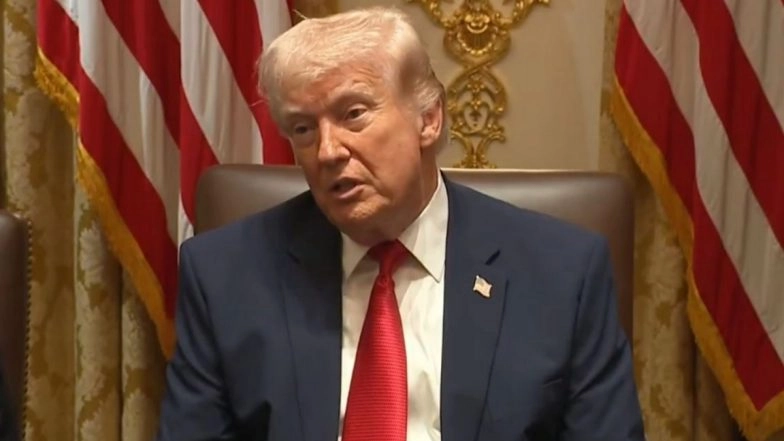
New York, April 1: U.S. President Donald Trump has said he is “strongly considering” withdrawing the United States from the North Atlantic Treaty Organization (NATO), escalating tensions with key Western allies amid disagreements over military action in Iran. The remarks, made in recent interviews and public statements, mark one of the most direct challenges yet to the decades-old alliance and come during a period of heightened geopolitical strain.
Trump’s comments suggest a significant shift in U.S. foreign policy, with the president openly questioning the value of NATO. He has described the alliance as ineffective and indicated that a U.S. withdrawal is under serious consideration. Donald Trump Threatens To Destroy Iran’s Civilian Infrastructure if Deal Not Reached ‘Shortly’.
The statements have raised concerns among allies about Washington’s long-term commitment to the mutual defence pact, which has been a cornerstone of transatlantic security since its formation in 1949.
Iran Conflict at the Center of Dispute
The immediate trigger for Trump’s remarks appears to be disagreements over the ongoing conflict involving Iran. U.S. officials have expressed frustration that several NATO members declined to participate in or support American-led military operations. ‘USA Will Remember’: Donald Trump Slams France Over Denying Use of Airspace to Planes Enroute Israel.
European countries have largely favoured diplomatic approaches or limited involvement, creating a visible divide within the alliance. Trump has criticised this stance, arguing that allies have not reciprocated U.S. support in past conflicts.
The disagreement has widened as the conflict impacts global energy supplies and regional stability, further straining coordination among Western nations.
Longstanding Criticism of NATO
Trump’s scepticism of NATO predates the current crisis. He has repeatedly argued that European members contribute insufficiently to defence spending and rely too heavily on U.S. military support. During his earlier tenure and subsequent political campaigns, Trump called on allies to increase defence budgets and warned that the U.S. might reconsider its commitments if burden-sharing remained uneven.
Recent rhetoric indicates a return to a more confrontational approach, with the president suggesting the U.S. may no longer guarantee protection under NATO’s collective defence framework.
Legal and Political Constraints
Despite the strong language, a U.S. withdrawal from NATO would face significant legal and political hurdles. A law passed in 2023 restricts a president from unilaterally exiting the alliance without approval from Congress or a supermajority in the Senate.
This means any formal withdrawal would likely involve a prolonged political process and potential legal challenges.
Global Implications and Allied Response
Trump’s comments have prompted cautious responses from European leaders, many of whom continue to emphasise the importance of NATO unity, particularly amid ongoing security concerns involving Russia and the Middle East.
Analysts warn that a U.S. exit could significantly weaken the alliance’s deterrence capability and reshape global security arrangements. NATO has long been central to coordinating defence policy among Western nations, and any change in U.S. participation would have far-reaching consequences.
Background: NATO’s Role in Global Security
Formed after World War II, NATO is a military alliance based on collective defence, where an attack on one member is considered an attack on all. The United States has historically been its most powerful member, providing significant military and financial support.
Recent tensions, including disagreements over defence spending, strategic priorities, and global conflicts, have tested the cohesion of the alliance. Trump’s latest remarks reflect these broader strains and raise questions about the future direction of U.S. foreign policy.
(The above story first appeared on LatestLY on Apr 01, 2026 06:02 PM IST. For more news and updates on politics, world, sports, entertainment and lifestyle, log on to our website latestly.com).