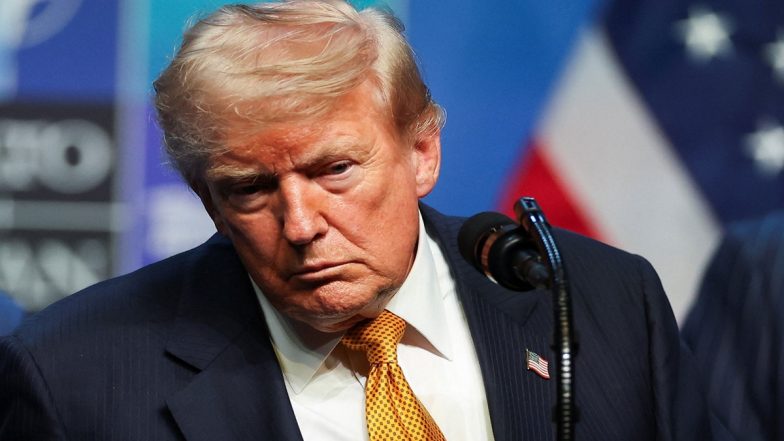
Why Donald Trump Aborted Ready-To-Launch Strikes on Houthis Despite Direct Appeal From Saudi Crown Prince MBS
US President Donald Trump ordered the Pentagon to prepare airstrikes against Yemen's Houthis following an appeal from Saudi Crown Prince Mohammed bin Salman, but abruptly cancelled the mission on Sunday. Troops were already loading bombs onto warplanes when the stand-down occurred. Trump said he is in 'deciding mode,' noting the Houthis have agreed not to target US personnel.

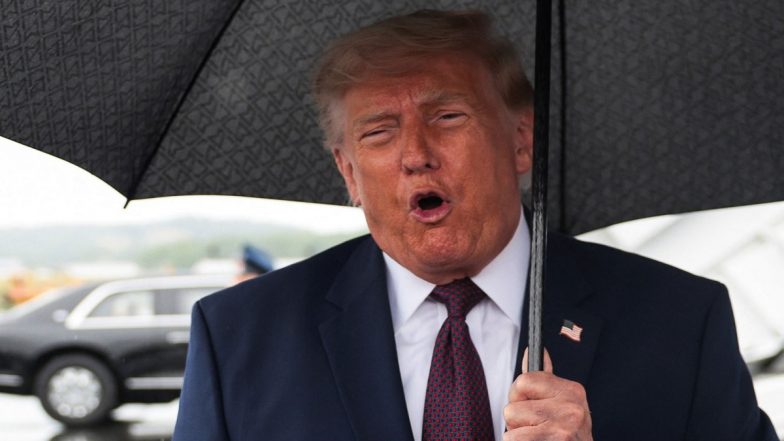
US President Donald Trump had ordered the Pentagon to prepare airstrikes against the Iran-backed Houthi movement in Yemen following personal appeals from Saudi Crown Prince Mohammed bin Salman, before reversing course days later. The planned strikes were halted on Sunday just as American commanders had approved target lists and troops were loading ordnance onto warplanes.
The sudden reversal, reported by The New York Times, underscores deep deliberation within the administration over whether the United States should re-enter direct combat in Yemen while managing its broader conflict with Iran. Trump had been weighing Saudi requests for military intervention for roughly two weeks as Houthi fighters advanced across strategic territory bordering the Red Sea. Donald Trump Says He’s in ‘Deciding Mode’ on Iran, Warns of ‘Very Big Things’ As Tehran Sends 7 Conditions.
Warplanes Were Being Prepared for Strikes, Then Donald Trump Said No
The direct push for intervention peaked on Thursday when Crown Prince Mohammed bin Salman, Saudi Arabia’s de facto leader, phoned Trump to urge US air support against advancing Houthi forces. Although Trump had told his advisers just a day earlier that he opposed launching strikes, he shifted position following the call and instructed defense officials to ready an air campaign.
By Sunday, the operation had reached an advanced stage. US commanders had approved target lists and military personnel were loading munitions onto strike aircraft when the stand-down order was issued. Administration officials confirmed that no American strikes would proceed for the time being. Iran Sets 7 Conditions for US Talks: What Are Tehran’s Demands To End War?
The White House press office declined to comment on Trump's internal deliberations. A senior administration official, however, reaffirmed that the United States maintains a defence pact with Riyadh and "will always defend our allies".
Donald Trump Says He Is in 'Deciding Mode'
Speaking to Fox News on Sunday, September 20, Trump described himself as being in "deciding mode" regarding the wider regional crisis involving Iran. Addressing the situation in Yemen, Trump emphasised that Washington remains in constant communication with the Houthis and noted that the group has so far agreed not to attack American assets.
Senior administration officials indicated that most members of Trump's inner circle were either skeptical of or actively opposed to joining Saudi Arabia's offensive, warning that opening another combat front could strain military resources already deployed in the confrontation with Tehran.
Saudi Cooperation Key to Trump
The policy calculation remains complex because Washington relies on Saudi cooperation for its wider regional strategy against Iran. Riyadh has previously exerted diplomatic leverage to protect its interests; earlier this year, Saudi authorities restricted access to their airspace and local bases, effectively stalling a US initiative to escort commercial tankers through the Strait of Hormuz.
Officials noted that any potential US airstrikes would likely have aligned with a planned ground push by Saudi-backed Yemeni government forces, which have historically struggled to secure significant territorial advances against Houthi fighters.
The Houthis have waged war against Yemen’s internationally recognised government since 2014. While hostilities subsided under a 2022 truce, the group reignited fighting this summer by imposing a maritime blockade on Saudi shipping and targeting vessels in the Red Sea.
The group subsequently seized key coastal positions near the Bab al-Mandab Strait, a crucial maritime chokepoint connecting the Red Sea with the Gulf of Aden. The renewed clashes have heightened volatility across global energy routes and maritime shipping corridors already impacted by the broader Middle East conflict.
(The above story first appeared on LatestLY on Sep 21, 2026 06:19 PM IST. For more news and updates on politics, world, sports, entertainment and lifestyle, log on to our website latestly.com).