Iran President Masoud Pezeshkian Says Tehran Would Allow UN Nuclear Inspectors Under Peace Deal
Iranian President Masoud Pezeshkian said Tehran would allow UN nuclear inspectors into Iran as part of negotiations on a possible long-term ceasefire with the US. He also said distrust between the two countries makes a Trump meeting difficult, while Iran awaits a US response to its proposal to reopen the Strait of Hormuz and resume nuclear talks.

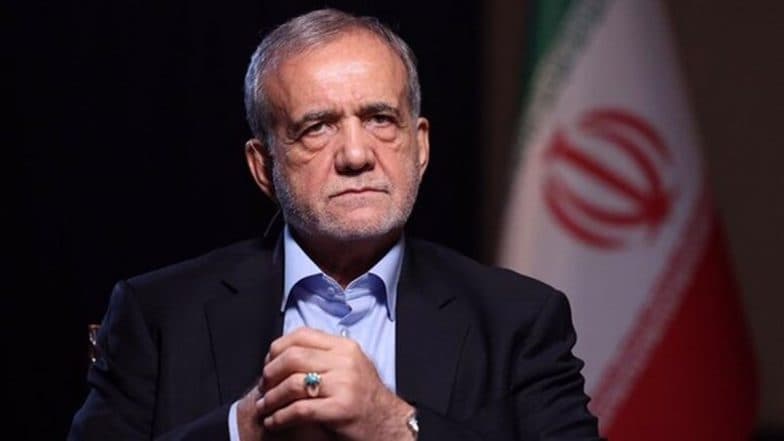
Iranian President Masoud Pezeshkian has said Tehran would allow United Nations nuclear inspectors into the country as part of negotiations on a possible long-term ceasefire with the United States, offering one of the clearest indications yet of Iran’s willingness to discuss renewed international monitoring. In an interview with CBS News recorded Friday, September 25, Pezeshkian twice confirmed that Iran would permit inspections if the issue is incorporated into negotiations.
The comments came as Iran awaits a response from Washington to a proposal that would reopen the strategically important Strait of Hormuz after seven days and restart negotiations aimed at resolving the wider conflict and the dispute over Iran’s nuclear programme. Iran submitted the proposal through mediators on September 16, according to Reuters, while CBS reported that the United States had yet to respond.
Masoud Pezeshkian Says Iran Would Allow Nuclear Inspections
Pezeshkian told CBS News that Iran would allow United Nations nuclear inspectors into the country under an agreement. "That is absolutely correct," Pezeshkian said when asked by "Face the Nation" moderator Margaret Brennan if Iran would allow the inspectors in.
Brennan pointed out that inspectors from the UN's International Atomic Energy Agency were not given full access when they tried before. "Will your country allow in weapons inspectors now?" Brennan asked again. "That is absolutely correct," he responded a second time, adding, "If they wish to come in and have inspections, we can reach accords and agreements vis-à-vis that specific topic within the negotiations."
The remarks are significant because access for the International Atomic Energy Agency has been a central issue in international efforts to monitor Iran’s nuclear activities. The IAEA has previously raised concerns over limitations on its ability to verify aspects of Iran’s programme.
Pezeshkian, however, reiterated Tehran’s longstanding position that Iran is not seeking to build a nuclear weapon. "Developing nuclear weapons is haram," he said using the word forbidden, maintaining that even if some in Iran wanted to build a nuclear weapon, "religiously speaking, they are not allowed to pursue that path."
Iran Links Hormuz Reopening To Renewed Talks
The comments on nuclear inspections came as Tehran pushes a broader proposal aimed at restarting negotiations with Washington. Iran's foreign minister offered a proposal this week to reopen the strait after seven days and restart talks with the US as an initial step toward a final nuclear deal. The US has yet to respond to the Iranian proposal, which was announced during the United Nations General Assembly in New York City.
Reuters reported on September 22 that an Iranian official said Tehran could reopen the Strait of Hormuz within seven days if Washington eased military pressure and lifted its blockade on Iranian ports. The proposal was delivered to the United States through mediators on September 16.
Pezeshkian said Iran would "abide by whatever we commit to" if the United States accepts the latest Iranian proposal to reopen the Strait of Hormuz. Brennan asked when Iran expects a response from the United States on its offer to reopen the Strait of Hormuz and restart negotiations.
"If this message reaches the president of the United States, or the interviewers and those involved in the discussions, naturally the process will begin from the very day they accept it," he said.
Iran's Pezeshkian Cites ‘Atmosphere Of Distrust’
Pezeshkian also said there was an "atmosphere of distrust" between Iran and the United States when asked whether he would have been willing to meet President Donald Trump in New York.
Trump had expressed openness to meeting with Iranian officials in New York. Although top Trump officials held indirect talks with Iranian officials through mediators, the president himself did not. During his speech to the General Assembly, Trump said he has a "big decision to make" on whether to cut a deal with Iran or "annihilate" the country. He also predicted that the two sides will not reach an agreement until after the midterms.
Pezeshkian suggested it would be difficult for him to meet face-to-face with Trump, pointing to an "atmosphere of distrust that has developed between Iran and the United States."
"As long as they don't cease doing what they're imposing on us every day, it's difficult to trust them," he said. "Every day, they increase the sanctions against us. Every day, they threaten us. Every day, they strike us. And they don't honor what they have put in writing. So if they engage in talks, will they actually follow through?"
The comments reflect the central dispute over sequencing in the current diplomatic effort. Iran has called for US action on military and economic pressure before reopening the waterway, while Washington has sought movement on the Strait of Hormuz as part of efforts to end the conflict.
Dispute Over The Strait Of Hormuz
The Strait of Hormuz has become a major point of contention between the two countries. The US has insisted Iran should not control the waterways entering the Strait of Hormuz, including those that pass Omani territory, or charge tolls for ships that pass through. Iran has demanded that ships seek permission and follow an Iranian-approved shipping route.
"If they operate according to that framework, I think all of us will abide by it," he said of the original US-Iran agreement. He blamed the US for the collapse of the ceasefire agreement known as the "memorandum of understanding," or MOU, over the summer, after Iran targeted commercial shipping vessels and the US responded by carrying out attacks on Iran.
The 60-day ceasefire deal that fell apart in July was designed to buy time for Iran and the US to hold talks on the future of Iran's nuclear program, a thorny issue that both sides have struggled to reach a deal on. According to the CBS transcript, Pezeshkian said the previous MOU remained the basis for Iran’s current proposal and argued that disagreements over implementation could have been resolved through dialogue.
Nuclear Issue Remains Central
Iran’s nuclear programme remains at the heart of the dispute between Tehran and Washington. In recent years, Iran has enriched uranium to near weapons-grade levels of purity, and while it denies any interest in building a nuclear weapon, it has refused to give up uranium enrichment altogether.
Mr. Trump has said in the past that Iran must stop enriching uranium, a more hardline stance than the Obama-era nuclear deal that allowed Iran to enrich to a low level, with limits on the size of its program and international inspectors.
Recent Iranian statements have also highlighted a distinction between allowing international inspections and making broader concessions on the nuclear programme. On September 25, a senior Iranian official was reported as saying that Iran would not make broader nuclear concessions even if Washington accepted the Hormuz proposal.
Pezeshkian, meanwhile, said Iran was prepared to discuss inspections as part of negotiations.
Pezeshkian Says Mojtaba Khamenei Is Healthy
Pezeshkian was also asked about his communications with Mojtaba Khamenei, Iran's supreme leader, who has not been seen in public since the US-Israeli attack that killed his father, Supreme Leader Ali Khamenei, earlier this year.
The Iranian president insisted the new supreme leader has "no specific ongoing health issues or challenges," and said they last met twice, once for over seven hours. He said they were seated "for those many hours" and "changed angles and positions" because they were unaccustomed to being seated for so long.
"From a medical standpoint, he's completely healthy," Pezeshkian said, adding that injuries to his face and legs have recovered. "Hear this from me as a physician, and accept it. He has no issues." CBS reported that Pezeshkian said he had met Mojtaba Khamenei twice, including once for more than seven hours.
When asked whether Mojtaba Khamenei is advising Pezeshkian on diplomacy, the president explained that there is a team "consisting of six members of various organizations, security forces, parliamentary representatives, government agencies, and they sit and conduct talks, consultations about decision-making processes, and reach any decisions through coordination."
The immediate question is whether Washington will respond to Tehran’s seven-day proposal and whether the two sides can agree on the sequence of steps involving the Strait of Hormuz, military activity, sanctions and nuclear negotiations.
Iran has said reopening the strait can follow an agreement on its conditions, while the United States has maintained pressure on Tehran. Reuters reported that Iran’s proposal was conveyed through mediators and that the Iranian delegation in New York had authority to pursue diplomacy.
For now, Pezeshkian’s comments put renewed international inspections on the negotiating table, but they do not by themselves establish a new agreement between Iran and the United States. Any such arrangement would depend on the terms negotiated by both sides and on subsequent implementation.
(The above story first appeared on LatestLY on Sep 26, 2026 09:27 AM IST. For more news and updates on politics, world, sports, entertainment and lifestyle, log on to our website latestly.com).